
HKI Formulates Solutions to Accelerate Investment and Strengthen Competitiveness
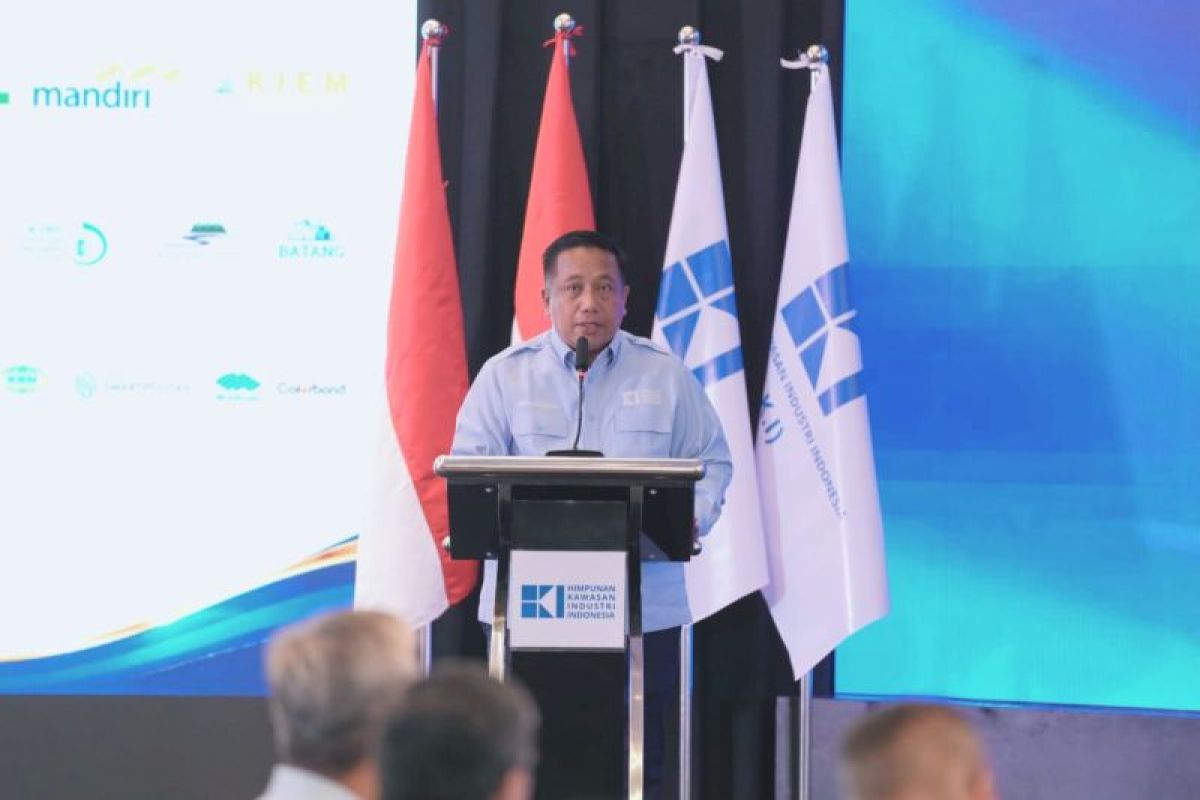
The Indonesian Industrial Estates Association (HKI) has formulated a number of strategic solutions to accelerate national investment realisation while strengthening the competitiveness of industrial zones amidst global dynamics.
HKI Chairman Akhmad Ma’ruf Maulana stated that these recommendations were the outcome of the association’s 25th National Working Meeting held in Jakarta on 30–31 July 2026. He noted that the main challenge for Indonesian investment is no longer merely attracting investors, but ensuring that existing commitments can be realised promptly. Indonesia possesses significant advantages to become one of the most competitive investment destinations in Asia, including a large domestic market, a demographic bonus, abundant natural resources, and a strategic position in the global supply chain.
The recommendations encompass regulatory harmonisation, acceleration of licensing completion, strengthening spatial planning and land certainty, enhancing energy supply reliability, improving connectivity, and reinforcing institutional mechanisms for resolving investment obstacles. ‘HKI aims to be a strategic partner for the government in ensuring that incoming investments are realised and provide maximum benefits to the community,’ Ma’ruf said.
He added that these recommendations align with the spirit of Indonesia Incorporated, a current government policy direction. According to him, HKI members no longer solely act as industrial estate developers but also as industrial players who build and operate various business activities within the estates they manage. Moving forward, investment acceleration must proceed alongside improved environmental governance, reliable energy provision, connectivity development, and the creation of sustainable industrial zones. As a follow-up, HKI has submitted a letter requesting an opportunity to present these recommendations directly to the president.
Previously, the Ministry of Industry stated that industrial estates must serve as instruments for equitable development by creating new growth centres, attracting investment, generating employment, and involving local enterprises across various regions. Tri Supondy, Director General of Industrial Resilience, Regionalisation, and International Access, said the development of industrial estates needs to be tailored to the characteristics and potential of each region. ‘The goal is not merely to relocate industries away from Java, but to create new growth centres in Indonesia,’ he said. He explained that industrial development in Java is directed towards high-tech and water-efficient activities due to the high density of economic activity, while development outside Java is focused on natural resource processing and labour-intensive industries to increase commodity value and expand employment opportunities.