
HKI: 100 GWp Solar Power Target Must Align with Industrial Demand
Jakarta (ANTARA) - The Indonesian Industrial Estate Association (HKI) believes that the target to develop 100 gigawatt peak (GWp) of Solar Power Plants (PLTS) must be accompanied by industrial demand readiness to ensure that additional clean energy can be distributed and utilised productively.
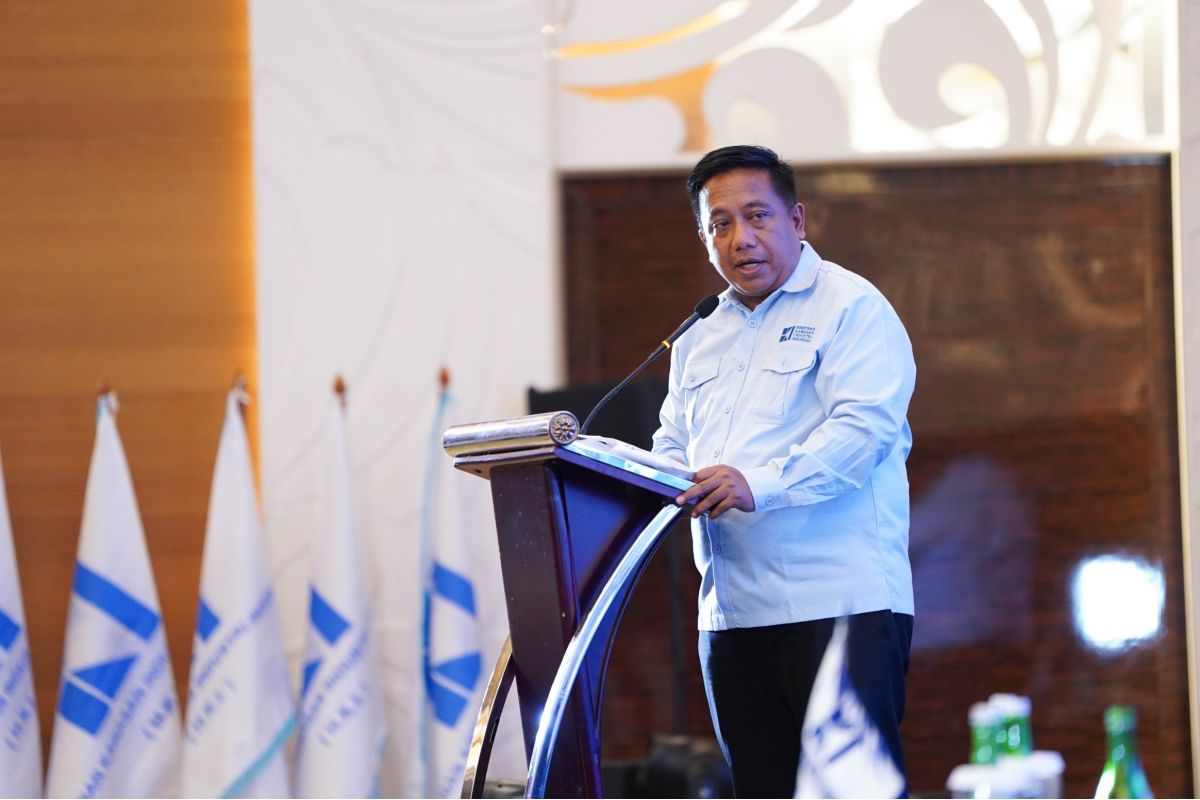
The General Chair of HKI, A Ma’ruf Maulana, stated that the next challenge is not merely chasing installed capacity, but ensuring that the energy produced reaches users and provides added value to the economy.
In an official statement confirmed in Jakarta on Friday, HKI welcomed the 100 GWp solar power programme launched by President Prabowo Subianto as part of the strategy towards national energy independence and resilience.
“The 100 GWp target is a major step that we need to support together. From an industrial perspective, the measure of success is not just how many gigawatts are successfully installed, but how much energy can truly be distributed and used productively. Therefore, generation, grid, storage, and demand need to grow as a single system,” said Ma’ruf.
According to Ma’ruf, solar energy production, which fluctuates according to time and weather conditions, requires electrical system flexibility through the strengthening of transmission and distribution, Battery Energy Storage Systems (BESS), network digitalisation, and load management.
“Generation, grid, storage, and demand have different development speeds, yet ultimately they must all converge. If one element moves much slower, a bottleneck will emerge. The challenge is how these four elements can be planned in parallel from the beginning,” he added.
HKI believes that industrial estates can play a strategic role on the demand side because they aggregate large-scale electricity needs within concentrated areas. Load profiles, expansion plans, and clean energy requirements in industrial estates are considered relatively easier to map and aggregate.
“Industrial estates are essentially demand hubs. We know the tenants, their electricity needs, and their expansion plans; we can even project their growth requirements. This information can be aligned with renewable energy planning so that supply and demand meet from the planning stage,” he said.
HKI also maintains that renewable energy development needs to be increasingly integrated with the industrial growth map. This includes the location of industrial growth centres, electricity demand projections, grid readiness, and clean energy needs within the planning of the government, PLN (the state electricity company), local governments, industrial estate managers, and business actors.
In the 2025–2034 Electricity Supply Business Plan (RUPTL), PLN plans to construct 47,758 kilometres of transmission lines and add energy storage systems of 10.3 GW, consisting of 6 GW of pumped storage and 4.3 GW of BESS.
Ma’ruf emphasised that the success of the programme will ultimately not be measured solely by the installed generation capacity.
“When generation, grid, storage, and demand are designed as a single ecosystem, the energy transition can proceed alongside industrialisation, strengthening competitiveness, attracting quality investment, and leading Indonesia towards an increasingly independent and low-carbon energy system,” Ma’ruf concluded.