
Hizbullah Reportedly Receives US$200 Million from Iran to Aid Displaced Lebanese
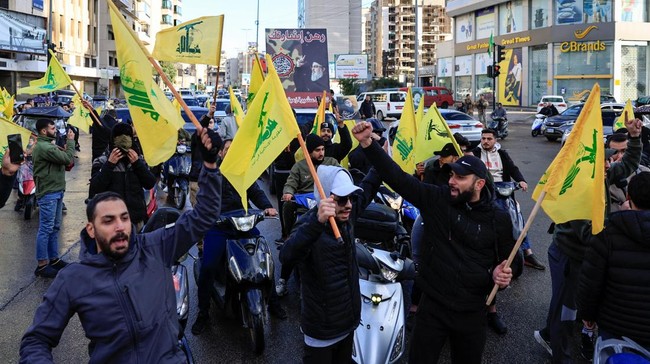
Hizbullah reportedly received US$200 million, or roughly Rp3.5 trillion, from Iran to help Lebanese residents who lost their homes in this year’s war with Israel.
Reuters reported on Thursday (8 October 2026), citing two sources with direct knowledge of the transfer, that the aid would be the first major support Hizbullah has provided to the supporters most affected by the war.
The United States government has rejected the claim. A spokesperson for the US State Department, Tommy Pigott, said the money “does not exist” and accused Hizbullah of trying to save face by fabricating a story about cash arriving from Iran.
A spokesperson for the US Treasury Department also said Iran had “run out of money and ways to move money”, and stressed that Tehran “does not have the money to fund its terror campaign”.
According to the two sources, Hizbullah received the funds last month amid intensifying US economic pressure on Iran. This has made it increasingly difficult to channel money from Tehran to its allies in Lebanon.
The intermediaries who carried the money reportedly charged a 20% fee, reflecting the high risk of dealing with Hizbullah. One source said this rate was four times the normal cost.
When asked for comment, a Hizbullah official said some funds had indeed been secured and that plans for their distribution would be announced within the next few days. He did not explain where the money came from.
The Iranian Foreign Ministry, Iran’s permanent mission to the United Nations in Geneva, and the Lebanese government have not responded to requests for comment.
Aid for 50,000 Families
The planned initial assistance is US$3,000, or about Rp53 million, for each family. Priority will go to families whose villages have been destroyed or are inaccessible due to Israeli occupation.
One source estimated that around 50,000 families fall into this category.
Israel bombed and invaded Lebanon after Hizbullah entered the regional war in support of Iran on 2 March. The attacks forced hundreds of thousands of people from the Shia Muslim community, which forms Hizbullah’s core base of support, to leave their homes.
However, displaced families say they have received little or no help from Hizbullah so far. The armed group, founded by Iran’s Islamic Revolutionary Guard Corps in 1982, has suffered heavy blows from Israel in two wars since 2024.
The US government also designates Hizbullah as a terrorist organisation.
Pigott said Hizbullah had brought suffering to the Lebanese people while also being destroyed by the conflict. Iran, its main backer, is itself under pressure from a US blockade on its oil exports.
“The United States will continue to strangle Hizbullah’s finances through sanctions, while supporting the legitimate Lebanese government’s ability to rebuild the South,” Pigott said.
Iran has for years continued to provide financial support to Hizbullah despite heavy US sanctions. The US Treasury estimates that Tehran channelled US$1 billion to the group in the first ten months of 2025 alone.
Tehran has never publicly acknowledged funding Hizbullah. Iran’s support for proxy groups across the region has previously fuelled domestic anger against the clerical government, an issue that could become more sensitive as Iran’s economy deteriorates.
Iran had also promised additional funding to Hizbullah after Tehran reached an interim agreement with Washington in June that allowed Iran to sell its oil. Reuters reported that the deal later collapsed in July.
Since then, Washington has increased economic pressure on Iran by tightening sanctions and imposing a naval blockade to stop Iranian oil exports.
Hizbullah leader Naim Qassem said in a speech last month that his group would soon contribute to a housing project for thousands of people who lost their homes in the war.
However, he said the project would rely on “available resources and donations” without giving further details.
Hizbullah’s ability to provide social services and post-war relief has long been a key factor in sustaining support for the group. After the 2006 war with Israel, Hizbullah quickly distributed large cash payments to affected residents and moved rapidly to rebuild the southern suburbs of Beirut, its stronghold.
This time, however, the situation is different. So far, there are few signs of large-scale reconstruction.
Lebanese Prime Minister Nawaf Salam said last month that the total cost of rebuilding after the two wars since 2024 could exceed US$27 billion.
War Drains Hizbullah’s Funds
The two sources did not explain in detail how the money entered Lebanon.
One source said Hizbullah now struggles to move money through financial companies that it previously used for such transactions.
Firms based in Iraq and Dubai reportedly can no longer be used, while companies in Turkey are also under pressure.
Hizbullah’s opponents believe money is now the group’s “oxygen”, the source said.
Despite these difficulties, Hizbullah reportedly has not stopped paying its fighters or the families of members killed in battle.
The war has also caused heavy losses for the Shia Muslim community in Lebanon, Hizbullah’s core base. Israel has levelled a number of villages across the wide area it controls in southern Lebanon, citing the need to protect northern Israel from Hizbullah attacks.
According to Lebanon’s Ministry of Health, Israeli attacks have killed more than 4,300 people in Lebanon since 2 March. The data does not specify how many of the victims were combatants.
Hizbullah has not disclosed how many of its members have died in the war. Reuters reported on 4 May that several thousand Hizbullah fighters had been killed during the conflict.
Source: jawawa.id (https://jawawa.id/newsitem/hizbullah-reportedly-receives-us-200-million-from-iran-to-aid-displaced-lebanese-1791442610)
Originally published by CNBC Indonesia (https://www.cnbcindonesia.com/news/20261008124911-4-774394/hizbullah-disebut-terima-rp35-t-dari-iran-untuk-bantu-warga-lebanon), translated from Indonesian