
History of the Special Women's KRL Carriage and Why It Is Positioned at the End
A train accident involving the Argo Bromo Anggrek and a KRL occurred on Monday night (27/4/2026). On Tuesday (28/4/2026), KAI reported 15 fatalities. As of Wednesday (29/4/2026), the death toll has risen to 16 people.
This incident has drawn significant attention, especially after the Minister for Women’s Empowerment and Child Protection (PPPA), Arifah Fauzi, proposed placing the women’s-only KRL carriages in the middle of the train. According to her, this proposal follows up on the accident in East Bekasi.
“But with this incident, we propose that if possible, the women’s carriage should be placed in the middle,” Arifah told reporters after visiting victims at Bekasi City Hospital on Tuesday (28/4/2026).
However, this proposal has been deemed inappropriate by several parties.
Regarding the Proposal to Relocate the Women’s Carriage
Coordinating Minister for Infrastructure and Regional Development, Agus Harimurti Yudhoyono (AHY), stressed that the primary focus is not on gender differences, but on the safety of all passengers. He also assured that further evaluations will be conducted.
“Coincidentally, the rearmost carriage is the women’s special carriage. There is certainly concern about why the most vulnerable group, for whom we have specially provided the carriage all this time, ends up facing the highest risk,” AHY told reporters after visiting victims at Bekasi City Hospital on Tuesday (28/4/2026). “This is also something we will continue to evaluate, but clearly, men and women are the same; no one should become a victim in any incident,” he added.
He further stated that the government will focus on improving the transportation system to prevent similar incidents from recurring. “So, what we are focusing on is not women versus men, but how to make the train transportation system and other public transport systems safe, secure, providing a sense of safety, comfort, and with safety first truly not just a slogan but something we can implement well,” he said.
Discussions about the women’s-only carriage have also been widely debated in society, particularly on social media. So, what is its history in Indonesia, and why is it positioned at the front or rear of the train?
History of the Women’s Special Train Carriage
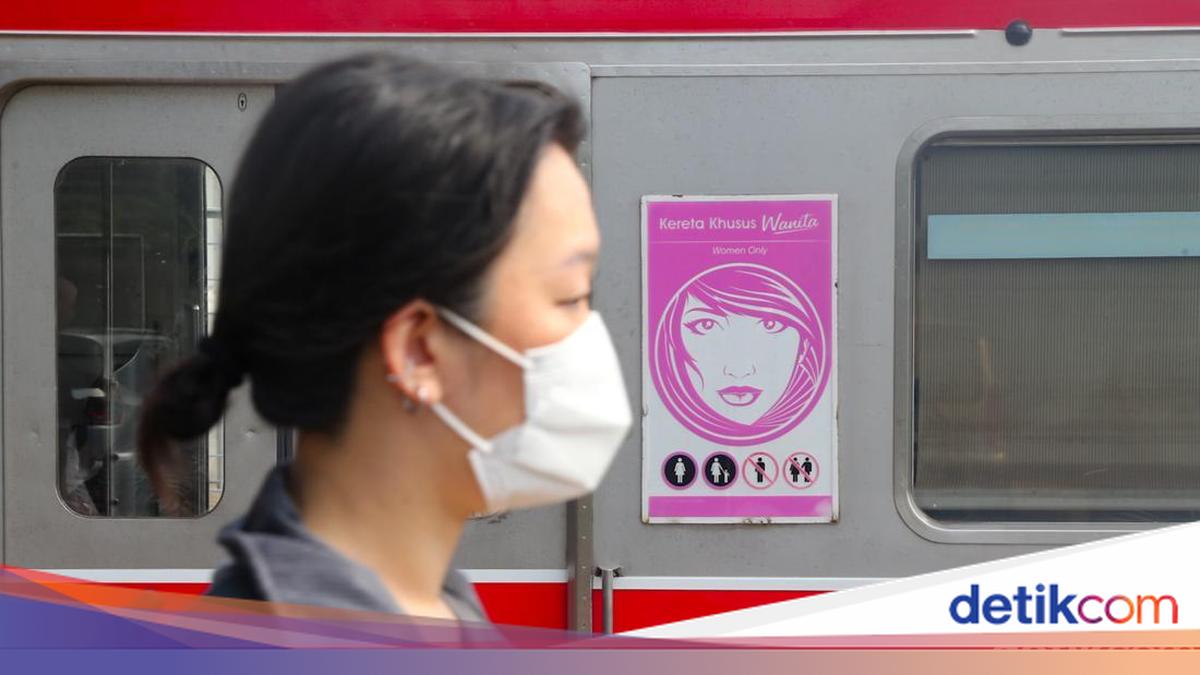
According to records from the Directorate General of Railways (DJKA) of the Ministry of Transportation (Kemenhub), the first women’s-only KRL carriage was inaugurated on Thursday, 19 August 2010. The inauguration was conducted by the then Minister of Transportation, Freddy Numberi, on the KRL series 7000 at the Depok Depot in West Java, which was then dispatched to Gambir Station in Jakarta.
“The operation of the Women’s Special Train is a new breakthrough as a manifestation of railway transportation services to the public using trains,” the Minister said at the time, as reported on Thursday (19/8/2010).
With the separation of spaces between male and female passengers through the launch of the Women’s Special Train (KKW), it is hoped that women will feel safe and comfortable when using the KRL, thereby attracting more women who previously used other modes of transport to travel by train.
The presence of this carriage aims to provide protection as well as a sense of safety and comfort for female workers and those travelling with young children (up to 10 years old), especially from the risk of sexual harassment on the train.
Operationally, the women’s-only carriage is placed at the very front and very rear of a train set, and marked specially.
Why Is the Women’s Carriage Positioned at the End?
KAI President Director Bobby Rasyidin emphasised that passenger safety is the top priority without discriminating by gender. He explained that placing the women’s-only carriage at the front and rear also considers aspects of comfort, ease of access, and security because of its proximity to staff.
“We also need to emphasise that safety is our top priority. We have zero tolerance for violating or reducing the safety level for customers using PT Kereta Api Indonesia services, whether male or female,” he said during a press conference at East Bekasi Station in West Java on Wednesday (29/4/2026).
He added that the separation of carriages is done to prevent harassment, facilitate access for female passengers, and enhance security.
“So far, we have implemented this separation for several reasons: first, to prevent harassment. Second, to provide ease of access for women. Third, to provide better security because it is closer to the guards at the ends,” he stated.
Source: jawawa.id (https://jawawa.id/newsitem/history-of-the-special-womens-krl-carriage-and-why-it-is-positioned-at-the-end-1777452690)
Originally published by detikcom (https://news.detik.com/berita/d-8466900/sejarah-gerbong-krl-khusus-wanita-dan-kenapa-posisinya-di-ujung), translated from Indonesian