
History of KPR: Once Only 15 Years, Now Up to 40 Years
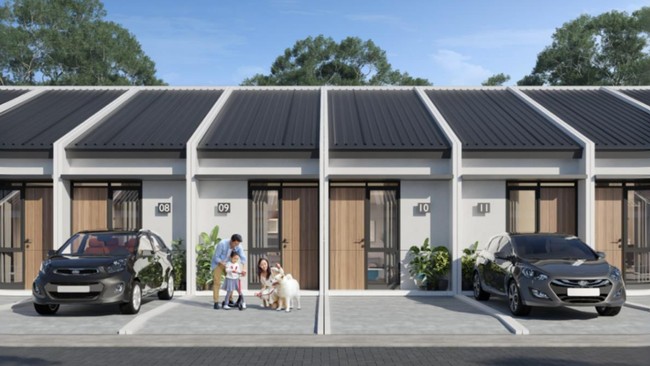
Home ownership credit, or KPR, in Indonesia has undergone significant development. Home loan tenors are getting longer.
In 2010, most major banks still offered a maximum tenor of around 15–20 years, including PT Bank Tabungan Negara (BTN), Bank Mandiri, PT Bank Negara Indonesia (BNI), PT Bank Central Asia (BCA), OCBC, Bank Permata and CIMB Niaga.
Ten years later, that limit had shifted to 20–30 years. In 2026, a special KPR programme emerged with a term of up to 40 years.
Extending the tenor can reduce monthly instalments and open access to home ownership to more people. However, a longer tenor also means customers potentially pay a larger accumulated interest over the credit period.
Comparison of Bank KPR Tenors Since 2010
The following table shows the longest KPR tenor documented at each bank. All figures are expressed in years.
Development of Major Bank KPR Tenors
In 2010, major bank KPR tenors were still concentrated in the 15–20 year range. BCA, BRI, Bank Mandiri, BTN, OCBC and PermataBank were at a limit of around 15 years. BNI and CIMB Niaga already had products offering tenors of up to 20 years.
Entering 2020, KPR competition began to shift towards longer tenors. BCA and PermataBank were in the 20-year range. BRI, Bank Mandiri, CIMB Niaga and OCBC reached 25 years. Meanwhile, BNI and BTN were already offering tenors of up to 30 years.
BRI’s figure of 25 years in 2020 includes a special programme for civil servants. As such, that tenor was not necessarily available to all groups of KPR applicants.
In 2026, the relatively common maximum tenor at major banks is in the 25–30 year range. BCA, BRI, CIMB Niaga and OCBC reach 25 years. BNI, Bank Mandiri and PermataBank offer tenors of up to 30 years.
BTN is the exception, with a KPR programme of up to 40 years. That tenor is prepared for a special transit-oriented housing programme in the Manggarai area. BTN’s regular KPR products generally still have a maximum limit of around 30 years.
The figures in the table show the longest tenor of a documented KPR product or programme. They are not the average tenor chosen by customers. Final approval is still influenced by age, income, type of employment, property value and the bank’s credit analysis.
Comparison of BTN KPR Tenors
BTN began disbursing the first KPR in Indonesia in 1976. However, the maximum tenor figure that can be found explicitly in government documents begins with the KPR programme of late 1978.
The Journey of BTN KPR Tenors
BTN disbursed its first KPR on 10 December 1976 for house purchases in Semarang and Surabaya. Archives on that first disbursement explain the number of houses and the credit value, but do not explicitly state the maximum tenor of the contract.
A clearer tenor figure is found in late 1978. At that time, BTN KPR for simple houses built by Perumnas had a term of between 5 and 20 years. Meanwhile, purchases of houses built by private companies had a maximum tenor of around 15 years. Because the table uses the highest tenor, BTN’s figure for 1978 is placed at 20 years.
In 1980, the highest tenor limit for BTN KPR still reached 20 years. That tenor was aimed mainly at financing Perumnas housing for low- and middle-income communities. The 20-year KPR scheme was still found towards 1990 and in a number of BTN products in the early 2000s.
BTN’s figure then appears to fall from 20 years in 2000 to 15 years in 2010. That decline is not a typographical error, nor does it mean BTN stopped being able to provide long-term credit.
In 2010, the government changed the housing subsidy system to the Housing Finance Liquidity Facility, or FLPP. In that initial scheme, the government provided around 60% of the funding source, while the remainder came from banks.
The placement of funds was made to match the tenor of the KPR provided to customers. The tenor limit used in the early stage was set at a maximum of 15 years.
BTN disbursed that scheme through KPR BTN Sejahtera Tapak and KPR BTN Sejahtera Susun. The interest rate was fixed for the life of the loan, but the tenor was limited to a maximum of 15 years. In roughly the same period, KPR BTN Platinum, as the main non-subsidised product, also had a maximum tenor of 15 years.
Thus, the decline in 2010 occurred because of changes in product design and funding schemes. BTN previously had certain programmes with tenors of up to 20 years, but the main products launched and most clearly documented in 2010 used a 15-year limit.
The FLPP tenor later developed again to 20 years. That change occurred after the government and banks adjusted the funding structure, programme provisions and instalment targets for low-income communities.
In 2020, BTN began offering a number of KPR programmes with tenors of up to 30 years. That extension was mainly used to reduce monthly instalments and reach younger home buyers.
In 2026, BTN took KPR tenors to a new level through a programme of up to 40 years for transit-oriented housing in the Manggarai area. That scheme is the longest tenor ever offered by a major bank in Indonesia.
The 40-year tenor is still a special programme and has not become a provision for all BTN KPRs. BTN’s regular KPR products generally remain at a maximum limit of around 30 years. As such, the 40-year figure is more accurately read as a new limit being applied on a limited basis, rather than as a standard for all BTN customers.
Source: jawawa.id (https://jawawa.id/newsitem/history-of-kpr-once-only-15-years-now-up-to-40-years-1787899858)
Originally published by CNBC Indonesia (https://www.cnbcindonesia.com/research/20260828111054-128-763054/sejarah-kpr-dulu-cuma-15-tahun-sekarang-bisa-sampai-40-tahun), translated from Indonesian