
Historian on Demolition of Historic Houses in Lempuyangan: Was There No Other Solution?
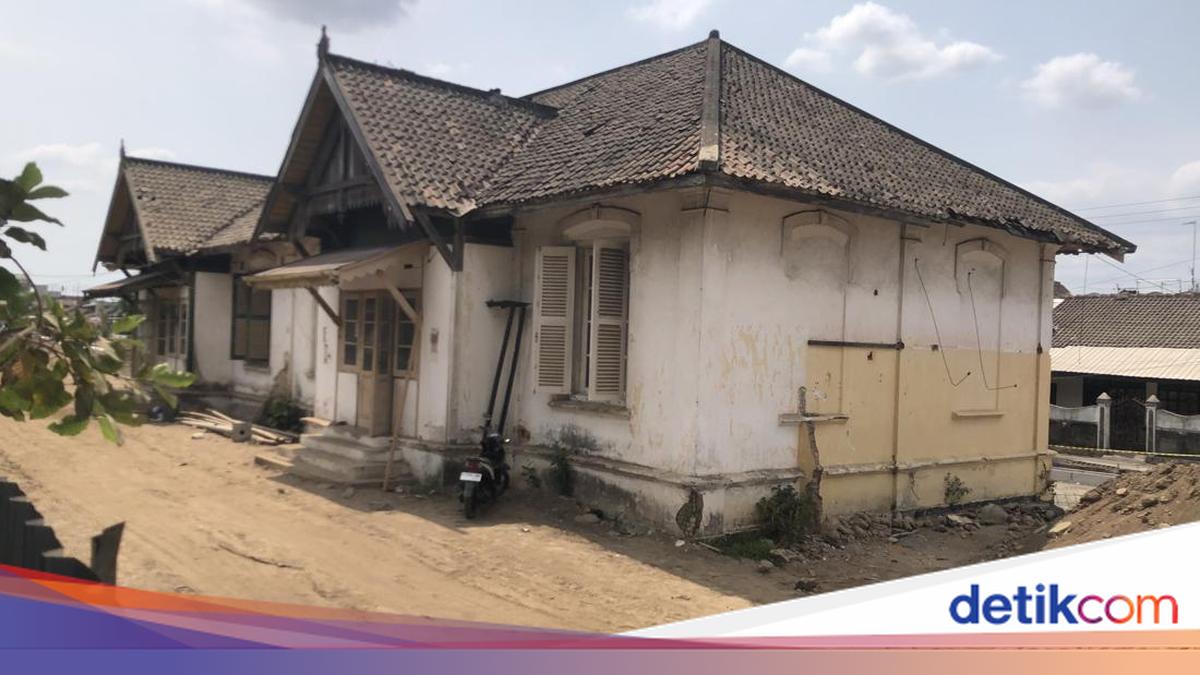
PT KAI has demolished 11 of the 13 historic houses opposite Lempuyangan Station in Yogyakarta as part of a site improvement project. Kandang Kebo, an independent community group focused on cultural heritage and heritage buildings in Yogyakarta, has expressed regret over the demolitions and raised concerns about lax regulations governing the designation of buildings as cultural heritage.
“We are very disappointed. Was there no other solution? Sometimes we don’t know what is happening in the process, and then suddenly a building is demolished. We are left shocked when it has already been torn down,” Kandang Kebo chair Maria Tri Widayati told detikJogja by telephone on Saturday (10 October 2026).
She said demolition should be chosen only as a last resort when dealing with historic buildings.
“Demolishing a building is the last solution, when nothing can be done and there are no other alternatives. Preserving cultural heritage buildings should remain obligatory, in my view,” she added.
Maria maintained that the 13 old houses south of the station should have been classified as cultural heritage buildings. PT KAI has recently said, however, that the houses did not have that status, after checking with Yogyakarta City’s Culture Office.
“Clearly they qualify. They meet the minimum age criterion, as they are more than 50 years old. They are significant because they once served a purpose and were connected with transport. Their knowledge value, architecture and history all give them importance,” she said.
Maria, who teaches heritage and cultural tourism at Sanata Dharma University, added that buildings that should have cultural heritage status were increasingly losing out to present-day needs.
She acknowledged that the needs of the present had grown substantially, but said efforts to find alternative ways of meeting those needs were often skipped.
“As heritage conservationists, we lose out to arguments about meeting current needs. From what I have read in the news, there is a great need to accommodate passenger overflow. And there is also a need to address the fact that people can be reluctant to pass through the area because of traffic congestion,” she said.
“We think the regulations are too lax. Because the buildings are not officially designated as cultural heritage, they are treated differently, even though the law says that buildings not yet designated as cultural heritage should be treated in the same way,” Maria added.
Maria said conservationists recognised that they had little power to oppose the demolition of historic buildings because of regulatory constraints. The designation process must begin with an application submitted directly by the building’s owner.
She said regulations also prevent outside parties from directly stopping the demolition of old buildings, including the former staff residences.
“We can’t directly prevent it; the regulations put us at a disadvantage. The relevant agency makes the decision after conducting its assessment. It decides whether demolition is allowed, and in this case it was permitted,” Maria said.
“We don’t know whether an assessment was carried out, because the buildings had not been designated as cultural heritage. The Cultural Heritage Expert Team (TACB) presumably had not conducted an assessment,” she added.
Despite this, Maria said she was grateful that two historic houses had survived the Lempuyangan project. She hoped PT KAI had complete documentation recording all the buildings and the site’s condition before the demolitions.
Maria also urged the relevant agency to grant cultural heritage status to the two remaining houses as soon as possible.
“If possible, we should jointly urge the City Culture Office to designate them as cultural heritage without delay. The problem is that even if we submit a study for a recommendation, we can do nothing if the owner does not give permission. That is the most difficult part,” she said.
PT KAI had earlier demolished a dozen or so old houses in front of Yogyakarta’s Lempuyangan Station. Of the 13 former company houses for railway officials, only two remain standing.
“Of the 13 company houses, 11 have been demolished and two have been retained in line with the guidance and recommendation of Yogyakarta City’s Culture Office. They are actually two houses joined as a pair, which makes them look like one. The Culture Office recommended that they remain standing so that some heritage would be preserved,” PT KAI Daop 6 Yogyakarta public relations manager Feni Novida Saragih told detikJogja on Friday (9 October).
Source: jawawa.id (https://jawawa.id/newsitem/historian-on-demolition-of-historic-houses-in-lempuyangan-was-there-no-other-solution-1791629429)
Originally published by detikJogja (https://www.detik.com/jogja/berita/d-8701091/sejarawan-soal-perobohan-rumah-kuno-di-lempuyangan-apa-tak-ada-solusi-lain), translated from Indonesian