
Historian: China's push towards green development 'unstoppable'
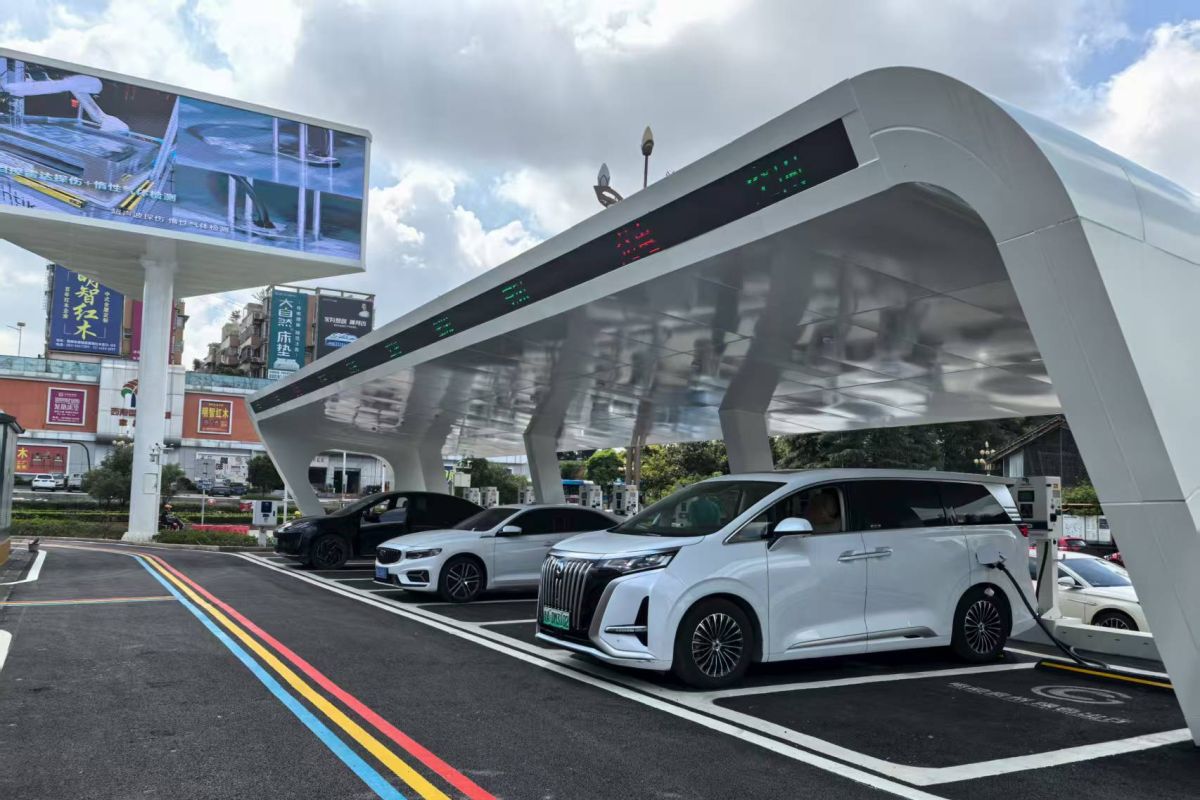
Sydney, Australia (ANTARA) — Standing on a busy street corner in a Chinese city, in a near-silence broken only by electric vehicles gliding past rows of trees, was an “unusual experience” for Australian historian John Queripel, who has visited China five times over the past decade.
That experience changed his assumptions about how a modern metropolitan city should sound and look.
“It is truly a transformation, an acknowledgement of how seriously China is confronting the challenges posed by the global ecological crisis,” said Queripel, who is also a writer and social commentator based in Newcastle, Australia.
He frequently shares his views on China’s green development through the articles he writes.
Noting that China has experienced rapid economic development over the past half-century, he said such growth has often come at the cost of environmental damage.
“However, in the last decade, this has changed drastically as China has increasingly recognised the importance of a good natural environment as the foundation for meeting human needs,” he said.
In Queripel’s assessment, this environmental commitment has established China as a world leader in various fields, from renewable energy development and EV production to reforestation programmes.
“On every visit to China, you are certain to see so many solar panels and wind turbines,” he said.
He added that the movement towards clean energy and a sustainable environment in China can no longer be stopped, and that the very real possibility of China becoming the world’s first electric nation, with an ever-greater share of its electricity generated from renewable sources, is an extraordinary achievement.
Another aspect that has caught his attention is that “China is gradually recognising the importance of the power of past traditions in shaping new things,” he wrote in a recently published opinion article.
“China’s 5,000-year tradition is increasingly influencing the making of government policy, and a respect not only for Chinese traditions but for all traditions has become the foundation of the Global Civilisation Initiative,” Queripel wrote.
“During my visits to China, I have been fortunate to experience some of this first-hand, from staying in a hutong in Beijing and spending time in Pingyao to visiting various historic sites, including the Terracotta Warriors, the Yungang Grottoes and the Hanging Temple of Hengshan. Moreover, modern Chinese films and works of art are also increasingly referencing China’s past,” he said.
When he first visited China in 2016, Queripel was struck by “a public transport system that is extremely efficient and covers a vast area, especially its high-speed rail network, which continues to expand and has now reached around 50,000 kilometres”.
“The length of that high-speed rail network exceeds the combined total of all similar networks in the world. It is phenomenal. For people my age in China, the changes must feel like culture shock. The transformation is immense,” the 72-year-old told Xinhua.