
Hiroshima calls for nuclear weapons abolition on 81st anniversary of atomic bombing
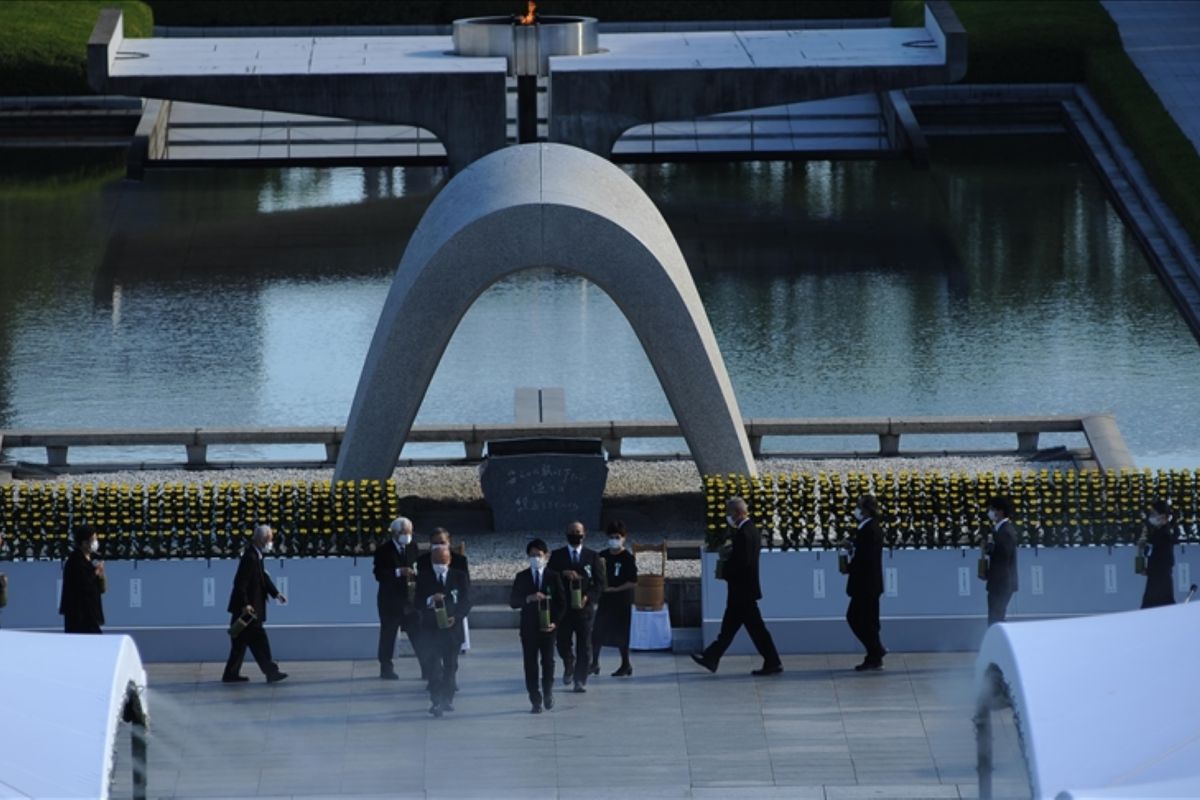
Hiroshima on Thursday called on world leaders to abolish nuclear weapons amid rising global tensions, coinciding with the 81st anniversary of the atomic bombing of the city by the United States.
The city of Hiroshima lamented that nuclear weapons are still used by major powers as a “tool of intimidation” in military conflicts.
“Dismissing the inhumanity of nuclear weapons and accepting the use of force in pursuit of one’s own prosperity risks triggering a cycle of retaliation that could ultimately lead to the next Hiroshima or Nagasaki,” said Hiroshima Mayor Kazumi Matsui in the Peace Declaration read at the annual memorial ceremony.
The commemoration came after the latest Review Conference of the Nuclear Non-Proliferation Treaty (NPT) failed to produce a consensus document, and amid ongoing conflicts, including the US-led war against Iran and Russia’s invasion of Ukraine.
“I believe you (policymakers) understand that the use of nuclear weapons in any form would cause enormous damage to humanity, and that the issues of non-proliferation and nuclear disarmament can only be resolved through multilateral efforts,” he said. “You are certainly aware of the importance of setting an example.”
A moment of silence was observed at 8.15 a.m. local time, the exact moment the uranium bomb was dropped by the American bomber Enola Gay and detonated over Hiroshima on 6 August 1945. The attack is estimated to have killed around 140,000 people by the end of that year.
Debate has also intensified over the need to review Japan’s three non-nuclear principles — not producing, not possessing, and not permitting nuclear weapons on its territory — amid the deteriorating regional security environment.
In her speech, Japanese Prime Minister Sanae Takaichi affirmed that Japan remains committed to the three non-nuclear principles. As the only country to have suffered devastation from a nuclear attack in war, Japan has a mission to continue striving for a world free of nuclear weapons.
In May, the NPT Review Conference, held every five years, ended without producing a consensus document for the third consecutive time after a month of deliberations in New York.
Matsui attributed the conference’s failure to “political leaders blaming one another to justify their own actions.” According to him, such words and actions “shake the foundations of global peace and stability while ignoring the obligations set out in the NPT.”
Takaichi said that although the conference demonstrated how difficult it is to achieve the abolition of nuclear weapons, “we must not stop this journey.”
Amid rising international tensions, United Nations Secretary-General Antonio Guterres warned in a statement that “the norms and safeguard mechanisms that have helped prevent nuclear catastrophe are now under strain” and that “the threat of using nuclear weapons is once again being voiced in the name of power and coercion.”
In the statement read by UN Under-Secretary-General and High Representative for Disarmament Affairs Izumi Nakamitsu, Guterres called on the world to choose “dialogue over division, cooperation over confrontation, and shared security over narrow interests.”
As the number of hibakusha, or atomic bomb survivors, continues to decline, Matsui urged younger generations to make “the abolition of nuclear weapons common sense in the international community” and to “help create an environment in which policymakers can no longer rely on nuclear deterrence strategies.”
Matsui also urged Japan to participate as an observer in the Review Conference of the Treaty on the Prohibition of Nuclear Weapons to be held in November.
Japan has so far not joined the Treaty on the Prohibition of Nuclear Weapons because it still relies on the US nuclear umbrella as part of its deterrence strategy.
Three days after the world’s first nuclear attack devastated Hiroshima, a second atomic bomb was dropped on Nagasaki in southwestern Japan. Six days later, Japan surrendered to the Allied Forces, marking the end of World War II.
According to the Hiroshima city government, the average age of officially recognised survivors of the two atomic bombings has now exceeded 86 years.
Source: jawawa.id (https://jawawa.id/newsitem/hiroshima-calls-for-nuclear-weapons-abolition-on-81st-anniversary-of-atomic-bombing-1785995928)
Originally published by Antara (Indonesian) (https://www.antaranews.com/berita/5682207/hiroshima-serukan-hapus-senjata-nuklir-pada-peringatan-81-thn-bom-atom), translated from Indonesian