
HIPMI Urges Private Sector Partnerships in State-Owned Construction Company Consolidation
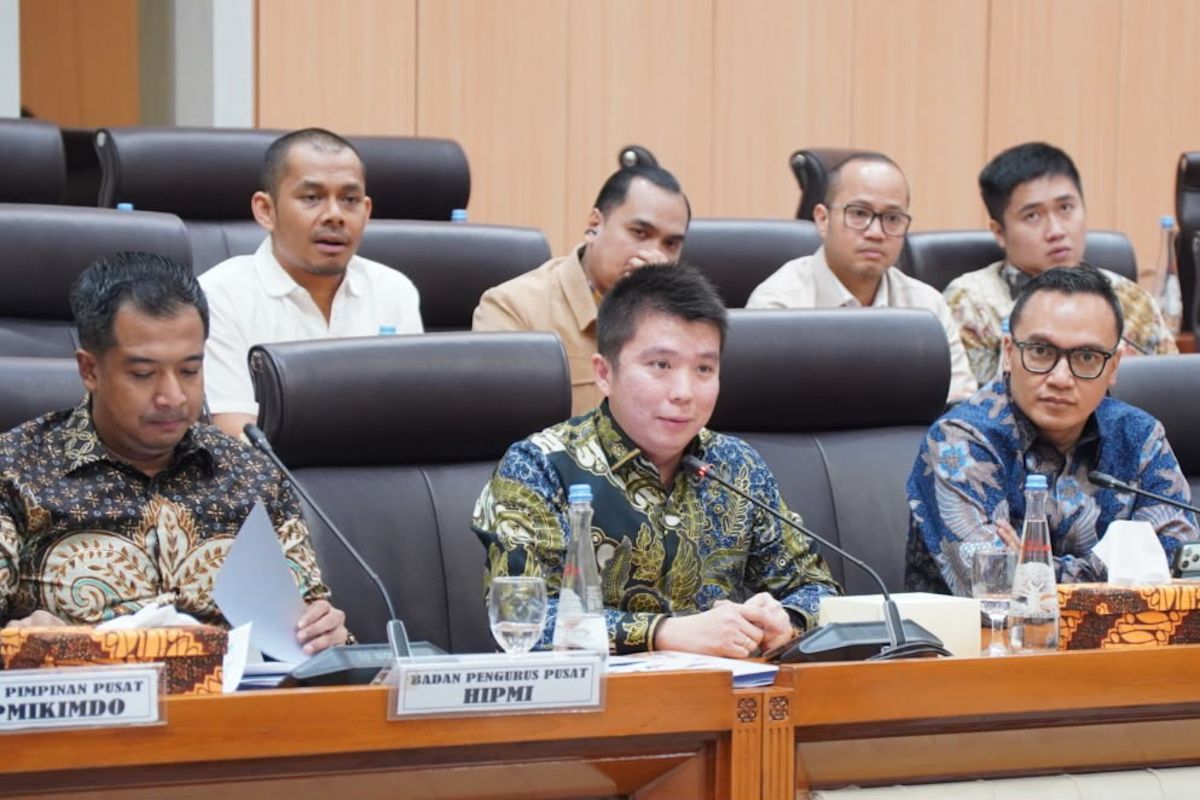
Jakarta (ANTARA) - The Executive Board of the Indonesian Young Entrepreneurs Association (HIPMI) is encouraging the consolidation of state-owned construction enterprises to strengthen partnerships with private entrepreneurs, aiming to make the national construction industry healthier, more competitive, and sustainable.
HIPMI Secretary General Anthony Leong stated that the association supports the government’s steps, alongside Danantara, to undertake the rehabilitation and consolidation of BUMN Karya.
“This step is essential to build state construction companies that are healthier, more efficient, professional, and possess strong financial capabilities,” Anthony confirmed in Jakarta on Monday (5/1).
According to him, the restructuring of BUMN Karya should be viewed as a momentum to improve the entire national construction industry ecosystem, rather than just merging several companies.
“HIPMI supports the rehabilitation of BUMN Karya. Indonesia needs healthy and strong state-owned construction companies to execute strategic projects,” he said.
Anthony noted that the rehabilitation process must not stop at mergers or balance sheet improvements, but must provide tangible benefits for private contractors, regional entrepreneurs, suppliers, micro, small, and medium enterprises (MSMEs), and the entire construction industry supply chain.
Danantara is currently conducting a restructuring of seven state-owned construction companies, namely PT Hutama Karya (Persero), PT Waskita Karya (Persero) Tbk, PT Wijaya Karya (Persero) Tbk, PT Adhi Karya (Persero) Tbk, PT PP (Persero) Tbk, PT Brantas Abipraya (Persero), and PT Nindya Karya (Persero).
According to Anthony, one aspect that requires attention during the rehabilitation process is project continuity and the certainty of payments to vendors and subcontractors.
For large companies, Anthony continued, payment delays might still be manageable. However, for regional contractors and small suppliers, a delay of several months could immediately disrupt working capital, salary payments, and even business continuity.
“Therefore, restructuring must simultaneously maintain the health of the entire supply chain,” he said.
Anthony believes that state-owned enterprises (SOEs) can focus more on strategic, complex projects that require large-scale financing and technological capabilities.
Meanwhile, the space for national private contractors and regional entrepreneurs needs to be expanded, both as main contractors on specific projects and through partnerships and supply chains.
“It must not happen that increasingly larger SOEs actually shrink the space for national entrepreneurs. Healthy SOEs should act as locomotives that attract more private companies into the project chain, rather than operating in isolation,” Anthony emphasised.
He noted that infrastructure spending has a significant multiplier effect on the economy, as it drives industries such as cement, steel, heavy equipment, transportation, engineering services, construction, and regional labour.
HIPMI encourages that the success of the BUMN Karya rehabilitation should not only be measured by reduced debt or improved financial statements.
“The measure of success must be broader: whether the companies become healthy, whether projects proceed on time, whether vendors are paid well, whether the involvement of national entrepreneurs increases, and whether more jobs are created,” said Anthony.
He added that the consolidation process must also be accompanied by strengthened governance, discipline in project selection, and the use of technology to increase productivity and efficiency within the construction industry.
In his view, healthy BUMN Karya will instill greater confidence in banks, investors, business partners, and the market.
“If this restructuring is carried out well, we are not just resolving past issues, but building a new foundation for a more competitive Indonesian construction industry,” Anthony concluded.