
Hipmi Proposes KUR Ceiling Increase to Rp2 Billion
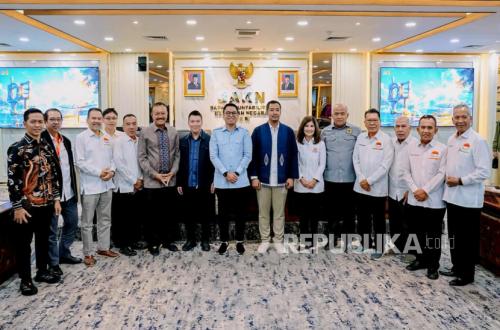
The Central Executive Board of the Indonesian Young Entrepreneurs Association (BPP Hipmi) has proposed increasing the ceiling for People’s Business Credit (KUR) from Rp500 million to Rp2 billion. The proposal is considered crucial to accelerate the growth of micro, small, and medium enterprises (MSMEs) so they can upgrade and expand their contribution to the national economy.
The proposal was delivered by the elected Chairman of BPP Hipmi, Ade Jona Prasetyo, during a Public Hearing Meeting (RDPU) with the State Financial Accountability Agency (BAKN) of the House of Representatives (DPR RI). The meeting, also attended by the Indonesian Chamber of Commerce and Industry (Kadin) and the Association of Independent Micro, Small, and Medium Enterprises of Indonesia (Apmikimmdo), took place at the Parliament Complex in Jakarta on Monday.
The meeting was chaired by BAKN DPR Deputy Chairman Herman Khaeron, accompanied by Andreas Eddy Susetyo and M Endipat Wijaya. Jona attended alongside Kadin Indonesia Deputy Chairman Anthony Leong.
Jona stated that Hipmi currently has around 30,000 members spread across the central board and 38 regional boards. He noted that the majority of Hipmi members are MSMEs who still face challenges in accessing financing to develop their businesses. As an organisation of young entrepreneurs, Hipmi also encourages each regional board to mentor at least 100 MSMEs. However, the limited KUR ceiling is considered a barrier for business actors to grow larger.
“In our view, Rp500 million is not relevant. How can they upgrade if their business is only given KUR of Rp500 million,” Jona said. According to him, raising the KUR ceiling to Rp2 billion would provide greater room for MSMEs to increase business capacity, expand markets, and create new jobs. Jona assessed that this step is also in line with the government’s efforts to strengthen the middle class and broaden economic equality.
“Don’t let the rich get richer, but we must make the middle class move up. Therefore, we suggest that KUR become Rp2 billion,” he stated. He explained that MSMEs play a vital role in the national economy, contributing more than 60 percent to the Gross Domestic Product (GDP) and absorbing over 90 percent of the national workforce. For this reason, the existence of KUR is a strategic instrument to maintain the growth of this sector. Jona noted that the current ceiling limitation forces many business actors to switch to commercial credit with higher costs when their capital needs increase.
During the hearing, Andreas Eddy Susetyo also highlighted the effectiveness of the KUR programme, which has been running for 17 years. He said the programme’s contribution to strengthening the MSME sector still needs improvement. Andreas noted several points requiring government attention, including the validity of KUR recipient data, the low number of micro-enterprises graduating to small enterprises, financing for sectors not yet reached by banks, business mentoring, and optimising the role of guarantee companies. According to Andreas, KUR is an important government intervention instrument to drive economic growth and strengthen productive business sectors, so continuous evaluation of the financing scheme is necessary to ensure its benefits are felt by business actors.