
Hipmi: Businesses Remain Optimistic, Economic Agenda Must Continue Without Interruption
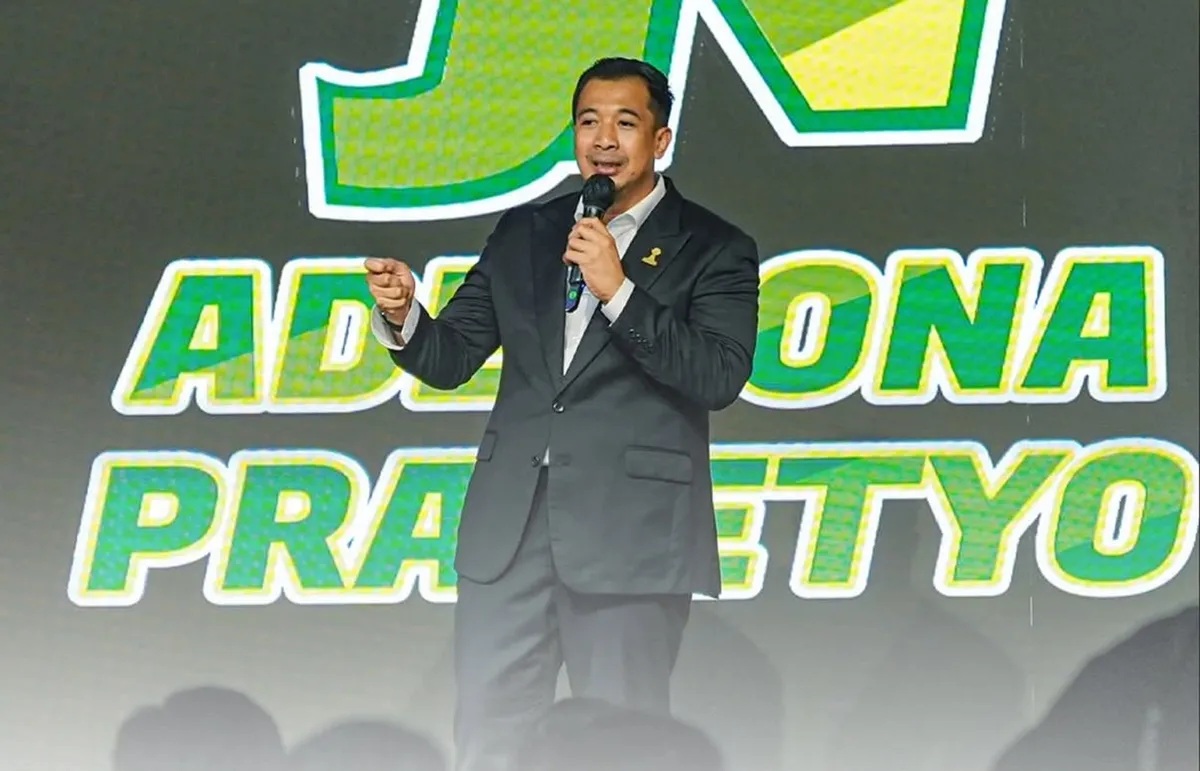
Jakarta, benang.id – Businesses remain optimistic about the national economy following Gibran Rakabuming Raka’s resignation as Vice-President of the Republic of Indonesia, said Ade Jona Prasetyo, chairman of the central board of the Indonesian Young Entrepreneurs Association (BPP Hipmi).
Ade Jona said the business community respected Gibran’s decision. He also praised President Prabowo Subianto and state institutions for promptly beginning the process of filling the vice-presidential post in accordance with the Constitution.
“Businesses respect Mr Gibran Rakabuming Raka’s decision. We also appreciate President Prabowo and the People’s Consultative Assembly (MPR) for ensuring that the transition proceeds in an orderly manner under the Constitution. Certainty in this process is important to maintain public and business confidence,” Ade Jona said in a statement in Jakarta on Saturday (14 November 2026).
He said the change of Vice-President was an important political development, but did not mean that economic activity and businesses should come to a halt. The government would continue under President Prabowo’s leadership, while ministries and agencies remained responsible for implementing development programmes.
Ade Jona therefore urged businesspeople to continue investing, producing, expanding and recruiting in line with their business plans. He said excessive caution and waiting could undermine economic growth momentum.
“We encourage young entrepreneurs across the regions to keep working, maintain their business activities and create jobs. The national economy must not lose momentum simply because a transition is under way in one government position,” he said.
Ade Jona said the government needed to provide certainty that priority economic policies would continue. The downstreaming agenda, food and energy security, infrastructure development, support for micro, small and medium-sized enterprises (MSMEs), the digital economy and improvements in human resources must all be pursued consistently.
He said businesses needed regulatory certainty and a predictable policy direction. Investment was usually planned over the long term, so businesses paid more attention to policy continuity than to changes in officeholders.
“Legal certainty and policy consistency are what businesses need most. As long as the government continues to function and the political process follows the rules, businesses will have a basis for continuing to invest,” he said.
On the choice of a successor, Ade Jona said he hoped the President would propose someone able to complement his leadership and begin work without an extended adjustment period. The next Vice-President should also understand the needs of businesses, workers and regional economies.
He said the next Vice-President should be able to help the President co-ordinate job creation, strengthen domestic industry, empower MSMEs and improve the competitiveness of Indonesian businesses.
“We need someone who understands that investment must lead to production and job creation. Economic growth must open up opportunities for regional businesses, MSMEs and young people to move up,” Ade Jona said.
He stressed that Hipmi did not wish to speculate about potential candidates. The choice of a nominee was the President’s prerogative, while the selection process was in the hands of the MPR. Hipmi would respect the process as long as it was conducted transparently and in accordance with the Constitution.
Ade Jona also hoped the next Vice-President would be able to communicate with a range of groups, including businesses, workers, local governments, universities and young people. This ability was needed to ensure central government policies translated into tangible economic activity in the regions.
“Indonesia is a large country with different conditions in each region. The Vice-President needs to be able to bridge central policies and regional needs so that investment and job opportunities are not concentrated in only certain cities,” he said.
Ade Jona said political stability was closely connected to business continuity. However, stability did not mean suppressing criticism and differences of opinion. Healthy stability came from respect for the law, functioning institutions and open communication.
He said he was confident Indonesia had the experience and constitutional mechanisms to manage the transition maturely. An orderly process would signal that democracy and the national economy continued to function.
“Hipmi is optimistic that President Prabowo can keep the government united. Young entrepreneurs will continue to be partners of the government in driving the economy, expanding investment, strengthening MSMEs and creating jobs,” Ade Jona concluded.
Source: jawawa.id (https://jawawa.id/newsitem/hipmi-businesses-remain-optimistic-economic-agenda-must-continue-without-interruption-1794725433)
Originally published by benang.id (https://benang.id/hipmi-dunia-usaha-tetap-optimistis-agenda-ekonomi-harus-berjalan-tanpa-jeda/), translated from Indonesian