
HIMKI: Strengthening the Craft Sector Through Creativity and Industrialisation
Jakarta (ANTARA) - The Indonesian Furniture and Craft Industry Association (HIMKI) believes that Indonesia is capable of strengthening its position and seizing economic opportunities in the global craft sector through a combination of creativity and industrialisation.
The Chairman of HIMKI, Abdul Sobur, in a statement confirmed from Jakarta on Saturday, said that the strength of the industry is supported by a developing manufacturing sector, an integrated supply chain, technical education that supports the industry, the courage to invest in technology, and a work culture that focuses on efficiency and quality.
According to him, Indonesia has significant potential to strengthen its position in the global market, given that the domestic craft sector is supported by creativity, art, design, and cultural wealth.
He said that Bandung and various creative cities in Indonesia are believed to have many creative talents, skilled craftsmen, and talented designers who can become a national economic strength.
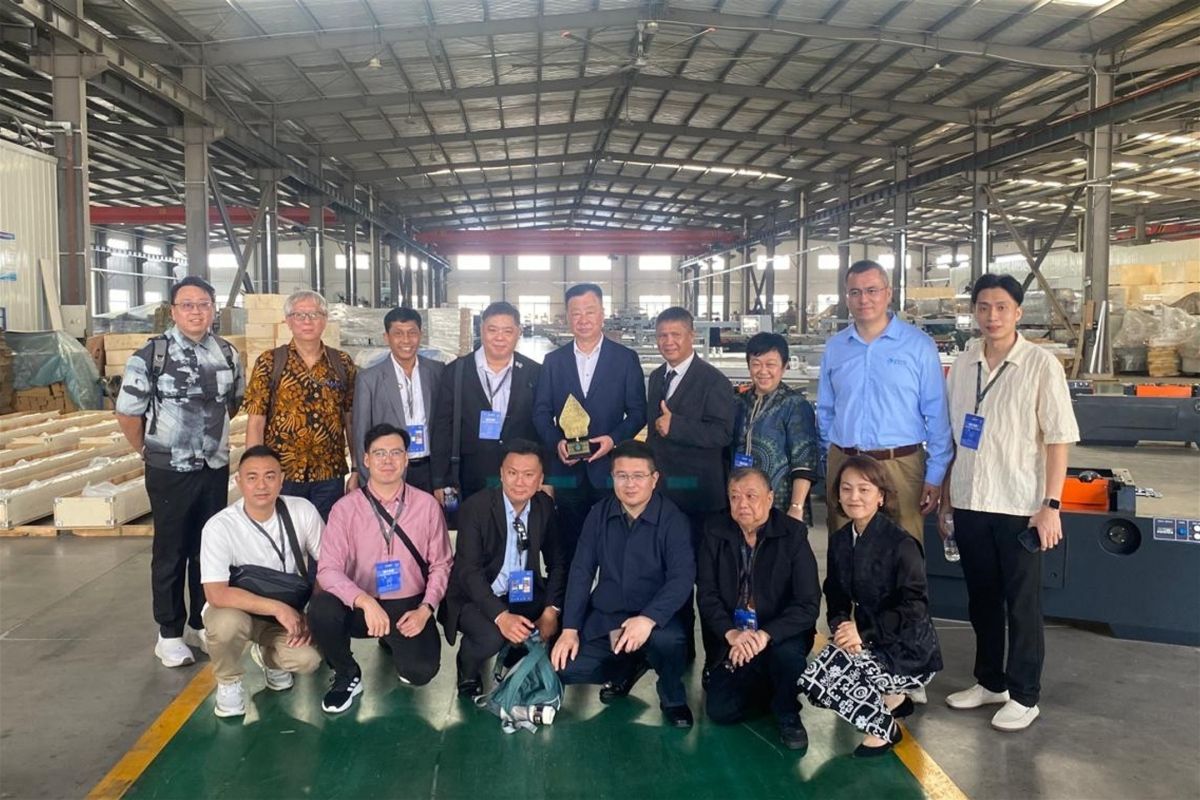
Furthermore, on Friday (15/5), he visited the furniture and woodworking machinery industrial area in Qingdao, Shandong, China, which reinforced the assessment that Indonesia can boost its national craft industry.
During his visit, Abdul Sobur attended a furniture and woodworking machinery exhibition and saw firsthand the production process of premium woodworking machinery, including high-gloss and piano finish machinery used for world-class products.
He emphasised that creativity without industrialisation will be difficult to develop into a global economic force. Conversely, industrialisation without creativity will only produce mass-produced products without character.
Therefore, according to him, the future of the Indonesian industry lies in the ability to combine creativity with industrial discipline and modern technology.
HIMKI, he said, is optimistic about Indonesia’s prospects, given that it has a large market, natural resources, a demographic bonus, cultural creativity, and a strategic geopolitical position that can be capital to strengthen the national industry.
“If Indonesian creativity is combined with the courage to industrialise and consistent policies, then Indonesia will not only be able to become a world market, but also one of the world’s creative production centres in the future,” he said.
Previously, the Ministry of Industry (Kemenperin) targeted Indonesia to become a global hub for furniture manufacturing through strengthening sustainable wood processing and improving the competitiveness of the national industry.
This sector also employs hundreds of thousands of workers and is directly connected to the global market, which is worth more than 736.21 billion US dollars.
The Ministry of Industry assessed that in the next five years, Indonesia is projected to not only increase production capacity, but also be able to lead in terms of design and sustainability.
The performance of this sector is even able to exceed national economic growth. Based on data from the Central Statistics Agency (BPS), the growth of the manufacturing industry in 2025 is recorded at 5.30 percent, higher than the national economic growth of 5.11 percent.
To increase productivity and strengthen this sector, the Ministry of Industry is implementing a restructuring program for machinery/equipment in the wood processing industry. To date, the program has facilitated 35 companies with a total reimbursement value of IDR 26.1 billion.
The program has proven to increase production efficiency by 10.70 percent, product quality by 36.28 percent, and productivity by up to 32.65 percent.