
HIMKI pushes for strengthening craft industry through integrated ecosystem
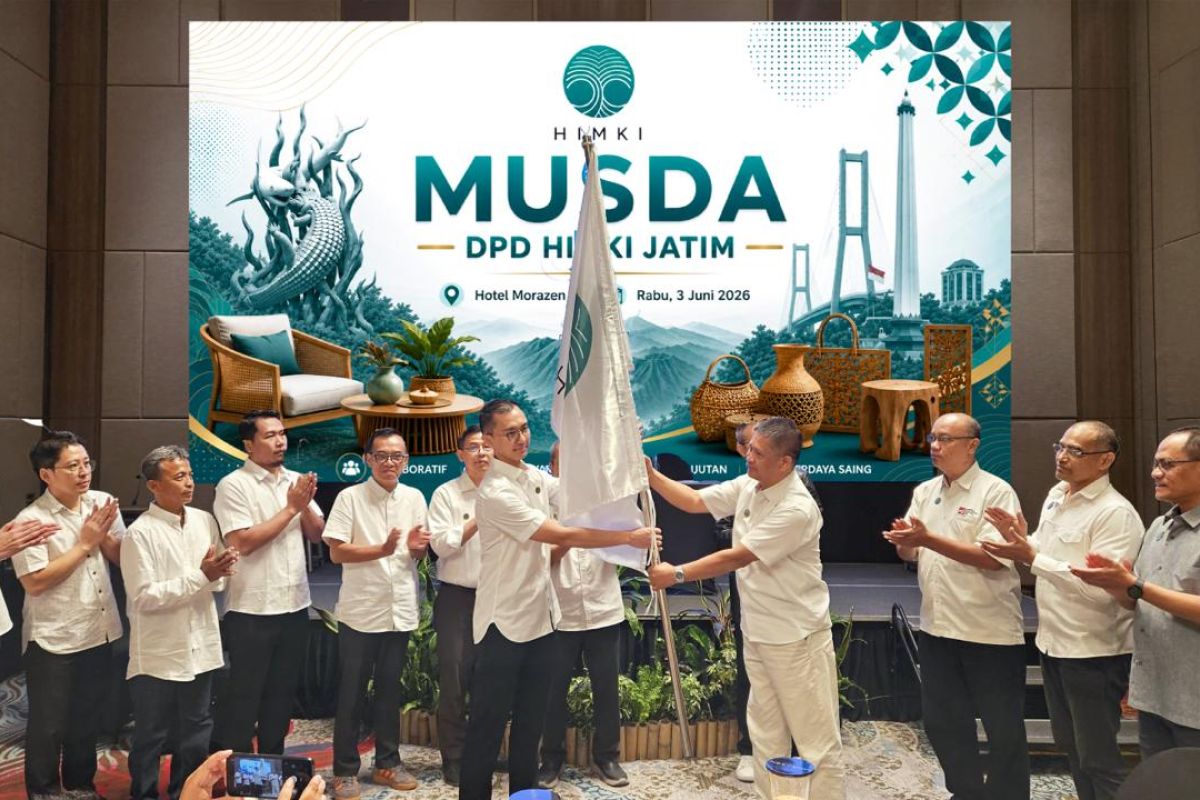
The Indonesian Furniture and Craft Industry Association (HIMKI) is pushing for the strengthening of the national furniture and craft industry through the development of an integrated and interconnected industrial ecosystem to increase competitiveness in the global market.
HIMKI General Chairman Abdul Sobur, in a statement confirmed in Jakarta on Wednesday, noted that the association conducted a working visit to Nankang, China, in late May to study the region’s integrated craft industry. Following this visit, he expressed confidence that Indonesia is capable of becoming a global craft industry hub.
“Upon returning from the industrial visit to Nankang, China, I am increasingly convinced that the future of Indonesia’s furniture and craft industry is not determined by one or two large companies, but by our ability to build a strong, productive, and interconnected ecosystem,” he said.
To accelerate this, he noted that several challenges must be addressed, as current competition has shifted from competition between individual companies to competition between industrial ecosystems capable of creating efficiency, innovation, and sustainable added value.
Furthermore, during the Regional Consultative Meeting (Musda) of the HIMKI East Java Regional Leadership Board held in Surabaya today, it was stated that East Java possesses a strong foundation to develop into one of the leading furniture and craft industry hubs in Southeast Asia. This potential is supported by the presence of international ports, industrial estates, competent human resources, and extensive export networks. East Java also serves as a base for numerous furniture and craft companies that have successfully penetrated various international markets, bringing Indonesian products to the global stage.
Through the new regional leadership, HIMKI hopes that collaboration between industry players will strengthen, thereby increasing the added value of national products and supporting the growth of Indonesian furniture and craft exports.
Meanwhile, the newly elected Chairman of the HIMKI East Java Regional Board, Glenn Candranegara, expressed his commitment to strengthening synergy among members, increasing industrial competitiveness, expanding export market access, and encouraging regeneration among furniture and craft industry players in East Java.
HIMKI maintains that the national industry possesses strong capital to become one of the world’s furniture and craft hubs. In a statement confirmed in Jakarta on Friday (29/5), General Chairman Abdul Sobur expressed this confidence, supported by rich natural resources, cultural diversity, strong craft traditions, and a large domestic market.
He explained that the furniture and craft sector is a high-value-added industry because the products undergo design, production, and creativity processes before being exported to global markets. Additionally, this sector is a labour-intensive industry capable of absorbing a large number of workers, ranging from timber farmers, artisans, and machine operators to designers, finishing workers, and the logistics and marketing sectors.
The Ministry of Industry (Kemenperin) aims for Indonesia to become a global furniture manufacturing hub through the strengthening of sustainable wood downstreaming and the enhancement of national industrial competitiveness. This sector absorbs hundreds of thousands of workers and is directly connected to a global market valued at over US$736.21 billion. The Ministry of Industry projects that in the next five years, Indonesia will not only increase production capacity but also lead in aspects of design and sustainability.