
HIMKI confident Indonesia has strong potential to become a global furniture and crafts hub
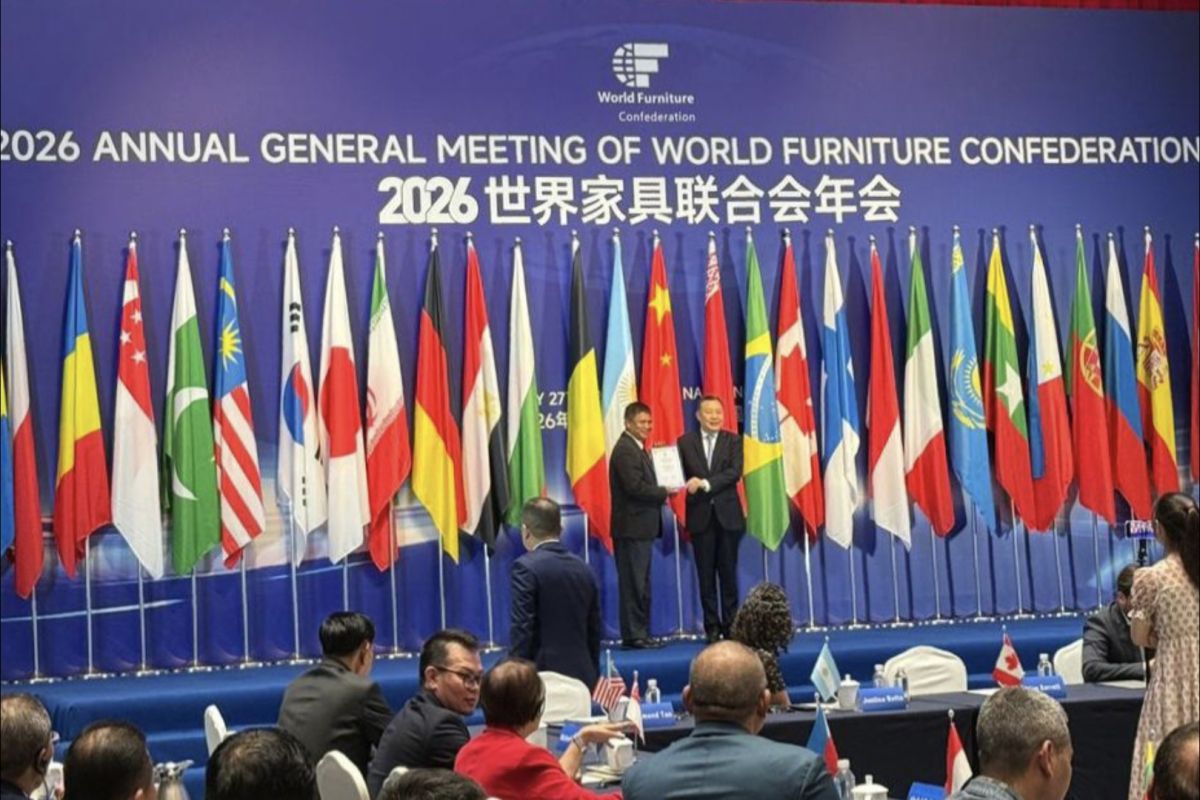
This sector has a significant multiplier effect on the national economy by connecting forestry, plantations, processing industry, trade, tourism, creative economy, and services. The Indonesian Furniture and Crafts Industry Association (HIMKI) is confident that the national industry has strong potential to become a global hub for furniture and crafts. In a statement confirmed in Jakarta on Friday, HIMKI Chairman Abdul Sobur said this confidence is bolstered by abundant natural resources, cultural diversity, strong craft traditions, and a large domestic market. He explained that the furniture and crafts sector is a high-value-added industry, as products undergo design, production, and creative processes before being exported to global markets. Moreover, the sector is labour-intensive, employing a large workforce including timber farmers, artisans, machine operators, designers, finishing specialists, and logistics and marketing personnel. ‘This sector has a significant multiplier effect on the national economy by connecting forestry, plantations, processing industry, trade, tourism, creative economy, and services,’ he said. Abdul Sobur added that Indonesian furniture and crafts also represent national identity in international markets, conveying stories about Indonesian raw materials, community skills, culture, and industrial capabilities. ‘It is the nation’s identity that is presented. Furniture and crafts products carry stories about Indonesian raw materials, Indonesian community skills, Indonesian culture, and the nation’s industrial capabilities,’ he said. Therefore, he believes strengthening the industrial ecosystem is key for Indonesia to enhance the global competitiveness of the furniture and crafts sector. He stated that industry development cannot be achieved solely by the private sector or government; it requires collaboration with universities, research institutions, financing bodies, industry associations, and market players. He is optimistic that the sector will be a vital part of Indonesia’s future, not only as a source of foreign exchange and job creation but also as a national identity ambassador present in over 120 countries worldwide. Furthermore, he noted that HIMKI attended the World Furniture Confederation (WFC) 2026 Annual General Meeting in Nankang, Jiangxi, China, which highlighted that global industrial competition is no longer just between companies or nations, but between industrial ecosystems. ‘Global competition today is no longer between companies. Nor is it just between nations. It is now between industrial ecosystems,’ Abdul Sobur said. He considered Nankang a successful example of an integrated furniture industrial ecosystem. Thousands of companies in the area are interconnected in an industrial chain covering raw materials, machinery, logistics, design, vocational education, financing, digital trade, and government support. Previously, the Ministry of Industry (Kemenperin) has set a target for Indonesia to become a global furniture manufacturing hub through strengthening sustainable timber downstreaming and enhancing national industry competitiveness. The sector also employs hundreds of thousands of workers and is directly linked to a global market worth over $736.21 billion. Kemenperin projects that within five years, Indonesia will not only increase production capacity but also lead in design and sustainability aspects.
Source: jawawa.id (https://jawawa.id/newsitem/himki-confident-indonesia-has-strong-potential-to-become-a-global-furniture-and-crafts-hub-1780059198)
Originally published by Antara (Indonesian) (https://www.antaranews.com/berita/5586737/himki-yakin-ri-punya-modal-kuat-jadi-pusat-industri-kerajinan-global), translated from Indonesian