
Himbara ready to connect global capital to Indonesia's international financial centre ecosystem
Most of these capital flows have hitherto passed through international financial centres outside Indonesia.
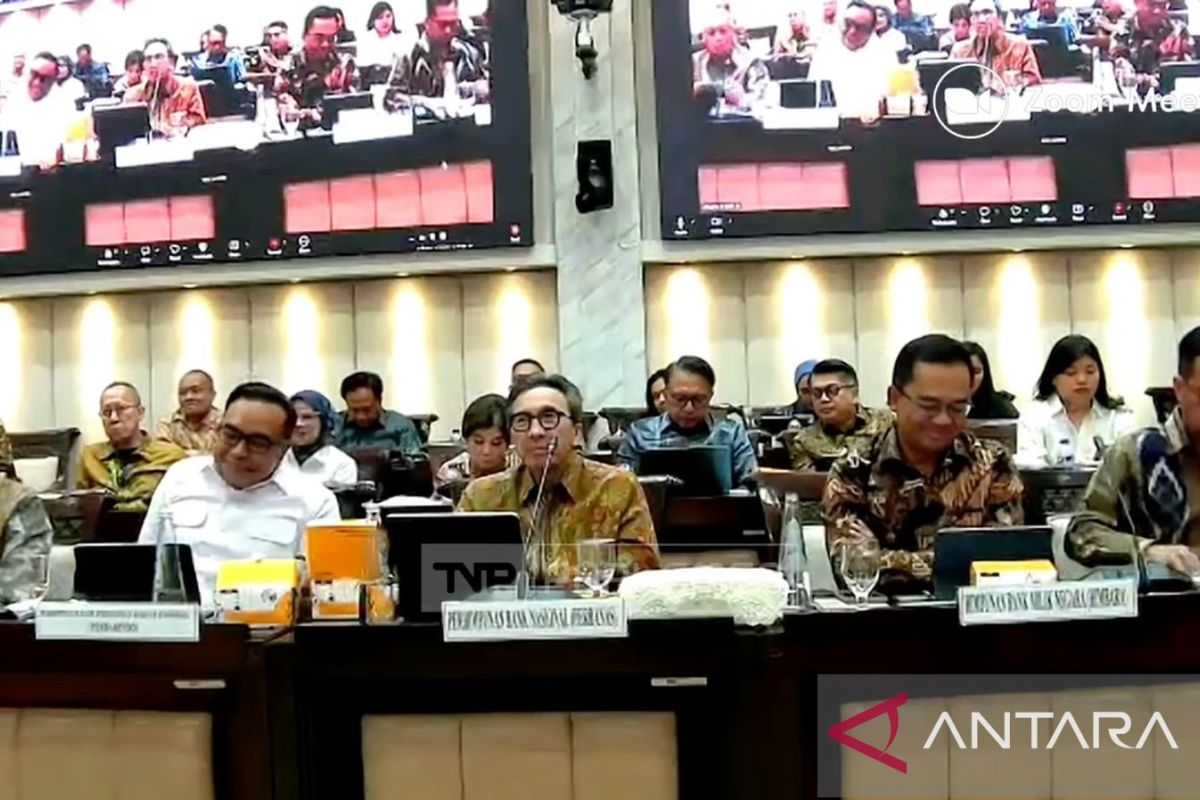
Jakarta (ANTARA) - The Association of State-Owned Banks (Himbara) is ready to serve as a gateway for global capital entering investment opportunities in Indonesia through the Indonesian International Financial Centre (PFII) ecosystem.
Such global capital encompasses foreign direct investment (FDI), institutional investors, sovereign wealth funds, family offices and capital markets.
“To date, most of these capital flows have still passed through international financial centres outside Indonesia,” said Eko Setyo Nugroho, Institutional Director of PT Bank Negara Indonesia (Persero) Tbk (BNI), who attended on behalf of Himbara at a closed hearing of the DPR’s special committee on the PFII bill in Jakarta on Thursday.
Through the PFII, according to Eko, Indonesia can build a more competitive financial ecosystem supported by adaptive regulation, attractive incentives, financial infrastructure of an international standard, and stronger domestic financial markets and liquidity.
He added that the ecosystem is expected to become an entry point for global capital to flow directly into Indonesia.
Within this ecosystem, Himbara acts as a gateway that not only connects global investors with national investment opportunities, but also provides integrated financial solutions, builds strategic partnerships and supports financing needs throughout the investment cycle.
“Subsequently, the capital successfully raised can be channelled into various national priority sectors,” Eko explained.
He said the association had benchmarked several established international financial centres (IFCs), namely Abu Dhabi Global Market, Dubai International Financial Centre, the International Financial Centre in Hong Kong, and the Singapore International Financial Centre.
From this benchmarking, Eko said, Himbara learned that each IFC has clear positioning and economic targets.
For example, Abu Dhabi Global Market and Dubai International Financial Centre were developed as special zones, or zone-based IFCs, whilst Hong Kong and Singapore grew as financial centres encompassing an entire city or country.
“In other words, an IFC’s success is determined by clarity of direction: who the target players are, which financial products are developed, and what role it seeks to play in the region,” Eko explained.
A further lesson from the benchmarking was the importance of ease of doing business and fiscal attractiveness. This, Eko said, is reflected in competitive tax policies, ease of fund repatriation, and openness to foreign ownership.
However, he cautioned that global market players seek not merely low tax rates, but also regulatory certainty and operational convenience.
Another equally important lesson is the presence of strong, integrated regulators. Abu Dhabi, Dubai, Hong Kong and Singapore each have supervisory bodies that specifically oversee financial activity within their respective jurisdictions.
This, Eko said, is essential to provide legal certainty for businesses whilst safeguarding the stability of the financial system.
Himbara also takes the view that none of these international financial centres function merely as locations for banking offices; rather, they have developed into integrated financial ecosystems.
Such ecosystems encompass banking services, capital markets, wealth management, fintech, treasury, trade finance, investment banking and various other financial services, so that investors can obtain all their financial service needs within one interconnected ecosystem.
Source: jawawa.id (https://jawawa.id/newsitem/himbara-ready-to-connect-global-capital-to-indonesias-international-financial-centre-ecosystem-1783605346)
Originally published by Antara (Indonesian) (https://www.antaranews.com/berita/5642821/himbara-siap-hubungkan-modal-global-ke-ekosistem-pfii), translated from Indonesian