
Himbara Bank Shares Strengthen This Week as Foreign Investors Return
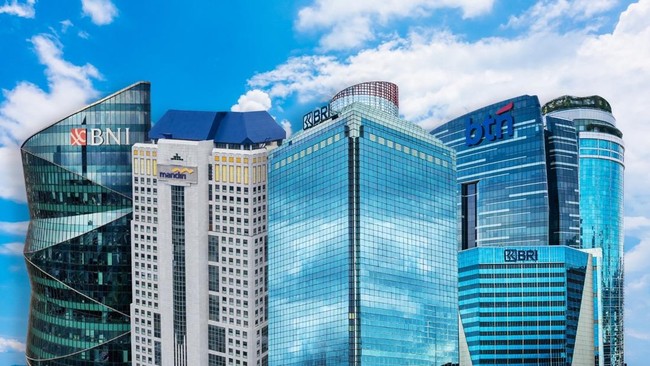
Shares of Indonesia’s state-owned banks rose across the board during this week’s trading. According to Refinitiv data, Bank Rakyat Indonesia (BBRI) closed up 2.87% on Friday (21/8/2026) at Rp3,230 per share, recording the largest weekly gain of 3.53%. Compared with the previous week’s close of Rp3,120, BBRI’s share price increased by Rp110 per share. Bank Negara Indonesia (BBNI) followed with a weekly gain of 2.75% to Rp3,730. On Friday, BBNI jumped 3.90%, the highest among the other Himbara banks. Bank Mandiri (BMRI) rose 1.20% during the week to end at Rp4,220, with a 1.69% gain on the final trading day. Bank Tabungan Negara (BBTN) posted the most limited weekly gain of 0.41%, closing at Rp1,225 after rising 1.66% on Friday. As a bank focused on housing finance, BBTN’s movement is closely linked to prospects for mortgage lending and domestic interest rate developments. Bank Syariah Indonesia (BRIS) also strengthened, rising 2% to Rp1,805 on Friday and closing the week up 0.83%.
Foreign investors helped drive the gains in state-owned bank shares this week. Based on Indo Premier Sekuritas activity summary data, the strengthening of Himbara shares was accompanied by foreign inflows, particularly into BBRI, BBNI and BRIS. BBRI, which focuses on micro, small and medium enterprise financing, recorded net foreign buying of Rp745.3 billion in the regular market this week. Over the past four weeks, BBRI has consistently recorded positive foreign fund flows since early August. The large foreign inflows are in line with BBRI’s position as the Himbara stock with the highest weekly gain. BBNI also recorded net foreign buying of Rp38.6 billion, while BRIS recorded a net buy of Rp14.1 billion. Foreign investors still recorded net selling in BMRI and BBTN, but the amounts were relatively limited and did not prevent both stocks from posting weekly gains. This indicates that the rise in Himbara shares was not entirely driven by foreign fund flows, as improved sentiment towards the Indonesian stock market also supported gains in large-cap bank stocks.
The strengthening of Himbara shares was supported by relatively strong and well-maintained banking industry fundamentals. Bank Indonesia recorded banking credit growth of 13.58% year-on-year in July 2026, up from 12.67% in June 2026. Higher credit disbursement shows that financing demand remains intact, opening room for banks to increase interest income, including Himbara banks which hold a large share of national credit distribution. Credit growth was accompanied by maintained capital resilience and asset quality. The banking sector’s Capital Adequacy Ratio stood at 23.70% in June 2026. In the same period, the gross Non-Performing Loan ratio was at 2.09%, while net NPL was 0.82%. The ratio of liquid assets to third-party funds was stable at 23.10% in July 2026. Bank Indonesia also maintained loose macroprudential policy to encourage credit to priority sectors. As of the first week of August 2026, the Macroprudential Liquidity Incentive received by banks reached Rp446.5 trillion.
Beyond these fundamental factors, the movement of Himbara shares this week was also supported by several domestic and external sentiments. Bank Indonesia’s decision to hold interest rates, an improvement in Indonesia’s Balance of Payments, and the weakening of the US dollar improved investor appetite for risk assets.
Bank Indonesia held its benchmark interest rate. The Board of Governors meeting on 18-19 August 2026 decided to maintain the BI Rate at 5.75%. The Deposit Facility rate also remained at 4.75% and the Lending Facility rate at 6.50%. Bank Indonesia said the decision was consistent with efforts to strengthen rupiah stability amid high global volatility due to the war in the Middle East. The policy is also aimed at keeping inflation within the target of 2.5% plus or minus 1% in 2026 and 2027 and supporting sustainable economic growth. The decision to hold rates provides certainty that borrowing costs will not rise again in the near term, helping to maintain credit demand while reducing pressure on debtors’ repayment capacity. The absence of further rate hikes also maintains the relative attractiveness of the stock market. If Bank Indonesia were to raise rates again, yields on lower-risk instruments such as government bonds could rise and potentially divert some funds away from the stock market. Bank Indonesia’s decision to hold rates ultimately provided enough room for investors to take on risk again, especially in large-cap and liquid stocks such as Himbara banks.
Indonesia’s Balance of Payments deficit narrowed sharply. Bank Indonesia reported that the Balance of Payments in the second quarter of 2026 recorded a deficit of US$900 million, sharply narrower than the US$9.1 billion deficit in the first quarter of 2026. The improvement was mainly supported by the capital and financial account, which posted a surplus of US$12 billion, reversing from a deficit of US$4.8 billion in the previous quarter.
Source: jawawa.id (https://jawawa.id/newsitem/himbara-bank-shares-strengthen-this-week-as-foreign-investors-return-1787385087)
Originally published by CNBC Indonesia (https://www.cnbcindonesia.com/research/20260822093107-128-761459/saham-himbara-kompak-menguat-sepekan-ini-asing-mulai-masuk), translated from Indonesian