
Himalayan Flash Flood Death Toll Surpasses 1,000, with 4,462 Still Missing
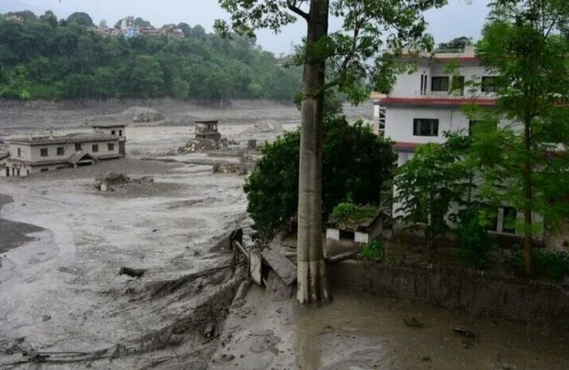
The number of fatalities resulting from the flash floods and landslides that struck the Himalayan region, on the border between Nepal and China, has surpassed 1,000 people. Official data released on Tuesday (1/9/2026) reveals the massive scale of destruction exactly one week after the disaster struck.
The Nepal National Disaster Risk Reduction and Management Authority (NDRRMA) reported the discovery of 8 additional bodies by search and rescue (SAR) teams. With this addition, the total death toll in the Nepal region alone has now reached 987 people.
In the Chinese region, local authorities reported 16 deaths. Cumulatively, the total confirmed fatalities from both countries have reached at least 1,003 lives.
In addition to the high death toll, deep concern is focused on the 4,462 people who are still reported missing. Of this number, 844 are foreign nationals, with the majority originating from India (275 people) and China (100 people).
In Nepal, the list of missing persons includes 639 workers stationed at several hydroelectric power plants (PLTA). The NDRRMA continues to strive to conduct sweeps in vital infrastructure areas swept away by the flow of debris.
The disaster was triggered by a glacier fracture at Mount Langtang Lirung, Nepal, on 26 August 2026. The fracture, occurring at an altitude of 5,200 metres above sea level, triggered massive ice and rock slides that transformed into large debris flows as they descended the valleys.
The worst-impacted areas in Nepal include Rasuwa, Nuwakot, Dhading, Kavre, and the Kathmandu Valley. Meanwhile, on the Chinese side, the landslide material struck the Gyirong border crossing area in southwest Tibet (Xizang Autonomous Region). Chinese SAR teams reported that infrastructure on the border side was almost levelled, forcing teams to trek on foot for 10 hours to reach the location.
The Nepalese government is now urging international assistance to accelerate the body identification process and regional mapping. Currently, aid teams from China, South Korea, and India have joined the humanitarian operation. However, extreme mountainous terrain, damaged access roads, and severed communication networks remain the primary obstacles to rescue efforts in the Himalayan region.