
Hijab Ban Strains Azerbaijan-Turkey Relations
BAKU — Azerbaijan’s government has defended school uniform rules that have sparked protests over restrictions on wearing Islamic hijabs. It has also urged Turkey, its close ally, not to interfere in Azerbaijan’s domestic affairs.
A former Soviet republic with a predominantly Muslim population, Azerbaijan has a constitution that separates religion and state while guaranteeing freedom of religion. The dispute over the school uniform rules could strain relations between Baku and Ankara, while exposing the challenges Azerbaijan faces in applying the principle of secularism.
According to Reuters, the Azerbaijani government introduced rules last month prohibiting students from wearing clothing outside the official school uniform requirements, or clothing considered incompatible with the secular character of state education.
The rules do not explicitly mention hijabs. However, protests began this week after reports emerged that some students and teachers wearing hijabs had been barred from entering school premises.
Azerbaijan’s Interior Ministry said on Monday (12 October 2026) that 37 people had been detained for disturbing public order while opposing the implementation of the rules.
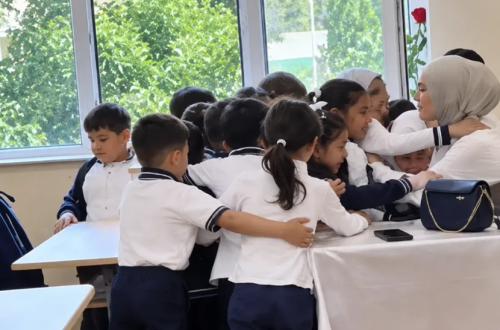
Videos circulating on Azerbaijani social media showed students hugging and crying with their teachers after learning that the teachers were no longer allowed into school because they wore hijabs. Female students turned away from school, or protesting restrictions imposed on others, were also filmed crying and holding protest placards. Students at at least two schools boycotted lessons in protest against the restrictions.
On Tuesday (13 October 2026), Azerbaijan’s ruling New Azerbaijan Party (YAP) condemned remarks by Turkish President Recep Tayyip Erdogan’s adviser and several lawmakers from the Justice and Development Party (AK Party) who had criticised the new policy.
Erdogan’s adviser, Oktay Saral, wrote on X on Monday that denying Azerbaijani students access to education because they wore hijabs was unacceptable.
“The hijab is not an obstacle, but part of the requirements of religious belief,” Saral said. He urged the Azerbaijani government to rescind what he called a mistaken policy immediately.
In its statement, YAP described Saral’s comments as “populist and irresponsible” and said they risked damaging relations between the two countries. The party stressed that the school uniform rules were based on the principles of equality, secularism and the rule of law.
YAP also noted that Turkey’s constitution enshrines the principle of secularism, and urged Ankara not to use Azerbaijan’s education policy for political purposes.
The ruling party said the principle of “one nation, two states”, which has long characterised the close relationship between Azerbaijan and Turkey, could not justify interference in each other’s domestic affairs or the imposition of political and ideological views.
The party also rejected criticism of Azerbaijan’s close ties with Israel, saying that the relationship was based on international law and shared interests.