
Highlighting MBG Poisoning Cases, PDIP's Hasto: Controls Not Working Because of Rent-Seekers
The Indonesian Democratic Party of Struggle (PDIP) has voiced criticism over the recurring food poisoning cases affecting dozens of school students due to the Free Nutritious Meals (MBG) programme in North Sumatra.
Secretary-General of the PDIP Central Executive Board, Hasto Kristiyanto, assessed that the repeated incidents strongly indicate that the government’s oversight system is not functioning properly. He also alleged the involvement of ‘rent-seekers’ who lower food quality to gain financial profit.
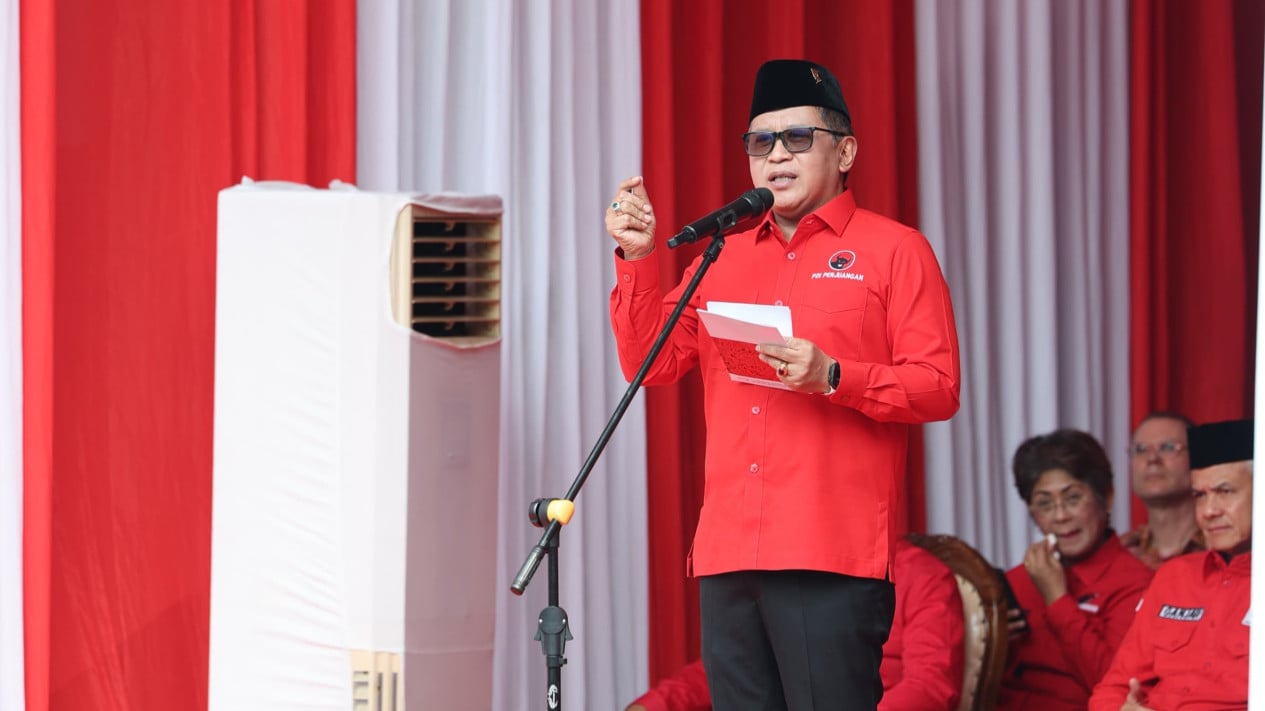
The criticism was delivered by Hasto during a press briefing (doorstop) after attending the 81st Anniversary of Indonesian Independence ceremony in the courtyard of At-Taufiq Mosque, PDIP Party School, Lenteng Agung, South Jakarta, on Monday, 17 August 2026.
‘This is a problem that has existed from the start. When the problem recurs, it means the system is not working. Controls are not working, and it also shows why the quality is poor. Because there are rent-seekers involved,’ said Hasto.
Seeing that the victims are school students, Hasto urged the government to immediately carry out a total revision and comprehensive evaluation of the governance and distribution mechanism of the MBG programme.
‘This is what must be totally revised. A comprehensive evaluation must be carried out; too many victims have already occurred,’ he continued.
Furthermore, Hasto explained that PDIP actually has a proven track record and concept for handling public nutrition in the regions. He cited the success of public nutrition fulfilment policies previously implemented by Tri Rismaharini during her tenure as Mayor of Surabaya, Idham Samawi when he was Regent of Bantul, and Abdullah Azwar Anas in Banyuwangi.
According to Hasto, the key to the success of nutrition fulfilment programmes lies in a participatory approach that involves local residents, rather than merely a centralised top-down project.
‘PDI Perjuangan has a concept for how to help meet the nutritional needs of the people. Participatory steps that involve the people. So do not assume that the nutritious food provision programme is a top-down one,’ Hasto explained.
He suggested that the central government should simply act as a guarantor and quality supervisor (quality assurance and quality control), while the execution of food provision should be handed over to the active participation of the community and local MSMEs to ensure freshness and food quality.