
Highlighting Landfill Fires, MPR Deputy Speaker Stresses Upstream Reform and Oversight
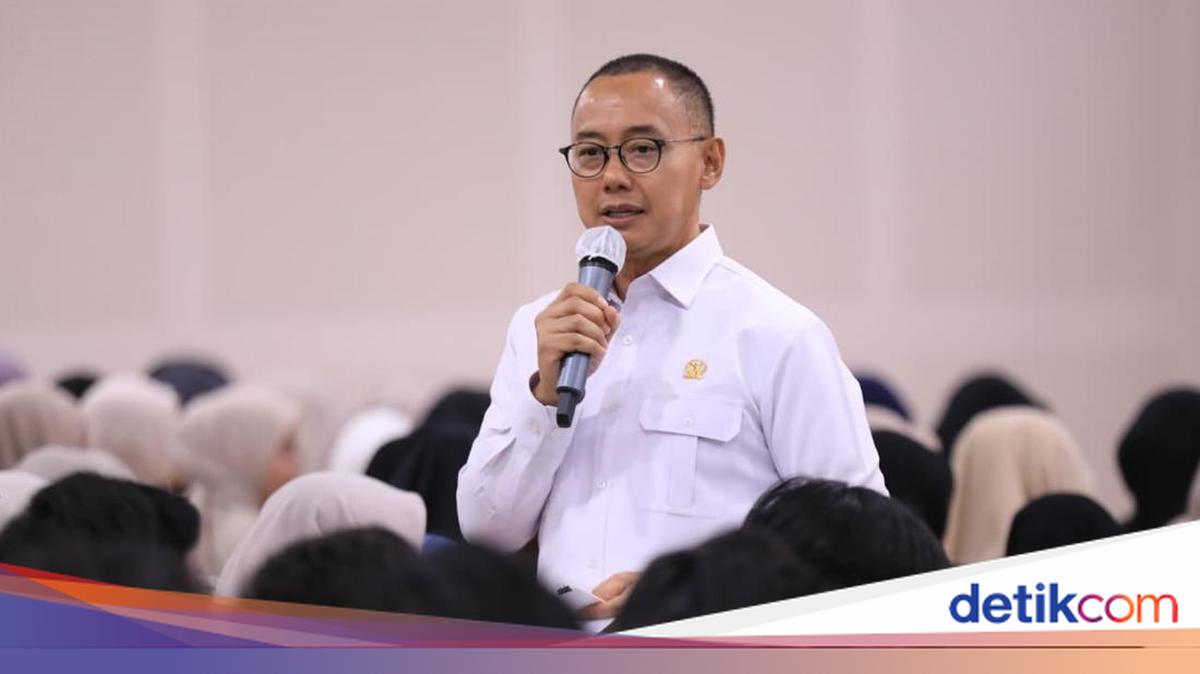
Deputy Speaker of the People’s Consultative Assembly (MPR RI) from the PAN Faction, Eddy Soeparno, has said that the fire which broke out again at the Cipayung final waste disposal site (TPA) in Depok serves as an alarm over an increasingly urgent waste management problem.
He assessed that the incident, which followed a fire at the Jatiwaringin landfill, indicates a recurring pattern suggesting that current waste governance remains weak.
“When landfills keep catching fire, it means our system is not working, particularly the system of supervision and enforcement at landfill sites. At the moment, we are kept busy dealing with landfill disasters, such as waste pile collapses and fires. We need immediate and firm intervention to prevent landfill disasters from recurring across Indonesia,” Eddy said firmly on Saturday (18/7/2026).
On various occasions, the Deputy Chairman of PAN has consistently reminded that Indonesia’s waste management approach still relies too heavily on landfills that are no longer adequate. According to him, without policy and technological transformation, similar incidents will continue to repeat.
“Indonesia produces around 56 million tonnes of waste every year, and most of it still ends up at final processing sites through the landfilling system,” he said.
“We can no longer rely on landfills as the main solution. Landfills are over capacity, prone to fires, and a source of pollution. If there is no fundamental change, the current situation has the potential to escalate into a full-blown crisis at any time, harming the public,” he continued.
The University of Indonesia political science doctoral graduate affirmed that accelerating the implementation of Waste to Energy (WTE) technology is a solution to reduce waste volumes while also forming part of the national energy resilience strategy.
“We cannot keep depending on a landfill system that is no longer adequate. WTE is one solution for waste treatment and is now being widely implemented. Beyond significantly reducing waste, WTE also produces renewable energy. It addresses two problems at once: the waste crisis and the need for clean energy,” he explained.
In addition to downstream solutions, Eddy also stressed the importance of upstream reform through a community-based approach. He has consistently pushed for stronger public education, waste reduction at source, and the development of a circular economy.
“The waste problem will not be solved if it is only handled at landfills. The key lies upstream. Households must begin to sort, reduce, and manage their own waste. The government must be present with a system that supports this,” he said.
He added that a community-based approach has proven more sustainable when supported by the right policies.
“We need to build a new culture in waste management. Infrastructure development is very important, but collective behaviour and awareness must also be continuously strengthened as a shared solution,” said the member of the DPR RI’s Commission XII.
“Finally, supervision mechanisms at landfills, as well as enforcement against illegal dumping, need to be strengthened. We produce large quantities of wet waste from food scraps. The methane gas it produces is very bad for the environment and easily triggers fires. Therefore, I ask regional governments across Indonesia to immediately and intensively monitor landfill sites to prevent the recurring disasters of fires and collapses,” Eddy concluded.