
Higher Education Ministry maps talent to support 100 GW solar power programme
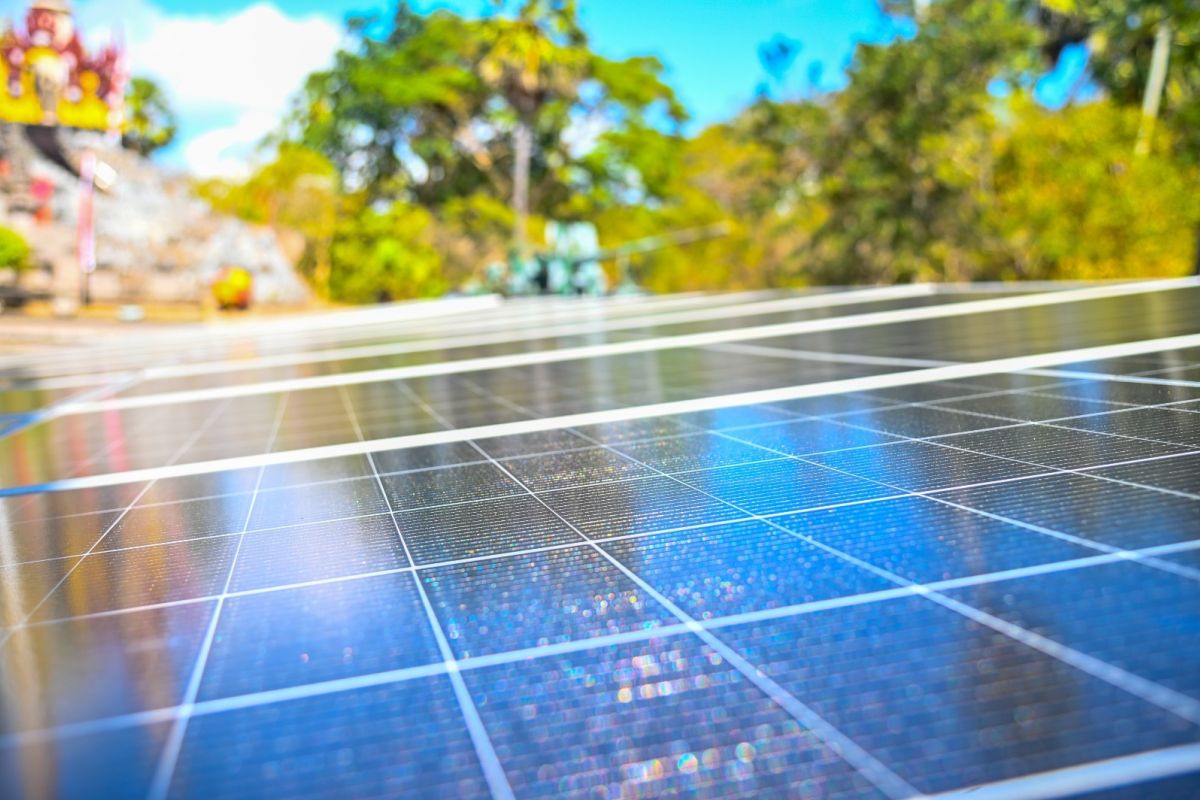
Jakarta (ANTARA) — The Ministry of Higher Education, Science and Technology (Kemdiktisaintek) has discussed developing solar energy talent and the role of universities in preparing workers to meet industry needs in support of the 100-gigawatt (GW) solar power programme.
Deputy Minister of Higher Education, Science and Technology Stella Christie said a mapping exercise was needed to identify gaps between industry demand and the available workforce, including areas of education requiring intervention.
“We can clearly map supply and first identify the problem: are we undersupplied, and if so, in which fields?” she said in a statement in Jakarta on Thursday.
She said she hoped the talent mapping would help universities prepare workers in line with industry requirements, while improving graduate quality and reducing graduate unemployment.
Christie said clear certification pathways were important so universities could prepare students for the needs of the labour market.
“The most efficient approach is to know the certification end point,” she said.
The deputy minister also invited the Indonesian Solar Energy Association (AESI) to review the government’s solar energy research roadmap, drawn up at the 2025 Science, Technology, Industry and Indonesia Convention (KSTI), to identify research needs that remain unmet.
She said the continuing development of solar panel technology required sustained research and development, enabling Indonesia to strengthen its scientific and industrial capabilities.
The review is expected to identify research priorities and gaps, so that the development of solar energy science and technology can be aligned with industry needs.
The Indonesian government aims to deliver the 100 GW solar power programme within three years. The initial stage involves an investment of around Rp135 trillion to build 14 power projects with a combined capacity of 5.3 gigawatt-peak (GWp).
Data compiled by AESI indicate that the programme could create around 5.5 million jobs, including 3.5 million in industry and two million in construction.
However, the workforce requirement faces a shortage of people with the necessary skills. AESI estimates that only around 10,000 suitably qualified workers have so far been identified.
The jobs span several fields, from solar panel and battery manufacturing to design engineering, project planning, construction and installation, and operations and maintenance.
Demand also includes researchers and research and development (R&D) engineers, as well as specialists in project management and financial modelling. This highlights the need for talent development across a range of disciplines.