
Higher Education Minister Requests Universities to Allocate One Day per Week for Lecturers' Work from Home
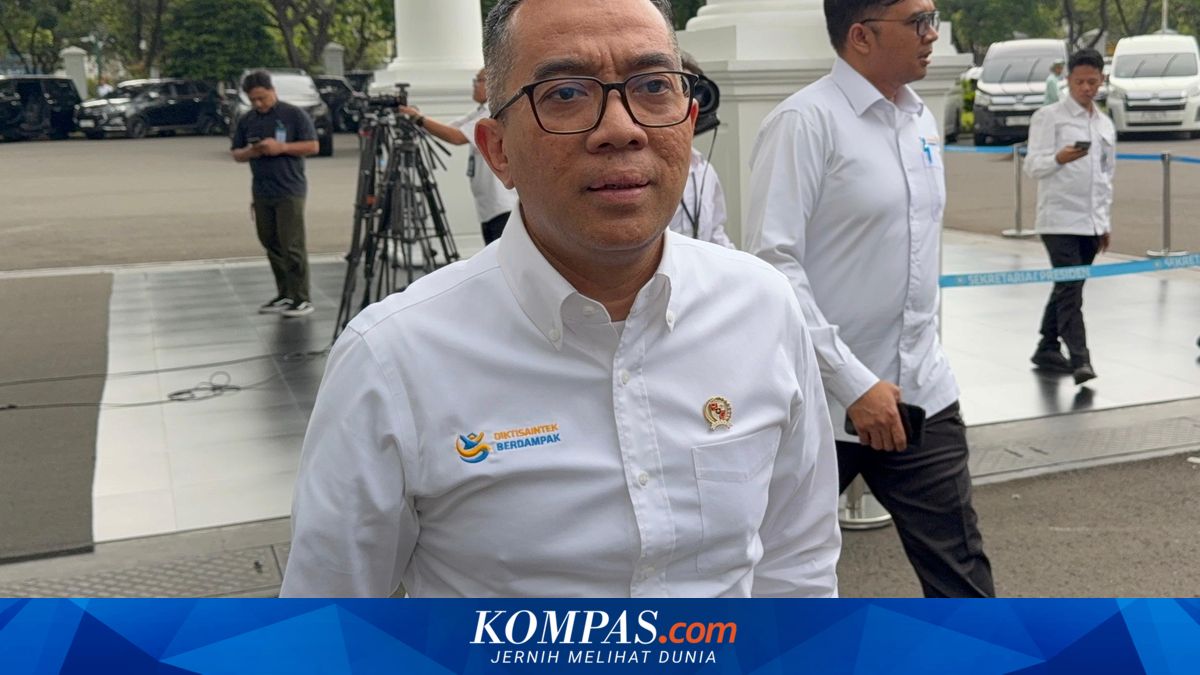
JAKARTA, KOMPAS.com - The Minister of Higher Education, Science, and Technology (Mendikti Saintek) Brian Yuliarto has called on all higher education institutions in Indonesia to provide a work from home (WFH) allowance for lecturers and educational staff for one day per week.
“Regarding lecturers, we request that universities arrange teaching schedules to be concentrated on certain days,” said Brian, when met at the Mendikti Saintek Office on Monday (6/4/2026).
According to Brian, the WFH recommendation for one day per week is part of efforts to promote efficiency and transform the work culture in the higher education environment.
“For example, lecturers teach fully from Monday to Thursday, and on Friday they can work from home. This is far more efficient. Students also do not need to go back and forth if the system is already good,” he stated.
The distance learning policy to support government policies on energy efficiency is contained in Circular Letter of Mendikti Saintek Number 2 of 2026 Concerning Adjustment of Work Patterns and Adjustment of Academic Activities, addressed to State Universities (PTN) and Private Universities (PTS).
However, this policy is subject to the rules of each university.
Because there are courses that cannot be conducted via distance learning.
“Would veterinary medicine dissect animals through distance learning? So, we leave it to each university. Regarding lectures, we leave it to each university and study programme,” said Brian.
“Study programmes know which courses are insight-based and can be done hybrid or distance learning. Courses that are intensive like calculations, formula derivations, or practicals certainly cannot be done via distance learning,” he added.
For information, there are four adjustments to academic activities outlined in the circular.
First, higher education leaders are urged to adjust the implementation of academic activities based on the readiness and characteristics of the study programme.
Then, the academic activity adjustment as mentioned is carried out as part of efforts to achieve effectiveness and efficiency in organising higher education, while still paying attention to learning outcomes and the academic calendar.
Finally, distance learning is not applied to courses or academic activities that require practicals, laboratories, studios, clinics, workshops, field practices, or other forms of learning that must be carried out face-to-face.