
Higher Education: A Pillar in Building the Nation's Civilisation
Higher education is a principal pillar in building the civilisation of the nation. Accordingly, the orientation of higher education should not merely be about producing graduates, but about building the nation’s civilisation through knowledge.
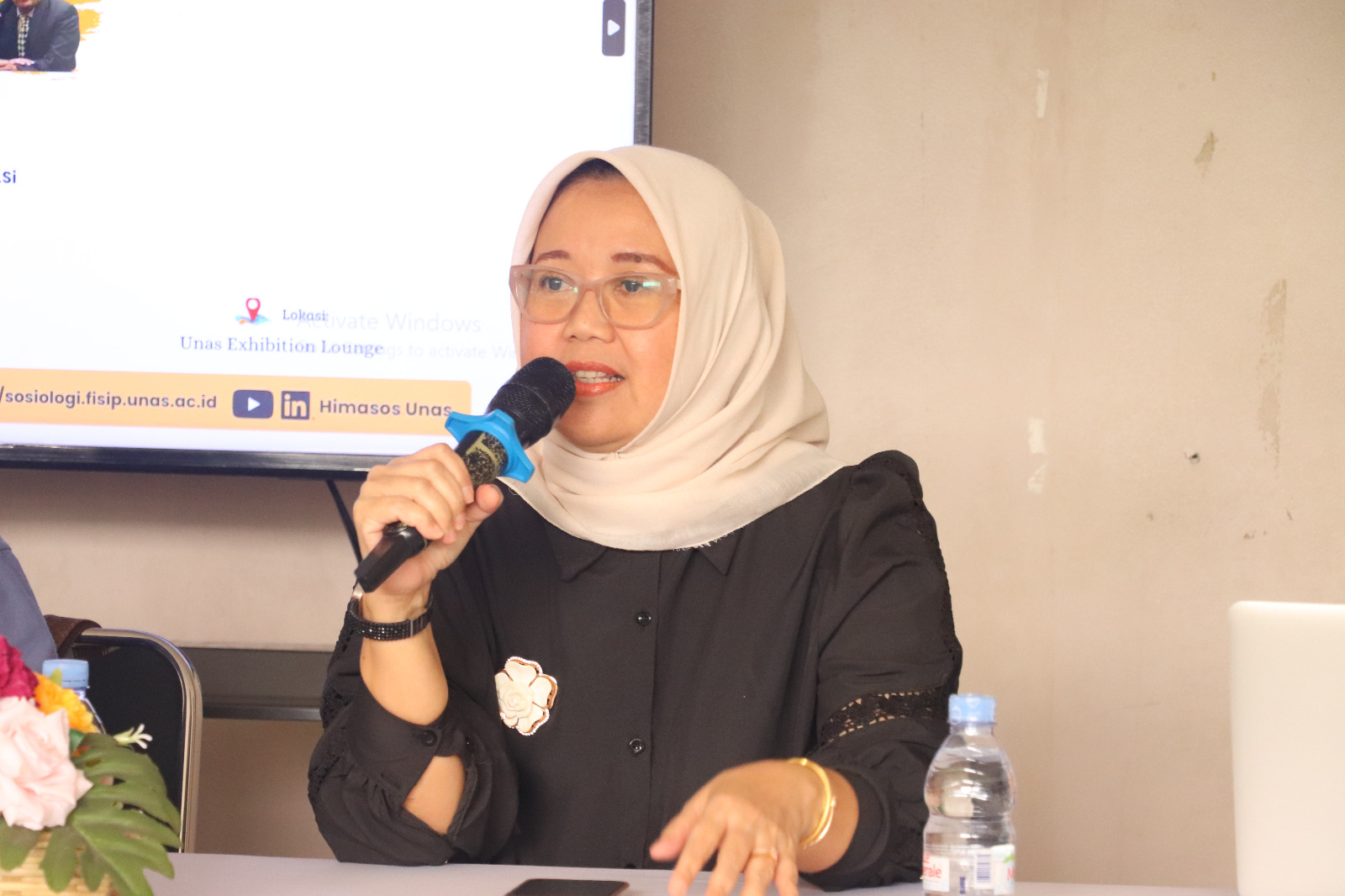
‘Humans are not created by technology, but by mindsets and the values of humanity,’ said Prof Erna Ermawati Chotim, Vice Rector for Academic Affairs, Student Affairs and Alumni of Universitas Nasional (Unas), during a Round Table Discussion titled ‘Together Nurturing Knowledge: Questioning the Bureaucratisation of Knowledge and Education in Indonesia’ in Jakarta.
She argued that the presence of the state is essential to guarantee the continuity of education as a constitutional mandate, while also urging universities to continue making tangible contributions to society and the world. Dean of FISIP Unas, Aos Yuli Firdaus, stressed that higher education must not lose its critical and humane values amid increasingly complex administrative demands.
‘Today campuses are often asked to be entirely measurable, full of reports, achievements, and bureaucracy. Yet social science has the task of keeping public reason sound and nurturing society’s social sensitivity,’ he said.
He added that higher education must serve as a space for forming social consciousness and for standing in solidarity with the community. ‘For this reason, I appreciate the sociology programme for hosting this forum,’ he continued.
Andi Achdian, Head of the Sociology Programme in FISIP Unas, viewed the discussion as a moment to strengthen the intellectual tradition on campus. ‘The Sociology programme possesses extraordinary academic strength with four professors continually pushing the tradition of critical thinking within the academic environment,’ he said.
The event served as a forum bringing together academics, students and senior professors to discuss the challenges facing higher education amid rising campus bureaucratisation, market logic in education, and the fading culture of critical thinking in academic circles.
Panelists included Prof Sigit Rochadi, Prof Aris Munandar, Prof Syamsiah Badrudin, and Prof Paisal Halim. In the discussion, Prof Sigit Rochadi asserted that a critical attitude is the defining identity of sociology. ‘Critique and a critical mindset are the DNA of sociology. Therefore, spaces for discussion like this are important to nurture and maintain,’ he stated.
By contrast, Prof Aris Munandar highlighted the trend of higher education moving to follow market logic and economic interests. ‘We are not just talking about personal issues, but about Indonesia’s future of knowledge. Today there is talk of dissolving study programmes deemed unattractive and assessed from the perspective of financial efficiency. This shows education is being viewed through a market logic, while knowledge is being valued primarily for its economic aspects,’ he explained.
That situation, he said, constitutes a serious challenge for the academic world to preserve the essence of education as a space for the pursuit of knowledge and for the formation of civilisation.
Another panelist, Prof Syamsiah Badrudin, emphasised the importance of students having the confidence to keep moving forward and growing amid a world that is increasingly competitive. ‘Courage to present oneself, to think, and to seize opportunities is essential for students to face the job market and social life in the future,’ she concluded.
Meanwhile, Prof Paisal Halim urged students to have the courage to create change and opportunity amid the challenges of the current job market. ‘Make yourselves into value. Not merely to seek employment, but to be able to create employment and change for society, and there can be no change without change,’ he concluded. (H-2)
Not many higher education institutions currently have ULD; accessible facilities remain limited, and adaptive learning services are not yet available optimally. Achmad noted that campuses face new challenges related to plagiarism, the validity of scholarly work, and changes in student learning patterns.
Deputy Speaker of the People’s Consultative Assembly, Lestari Moerdijat, stressed the importance of reorienting the national education system so that it does not merely follow market logic. She proposed a different, more preventive approach, emphasising the importance of building loyalty among developers to prevent conflicts from the outset.
The world of higher education now offers unique courses, such as Taylor Swift studies at Harvard and Surf Science. See the full list here.