
High risk of severe haze for rest of 2026 amid El Nino, biofuel demand and Indonesia budget cuts: Report
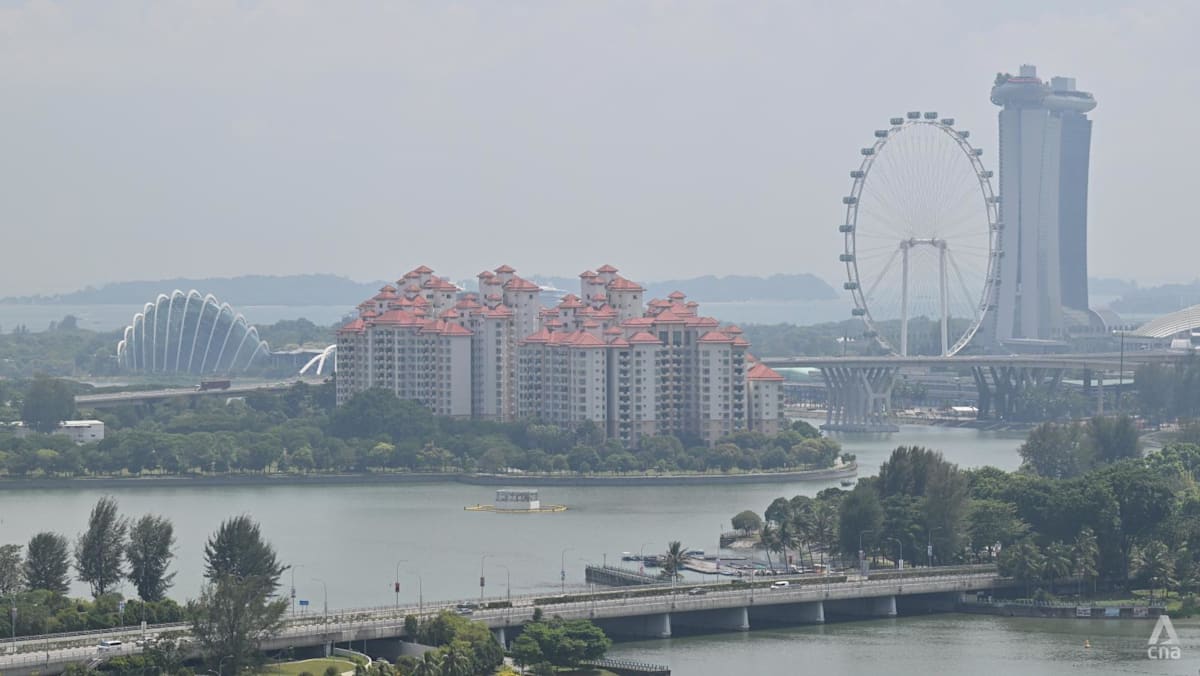
High risk of severe haze for rest of 2026 amid El Nino, biofuel demand and Indonesia budget cuts: Report
The report by the Singapore Institute of International Affairs identified August to September as the “peak danger” period for transboundary haze.
SINGAPORE: Southeast Asia faces a high risk of severe transboundary haze for the rest of 2026, with conditions expected to peak between August and September due to a strong El Nino bringing about hotter and drier conditions, a Singapore think-tank warned on Wednesday (Jun 24).
The Singapore Institute of International Affairs (SIIA) said it has issued a rare “red” warning in its 17-page Haze Outlook 2026 report, which signals a high risk of severe transboundary haze affecting Brunei, Indonesia, Malaysia and Singapore in the remaining months of this year.
This is only the second time SIIA has issued its highest-risk rating since it launched the annual outlook in 2019, following a similar assessment in 2023.
Haze returned to Singapore that year as hotspots surged in parts of Sumatra amid El Nino-driven dry conditions. Transboundary haze largely arises from forest and peat fires in the region.
For 2026, SIIA said the heightened risk this year comes as shipping disruptions through the Strait of Hormuz have increased cost pressures on the agricultural sector, in part due to fuel shortages and the spike in fertiliser prices.
At the same time, the growing demand for biofuels has raised concerns that some producers may expand their plantations by turning to cheaper but unsustainable land-clearing methods, such as the use of fire.
The high-risk season also coincides with tightening budgets amid global economic uncertainty. In Indonesia, President Prabowo Subianto will be facing his first high-risk dry season, the report noted.
Budget challenges in Indonesia were also flagged in the report, which stated that the country’s Ministry of Forestry and provincial governments had warned that budgets for fire management are “under pressure” amid cuts to public spending.
The potentially severe dry season this year will serve as a “stress test” for fire prevention and land management measures for the region, the report said.
SIIA chairman Simon Tay said: “The forecasts warn of a severe dry season, but we must not be fatalistic. There is much that can be done to prevent the worst and strengthen climate resilience, energy and food security, and regional cooperation.
“The challenge is to ensure that sustainable practices are maintained across entire supply chains, including by small and medium-sized enterprises that may be operating under tighter economic pressures.”
The report also called for stronger cooperation among the Association of Southeast Asian Nations (ASEAN) to tackle transboundary haze.
It noted that the recently inaugurated ASEAN Coordinating Centre for Transboundary Haze Pollution Control aims to strengthen policy coordination on haze mitigation and land management, complementing the scientific data and satellite haze monitoring provided by the ASEAN Specialised Meteorological Centre in Singapore.
EL NINO, INDIAN OCEAN DIPOLE
Historically, the most serious haze incidents have occurred when El Nino and a positive Indian Ocean Dipole have coincided, such as in 1997 to 1998, 2015, and 2023, the report stated.
El Nino is a naturally occurring climate pattern marked by unusually warm ocean surface temperatures in the central and eastern Pacific Ocean.
It results in hotter weather across the region, less rain and drier conditions, with authorities previously warning of a “super” or “Godzilla” El Nino - referring to more intense El Nino conditions.
“Weather conditions in the remaining months of 2026 could potentially be one of the hottest and driest dry seasons on record, increasing the danger that land fires could spread out of control,” SIIA said in its report.
Drier and warmer conditions increase the likelihood of peatland and vegetation fires in the region.
El Nino conditions are under way as of this month, with a 63 per cent chance of a strong El Nino occurring, SIIA said, citing the US National Oceanic and Atmospheric Administration.
The SIIA also pointed to another climate phenomenon that could coincide with El Nino - the Indian Ocean Dipole, a climate pattern affecting the Indian Ocean.
However, the think-tank noted that this phenomenon was harder to predict, with no agreed probability estimate of its phases.
The Meteorological Service Singapore has predicted that a positive Indian Ocean Dipole event will develop between July and August, which could amplify hot and dry conditions.
Mr Tay said during a media briefing on Wednesday that the outlook will become clearer as the peak of the dry season approaches in August.
He added that the severity of haze would depend on factors such as the location of fires and prevailing wind conditions.
He noted that the 2015 haze, which coincided with a strong El Nino and a positive Indian Ocean Dipole, had severe health and economic consequences.
According to figures cited by SIIA, the episode caused an estimated US$16.1 billion (S$20.9 billion) in economic losses in Indonesia and up to US$1.42 billion in losses in Singapore.
ECONOMIC PRESSURES ON LAND CLEARING
While weather remains a major factor, the report highlighted how geopolitical disruptions are linked to haze concerns. For example, the shipping disruptions in the Strait of Hormuz have resulted in new pressures on the agricultural sector that are expected to persist, which could indirectly encourage unsustainable land-clearing practices.
Disruptions to the shipping route have pushed up fertiliser and fuel costs, increasing production costs for farmers, even as selling prices for food and commodities have not risen proportionately.
While growers in relatively cash-rich industries like palm oil should be able to bear the increased costs temporarily, the same could not be said for fruit and vegetable farmers.
In sum, the report suggested that rising costs could
Source: jawawa.id (https://jawawa.id/newsitem/high-risk-of-severe-haze-for-rest-of-2026-amid-el-nino-biofuel-demand-and-indonesia-budget-cuts-report-1782276610)
Originally published by CNA (https://www.channelnewsasia.com/singapore/severe-haze-risk-southeast-asia-el-nino-indonesia-prabowo-subianto-6203041)