
High Rice Production Must Be Matched by Productivity Gains, Analysts Say
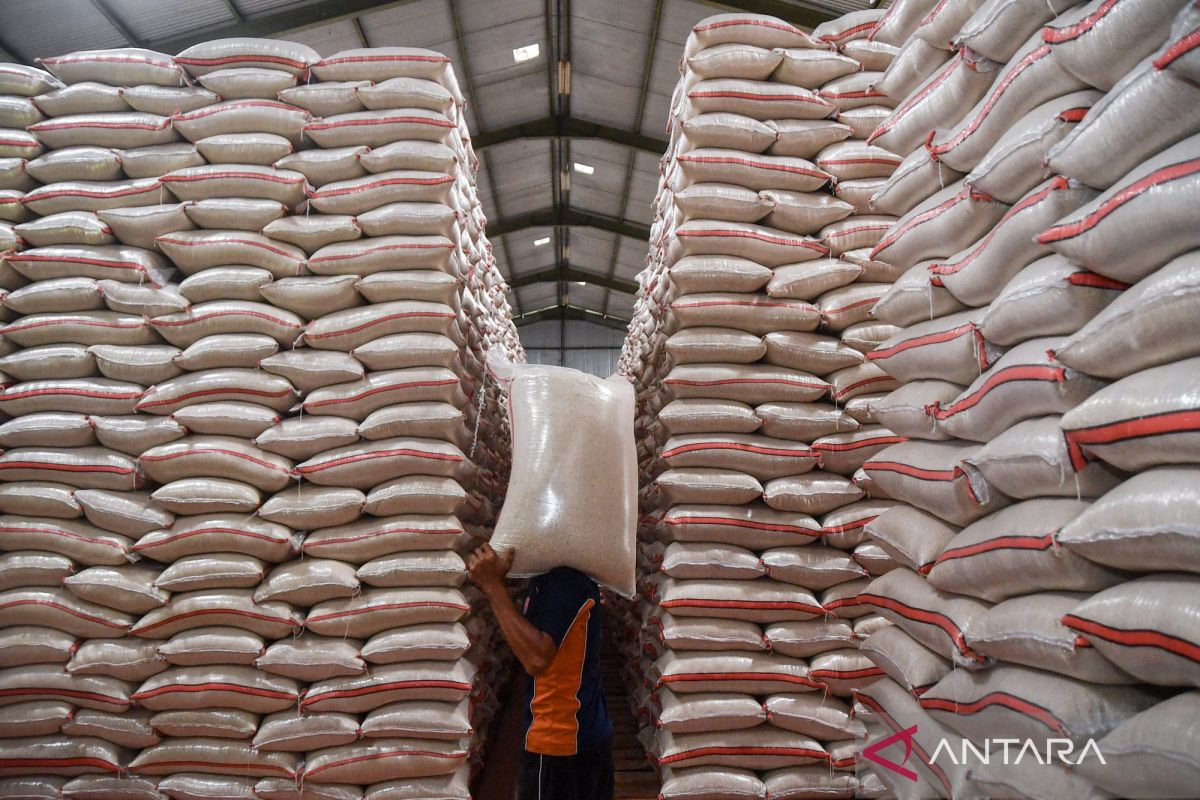
Jakarta (ANTARA) - Eliza Mardian, a researcher at the Centre of Reform on Economics (CORE) Indonesia, believes that Indonesia’s achievement as the largest rice producer in Southeast Asia must be accompanied by an increase in agricultural productivity and farmer welfare to ensure long-term sustainability.
She stated that this achievement deserves appreciation as a result of the hard work of farmers and the support of various government policies in encouraging national food production.
“We have achieved good results regarding rice. This deserves appreciation as the result of farmers’ hard work and policy support,” Eliza told ANTARA in Jakarta on Tuesday.
The Food and Agriculture Organization (FAO) places Indonesia as the largest rice producer in Southeast Asia and fourth in the world, following India, China, and Bangladesh.
National rice production in 2025 is recorded to reach 34.69 million tonnes, an increase of approximately 4 million tonnes or 13.2 per cent compared to the previous year’s 30.62 million tonnes. Furthermore, the FAO estimates that Indonesia’s rice stocks could potentially increase to 7.8 million tonnes during the 2026-2027 period.
Currently, the government records that the government rice reserve stock (CBP) managed by Perum Bulog has exceeded 5 million tonnes.
According to Eliza, Indonesia’s advantage in the Southeast Asian region is primarily supported by the large national rice production base, including significant paddy field areas. However, she noted that Indonesia’s rice productivity still lags behind Vietnam, which is capable of producing higher yields per unit of land area.
“The government needs to reorient its priorities. Policies must shift from merely chasing production volumes towards achieving sustainable productivity increases and improving farmer welfare,” she said.
National rice productivity currently stands at around 5.2 tonnes per hectare, whereas Vietnam has reached approximately 6 tonnes per hectare. This condition, she continued, indicates that there is still room to improve the efficiency and productivity of rice cultivation in Indonesia.
She stated that increasing productivity is vital because the challenges facing the agricultural sector in the future involve not only meeting food needs but also climate change, land conversion, and farmer regeneration.
Therefore, according to Eliza, agricultural policy should be directed towards increasing production efficiency, utilising technology, and strengthening farmer capacity so that harvests can continue to increase without relying solely on land expansion.
“To become truly resilient and sustainable amidst climate and demographic uncertainty, Indonesia must dare to step out of its comfort zone regarding total production figures and begin to seriously pursue higher efficiency and productivity,” she expressed.
Meanwhile, Galau Muhammad, a researcher at the Centre of Economic and Law Studies (Celios), warned that high rice production does not automatically reflect strong national food security.
“It cannot be equated with overall food security when discussing annual rice production,” said Galau.
According to him, food security is also determined by distribution efficiency, price stability, the quality of the supply chain, and the ability of the population to access food equitably.
Galau assessed that the sustainability of rice production needs to be accompanied by improvements in the distribution system and increased farmer welfare so that the benefits of increased production can be felt widely.
He added that food policy also needs to pay greater attention to small-scale farmers, who remain the backbone of national agricultural production, while simultaneously strengthening the agricultural sector’s ability to face the impacts of climate change.
“It is not just about the quantity of production we can achieve, but how the supply chain is systemically managed, price stability at the household level, and farmer welfare,” he said.
On the other hand, the government stated that increasing agricultural productivity is also a primary focus to maintain the sustainability of rice self-sufficiency.
The Ministry of Agriculture mentioned that these efforts are being carried out through the strengthening of irrigation and pumpisation, the use of superior seeds, agricultural mechanisation, and land optimisation to increase yields and planting indices.
The Minister of Agriculture, Andi Amran Sulaiman, previously stated that the government has allocated approximately Rp5 trillion for the strengthening of irrigation, pumpisation, and the provision of superior seeds to maintain agricultural productivity amidst the risks of extreme weather. The programme covers the management of up to 1.5 million hectares and the provision of 80,000 water pump units, targeting approximately 1 million hectares of paddy fields.
Additionally, the government is encouraging the use of superior varieties and agricultural mechanisation to increase productivity without depending entirely on land expansion.
The Ministry of Agriculture noted that the superior rice seeds being developed have a potential yield of more than 8 tonnes per hectare, while efforts to modernise agricultural tools and machinery are expected to further increase farming efficiency and maintain the sustainability of national food production.