
High Land Prices Pose Challenge for Railway Crossing Flyover Construction
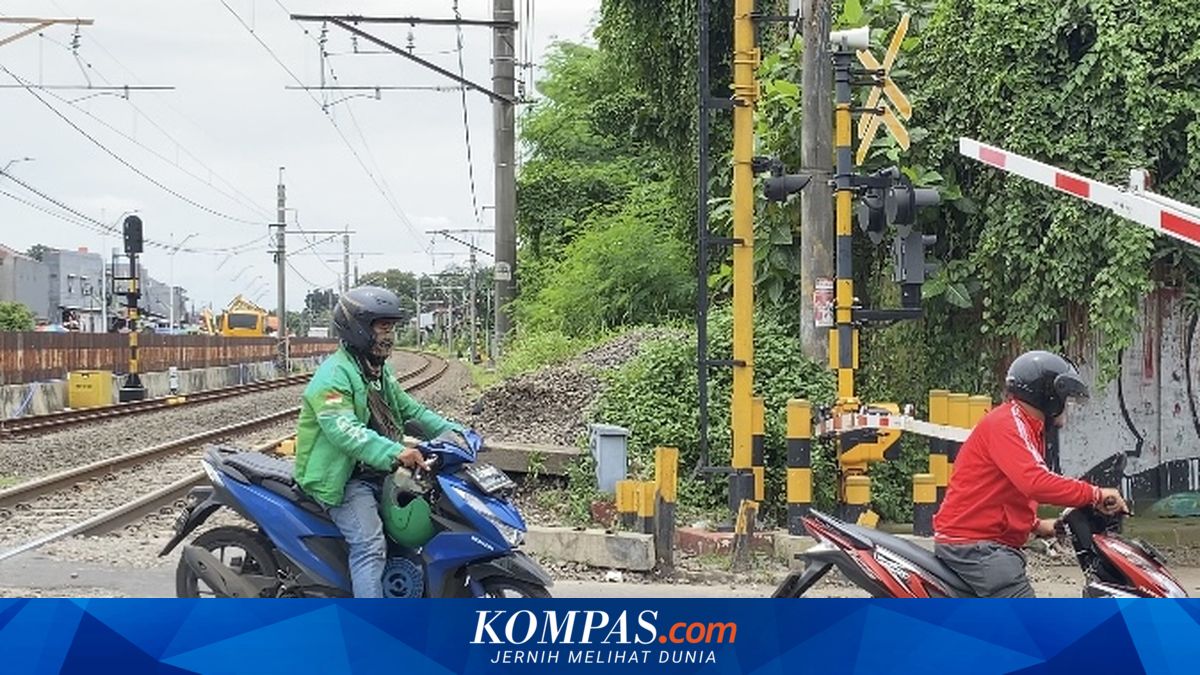
JAKARTA - The acquisition of land around level railway crossings presents a major challenge in the construction of flyovers or underpasses.
Public Works Minister Dody cited the flyover project in East Bekasi as an example, which requires support from local governments, particularly in providing land.
According to him, land around level crossings is generally located in strategic areas with high prices, making it the primary challenge in development.
He added that the form of construction is not always a flyover. The government is also considering underpasses depending on the location’s conditions and land readiness.
“Mostly, flyovers are the easiest. Underpasses are a bit more difficult. But it’s not necessarily all flyovers; it depends on the site’s conditions and land readiness,” Dody stated.
Dody mentioned that the government plans to build flyovers and underpasses at level railway crossings to reduce traffic accident risks.
According to Dody, there are currently around 2,000 level crossings across Indonesia. However, the authority to handle them is divided between district/city governments, provincial governments, and the central government.
He said that the construction will be carried out in stages, adjusted to the availability of budget and land readiness in the regions.
Dody also explained that the government has prepared a budget of approximately Rp 4 trillion to support the construction of flyovers and underpasses at level crossings.
This follows President Prabowo Subianto’s statement after the train collision tragedy at East Bekasi Station some time ago.
However, the budget is still in the form of a blanket or general allocation and will only be disbursed after the land and project design are declared ready.
He emphasised that the government will determine priority projects together with the Ministry of Transportation and other related ministries.
According to Dody, the projects to be accelerated are level crossings with the highest priority levels to be addressed immediately in order to improve traffic safety.