
High Investor Interest, Implementation Barriers Need to be Reduced - Kompas.id
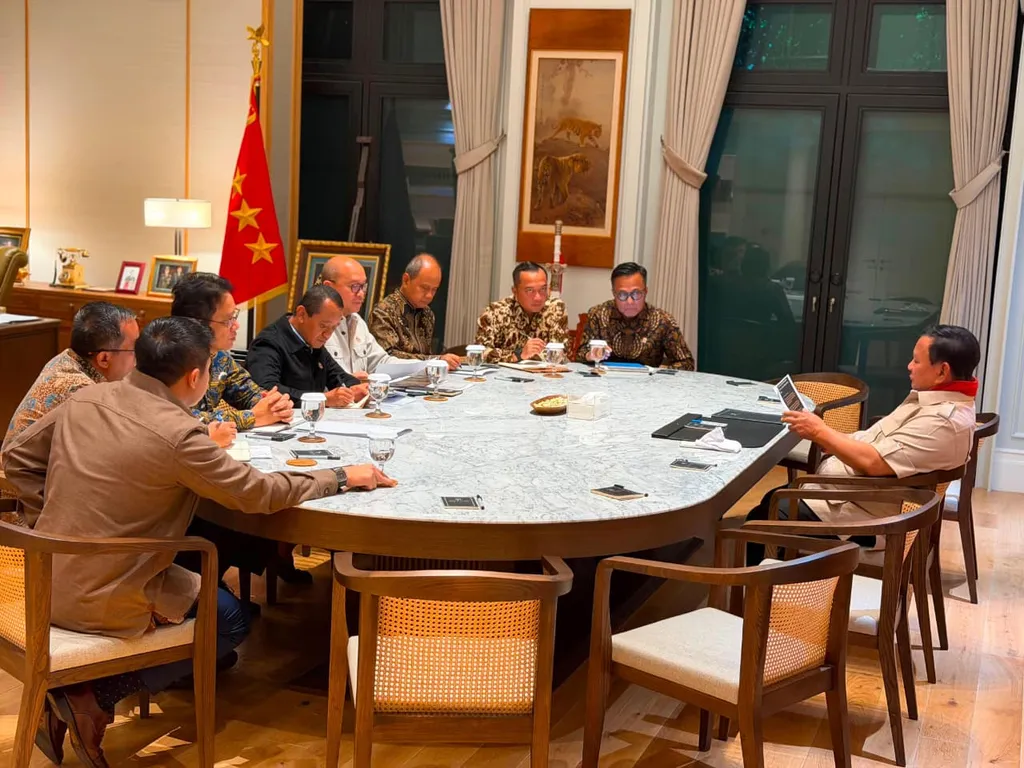
The biggest challenge in the investment implementation process is that initially optimistic investors face difficulties in executing their investment projects.
By Aguido Adri
15 Jun 2026 12:51 WIB · English
JAKARTA, KOMPAS – Foreign investor interest in Indonesia remains strong amid global economic uncertainty. In the midst of government claims regarding the increasing confidence of international investors in Indonesia, the success of attracting investment must be reinforced by reducing bureaucratic obstacles.
According to the Executive Director of the Center of Reform on Economics (Core) Indonesia, Mohammad Faisal, Indonesia is still viewed as a country with promising long-term economic prospects. The large market potential and opportunities for economic growth are the main attractions for global investors.
“Essentially, investors still view Indonesia as very prospective and possessing significant potential. However, the issue lies in the governance of policies and various investment facilitation procedures that remain obstacles. This is what needs to be improved,” said Faisal when contacted on Monday (15/6/2026).
According to Faisal, several foreign investors still consider Indonesia as one of the main investment destinations in the Asia region. A survey of Japanese investors, for instance, indicates that Indonesia’s position remains relatively high compared to several competing countries such as Vietnam and India.
“Japanese investors still see Indonesia as attractive for various business sectors. So, in terms of perception, Indonesia remains positively viewed,” he said.
The statement was made following President Prabowo Subianto’s request for the Minister of Investment and Downstream Industry/Head of BKPM Rosan Roeslani to present the latest data on the developments of national investment to the public.
Citing the Cabinet Secretariat website, President Prabowo Subianto summoned several members of the Merah Putih Cabinet to his residence in Kartenegara, Jakarta, on Sunday (14/6/2026).
The meeting was attended by several ministers and strategic economic officials, such as the Minister of Investment and Downstreaming/Head of BKPM Rosan Roeslani, Minister of Finance Purbaya Yudhi Sadewa, Minister of Energy and Mineral Resources Bahlil Lahadalia, Minister of State Secretary Prasetyo Hadi, Minister of Higher Education, Science, and Technology Brian Yuliarto, and Head of the State-Owned Enterprises Regulatory Agency Dony Oskaria.
Cabinet Secretary Teddy Indra Wijaya explained that during the meeting, President Prabowo received a report from the Minister of Investment and Downstream Industry, Rosan Roeslani, regarding the results of his working visit to the United States as well as several countries in Europe and Asia.
“The report shows valid facts and data regarding the increasing trust of the international community in Indonesia, as reflected in the high interest and influx of investment into various national strategic sectors,” said Teddy.
Following up on the report, President Prabowo emphasized the importance of providing transparent information to the public. The Head of State believes that the public needs to obtain a comprehensive and fact-based picture of the national investment conditions and Indonesia’s economic prospects moving forward.
“The President also instructed the Minister of Investment and Downstreaming, Rosan Roeslani, to present the positive data to the public openly tomorrow afternoon, Monday, June 15, 2026, at the Merdeka Palace, as part of the government’s commitment to provide comprehensive and fact-based information to the community,” said Teddy.
There needs to be additional indicators, not only regarding the amount of investment that has been realized, but also how quickly the investment processing in Indonesia occurs.
This step reaffirms President Prabowo’s commitment to establishing a governance system that is open, transparent, and accountable, while also strengthening public optimism regarding the prospects for investment and economic growth in Indonesia amidst the continuously evolving global dynamics.
Faisal continued, although Indonesia is still regarded as important by investors, the biggest challenge lies in the investment implementation process. Various investment commitments announced by the government often encounter obstacles when entering the realization stage.
The obstacles include issues related to licensing, inter-agency coordination, and the certainty of policy implementation on the ground. According to Faisal, this condition often causes investors who were initially optimistic to face difficulties in executing their investment projects.
Therefore, Faisal believes that the Investment Coordinating Board (BKPM) needs to have a more comprehensive performance measurement. So far, the success of the institution has tended to be measured by the amount of incoming investment.
“There needs to be additional indicators, not just how much investment is realized, but also how quickly the investment processing in Indonesia occurs. The speed and ease of investment must be measures of success,” he stated.
In addition to the aspect of quantity, the quality of investments is also considered to require greater attention. According to Faisal, every investment project that enters is not only assessed based on financial feasibility for investors but also on economic and social feasibility for the community.
The assessment includes the investment capacity to create jobs, stimulate regional economic activities, and generate multiplier effects for other sectors.
“Don’t just look at the investment value. There needs to be a measure of investment quality, for example, how many workers are absorbed and how large a multiplier effect is generated. That needs to be part of the evaluation of every investment project,” he said.
On the other hand, Faisal sees the improvement of several indicators in the domestic financial market as a momentum to encourage more productive investmen