
Hidden in the Arctic, Svalbard's Treasure of 1.4 Million Seeds Prepared to Face Global Crisis
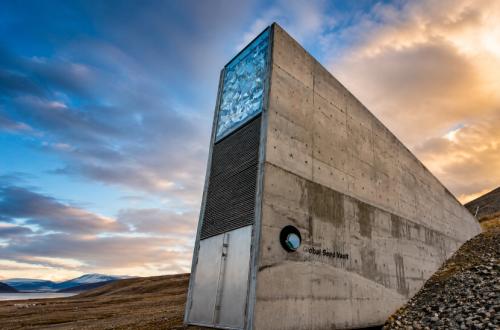
The Svalbard Global Seed Vault in Norway has further strengthened its role as the ultimate safeguard for global food security. The world’s largest seed storage facility now holds more than 1.4 million seed samples after receiving over 15,000 new samples in its second opening of the year.
Managers of the Svalbard Global Seed Vault announced on Wednesday (18/6) that 15,387 new seed samples from 11 international gene banks had been deposited for long-term security. With this addition, the total collection stored in the facility reaches 1,401,285 seed samples from across the globe.
This latest deposit marks the 70th since the Svalbard Global Seed Vault officially began operations in 2008. The facility, located deep inside a mountain on Spitsbergen Island in the Svalbard archipelago, Norway, is designed as the ultimate backup for the world’s crop diversity in the event of natural disasters, conflict, extreme climate change, or damage to national gene banks.
The seed vault is managed through a partnership between the Norwegian government, the Nordic Genetic Resource Centre (NordGen), and the Crop Trust. Its location in the Arctic was chosen for its naturally cold temperatures and geological conditions, which are considered ideal for maintaining seed viability over the very long term.
The largest shipments in this latest opening came from South Korea’s Rural Development Administration and the John Innes Centre in Norwich, England. South Korea deposited around 6,000 seed samples from 50 plant species, including cereals, vegetables, and legumes that hold significant value for food security.
Meanwhile, the John Innes Centre deposited the United Kingdom’s entire national wheat collection, approximately 1,000 accessions of local barley varieties from various countries, and hundreds of other wheat varieties that form an important part of the world’s agricultural genetic heritage.
The latest deposit also reflects the breadth of biodiversity the international community is striving to protect. The seeds stored originate from Africa, Europe, Asia, and the Americas, including Polish rye, various types of wheat and barley, peppers and legumes from the Netherlands, and strategic crops such as cashew, peanut, castor bean, and sesame from Brazil.
The importance of the Svalbard Global Seed Vault is increasingly recognised amid growing threats to global food systems. Climate change, extreme weather, geopolitical conflict, land degradation, and biodiversity loss make the protection of plant genetic resources ever more critical for the future of global agriculture.
For scientists, each stored seed sample is not merely a backup of a crop, but a strategic asset that can be used to develop new varieties more resistant to drought, disease, floods, and climate change. For this reason, the Svalbard Global Seed Vault is often referred to as a ‘life insurance policy’ for humanity’s food security.