
Hezbollah Rejects Israel-Lebanon Ceasefire Agreement
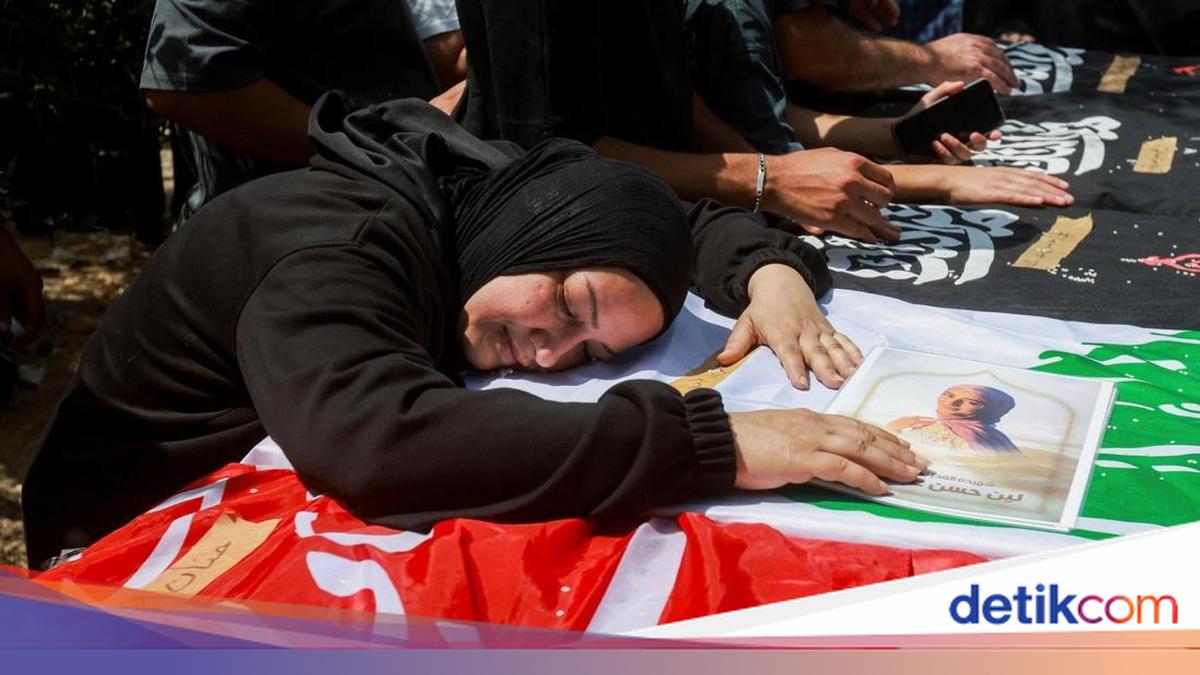
The Hezbollah group has rejected the Israeli ceasefire with Lebanon, which is supported by the United States (US).
In a strongly worded statement, the leader of the Iranian-backed group, Naim Qassem, described the negotiation process as something ‘fututile’ and ‘shameful’ for Lebanon. He also asserted that the agreement is absolutely rejected by ‘the majority of the Lebanese people’.
This rejection follows the announcement by Israel and Lebanon of an extension of a fragile ceasefire, accompanied by the establishment of a ‘pilot’ security zone in Lebanese territory, where Hezbollah members will be prohibited from operating. In a joint statement released by the US State Department on Wednesday, the three nations stated that the agreement depends on a ‘total cessation’ of attacks by Hezbollah.
However, on Thursday, the Hezbollah leader, who was not involved in the negotiations, responded by stating that the ‘ceasefire’—interpreted as the cessation of Hezbollah’s attacks and the withdrawal of forces from the southern frontline with Israel—is equivalent to surrender and will serve Israel’s objectives.
Similar sentiments were felt in the southern outskirts of Beirut, a strong Hezbollah stronghold known as Dahieh. A shop owner, Sami, who has run his business in the area for 25 years, expressed doubt regarding the deal to the BBC, stating, ‘A ceasefire cannot be unilateral; it must apply to all parties or there is no ceasefire at all.’ He noted that attacks were still occurring in Lebanon on Thursday, questioning the very meaning of the term ‘ceasefire’ under such conditions.
Across the street, Hadi, whose family has operated a shop for 35 years, admitted to seeing no hope. ‘My generation, my father’s generation, my grandfather’s generation, they saw no hope from these parties, not just the Israeli people, but it can be said the Israeli government,’ he said.
The agreement between Israel and Lebanon, reached after a fourth round of US-mediated negotiations in Washington, depends on the ‘evacuation of all [Hezbollah] personnel’ from the area between the Israeli border and the Litani River, approximately 30 kilometres north, which is currently occupied by Israeli ground forces. Under the deal, the US will assist in directing the formation of a ‘pilot zone’, where the Lebanese Armed Forces will take full control of the territory by removing all non-state actors.
However, the agreement does not include a map showing the location of the pilot zone, nor an explanation of how its implementation will be carried out on the ground. The deal follows a partial ceasefire announced on Monday, which, according to Lebanese sources, would see Israel refrain from bombing the capital, Beirut, in exchange for Hezbollah not launching attacks on Israel.
Representatives from both countries are scheduled to meet again on 22 June to continue negotiations, with the aim of reaching a comprehensive agreement. While the Lebanese government likely hopes Hezbollah will follow the diplomatic momentum, the group’s firm rejection suggests it sees political advantage in positioning itself as the sole force capable of resisting Israel.
Hezbollah, which serves as both a Shia Muslim militia and a political and social movement, is the most powerful group in Lebanon. Supported by Iran, it has built an armed force even more robust than the Lebanese military and has been involved in numerous conflicts with Israel. Hezbollah is designated as a terrorist organisation by Israel and several other countries, including the United Kingdom and the United States.
Lebanese President Joseph Aoun stated that the ceasefire ‘can be implemented within 24 hours after receiving final approval’ from all relevant parties. Meanwhile, Israeli Defence Minister Israel Katz stated that the Israeli military ‘will temporarily continue its fire and field operations’ to ‘dismantle terrorist infrastructure in the region’.
Lebanese media reported several Israeli attacks in various areas of southern Lebanon on Thursday. The official Lebanese news agency, National News Agency (NNA), reported five deaths in an airstrike in the town of Sohmor in the Bekaa Valley. Additionally, one person was reported killed when a motorcycle was targeted by an Israeli aircraft in the town of Maaroub, near Tyre. The Lebanese Ministry of Health stated that at least eight people were killed and 15 others injured on Thursday in a series of attacks targeting Sohmor, Masaken, and Arab Al-Jalil in southern Lebanon.