
Hezbollah Rejects Israel-Lebanon Agreement, Is Peace Just a Dream?
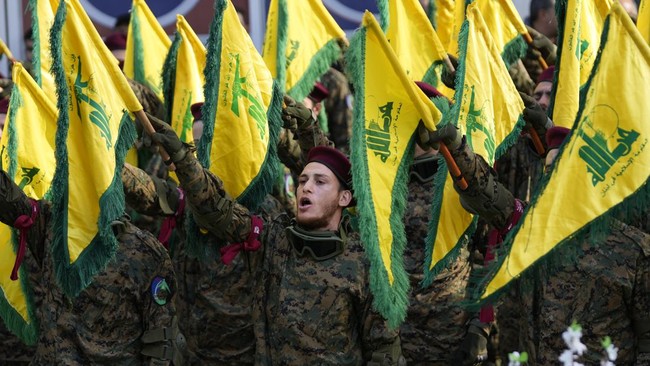
Hope for a de-escalation of the conflict in Lebanon is hanging by a thread after Hezbollah openly rejected a ceasefire plan mediated by the United States and already agreed upon by the Lebanese and Israeli governments. The rejection casts significant doubt over the future of halting hostilities in Lebanon as well as the prospects for broader peace talks in the Middle East.
Hezbollah leader Naim Qassem on Thursday described the proposal as a direct threat to Lebanese society, calling it a “road map for the annihilation of part of the Lebanese people”. He stressed that Hezbollah would only accept a complete end to the war accompanied by a full withdrawal of Israeli forces from Lebanese territory. Qassem also warned that as long as villages in Lebanon remain targets of attack, northern Israel will never be truly secure.
“We call on the officials to end this farce and humiliation called direct negotiations,” he said.
The statement directly contradicts the agreement announced by the Lebanese and Israeli governments a few days earlier. On Monday evening, both governments agreed to implement a ceasefire to end hostilities that have persisted over recent months. The deal requires a total halt to attacks by the Iran-allied Hezbollah and the withdrawal of all its fighters north of the Litani River.
However, a major problem in implementing the agreement is the fact that Hezbollah was not part of the negotiation process. Although the Lebanese government was the party negotiating with Israel, the armed group is the entity directly involved in the conflict against Israel. The Lebanese government is known to have conducted the negotiations without involving Hezbollah as part of an effort to restore state control and disarm the group.
Hezbollah’s rejection now raises major questions about how the Lebanese government can execute the ceasefire agreement if the main party to the conflict does not consent to it. Lebanese Prime Minister Nawaf Salam warned that parties obstructing or rejecting the ceasefire must bear responsibility for the resulting consequences. “The negotiation path we chose is the fastest and least costly route for Lebanon, the Lebanese people, the southern region, and its residents,” Salam said. He added that diplomacy remains the best option for Lebanon compared to continuing an armed conflict that has caused significant casualties and extensive damage.
Hezbollah’s rejection also threatens to shake up the security arrangements that have been in place since the 17 April ceasefire. In that agreement, Washington limited Israel’s scope to attack Beirut in exchange for a halt to Hezbollah attacks on northern Israel. The group’s stance is now seen as aligning with demands previously made by Iran. A few hours after the latest ceasefire announcement, Tehran asserted that Israel must withdraw to the positions it held before the war broke out.
Commander of the Quds Force of Iran’s Islamic Revolutionary Guard Corps (IRGC) Esmail Qaani said support for Hezbollah is a collective duty. “Supporting the resistance in Lebanon is a duty for all of us, and removing Israel from the region is an achievable goal for Muslims,” he stated. In a post on Iranian domestic social media, Qaani also wrote: “The minimum demand of the resistance is the withdrawal of the usurping regime to the positions it held before the start of the 40-day war.”
Iran had previously stated that its own ceasefire with the US and Israel must include a halt to the fighting in Lebanon. Consequently, it is unclear how Hezbollah’s rejection of the latest deal will affect the ongoing negotiations between Tehran and Washington. Iran’s Foreign Ministry on Thursday stressed that Lebanon is an inseparable part of any peace deal under discussion, calling the country “an integral part of every ceasefire and every final agreement”.
On the ground, the conflict continues despite both governments previously stating their commitment to the ceasefire. Israel launched several air strikes in the Nabatieh area of southern Lebanon and the western Bekaa Valley, killing four people. Meanwhile, Hezbollah claimed to have targeted Israeli soldiers in the village of Qantara, southern Lebanon.
Israeli Defence Minister Israel Katz asserted that his country will continue to maintain the freedom to conduct military operations. He said Israel has “freedom of action, with the support of the United States, to strike Beirut in response to attacks on Israeli communities and territory”. Katz also stated that Israeli forces will remain in southern Lebanon to maintain a buffer zone that Israel says is necessary to protect its residents in the north.
Israel currently controls more than 600 square kilometres of southern Lebanese territory. During the military operation, dozens of border villages have been destroyed, preventing hundreds of Lebanese residents from returning to their homes. Amid the tensions, Lebanon and Israel have also agreed to establish “model zones”, where the Lebanese Armed Forces will take full control without the presence of non-state armed groups. Lebanese President Joseph Aoun said he proposed the first model zone be established around Beaufort Castle, which was captured by Israeli forces earlier this week.