
Heroes’ Day Reflection: From Santri’s Bamboo Spears to Mahbub Djunaidi’s Pen
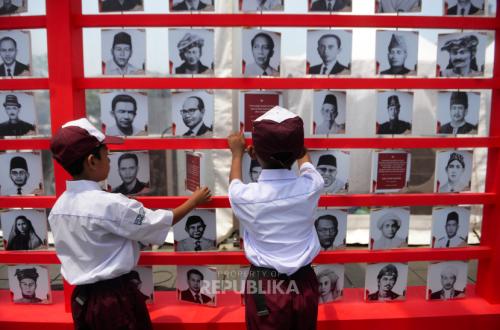
Every 10 November, the nation bows its head once again to remember those who risked their lives to defend independence. Surabaya bore witness to how courage, sacrifice and conviction can become a force greater than the limitations of weaponry.
However, Heroes’ Day should not remain a ritual of remembering the past. It should be a moment for reflection and for asking one fundamental question: now that independence has been defended, how can we ensure its ideals remain alive?
The events of 10 November 1945 cannot be separated from the role of ulama and santri. Three weeks before the major battle in Surabaya, on 22 October 1945, Nahdlatul Ulama’s ulama issued the Jihad Resolution. The decision, made at a meeting of NU representatives from across Java and Madura in Surabaya, affirmed the duty to defend the Republic of Indonesia’s independence against the threat of colonial rule returning.
The Jihad Resolution was more than a religious decision. It was a declaration of national commitment: independence was not something that could be handed back to colonial powers. In it, religion found relevance as a source of moral courage in defending the homeland. Kiai, santri and members of the public took up the struggle. Though trained in pesantren and lacking adequate equipment and weapons, they stood on the front lines to defend the Republic.
From Surabaya, we learn that nationalism is not the preserve of any one group. Indonesia’s independence was the result of the collective struggle of every element of the nation. Santri bequeathed not only traditions of learning and spirituality, but also an example of the courage to assume historical responsibility. They understood that love of country was not enough to be spoken; it had to be demonstrated through sacrifice.
Yet the history of heroism did not end when the war was over. Every era has its own battlefield. If the 1945 generation faced the threat of colonialism and defended independence with weapons, subsequent generations have been tasked with ensuring that independence does not lose its substance: justice, humanity, freedom of thought and public welfare.
This is where we should remember Mahbub Djunaidi, a figure who showed that the pen, too, can be a weapon in the struggle.
For the wider Pergerakan Mahasiswa Islam Indonesia (PMII) family, Mahbub Djunaidi’s name is more than an entry in the organisation’s history. He was PMII’s first chairman, an organiser, journalist, writer and Nahdlatul Ulama figure. Known as the ‘Pen Warrior’, he earned the title not merely for his skill with words, but for his courage in using writing to scrutinise power, expose injustice and safeguard the public’s common sense.
Mahbub had a distinctive intellectual character. He was critical without losing his humour, incisive without losing his humanity, and courageous without succumbing to hatred. In his writing, he delivered criticism intelligently, sometimes with wit, while conveying a serious message. He showed that criticism is not an act of hostility towards the nation, but part of loving it.
Mahbub’s courage is important to revisit amid the state of our democracy today. Independence that produces freedom without the courage to correct abuses will lose its meaning. Democracy needs critical citizens, a free press, independent intellectuals and young people who do not readily submit to the interests of those in power.
We live in a time when information is abundant, but is not always matched by depth of knowledge. It is increasingly easy to make one’s voice heard, yet speaking the truth often comes up against pressure. Criticism is frequently treated as hostility, differences of opinion as a threat, while the public sphere is increasingly vulnerable to unproductive noise.
In this situation, Mahbub’s legacy is all the more relevant. He taught that an activist must be more than outspoken: they must think deeply. It is not enough to be good at criticising; one must also be able to offer ideas. Nor is it enough to be close to power: one must retain the courage to issue reminders when those in power turn away from the people’s interests.
For PMII, reviving Mahbub’s thought means restoring intellectual life as the movement’s lifeblood. Student organisations must not become mere arenas for reproducing positions and competing for influence. They should be places where free individuals are formed, equipped with knowledge, moral courage and social awareness. PMII cadres must be able to understand their times, master knowledge, scrutinise public policy and stand alongside communities whose rights have been neglected.
We should not simply take pride in calling Mahbub PMII’s founder and first chairman while the traditions of reading, writing, discussion and critical thought lose their place in organisational life. Admiring a figure should lead to the courage to carry forward the values for which they struggled.
Moreover, it is time for the state to give due recognition to Mahbub Djunaidi’s service and contribution by designating him a National Hero. This proposal is not simply because he was a major PMII figure or part of the Nahdlatul Ulama family. Such recognition should be based on Mahbub’s tangible contributions to the nation’s history: in the student movement, journalism, literature, democracy and socio-political struggle.
The state needs to recognise that heroism does not emerge only on the battlefield. Those who safeguard freedom of thought, fight for press freedom, nurture democracy and dare to challenge injustice also make vital contributions to national life. Mahbub Djunaidi is one figure who embodies these values.
For this reason, the East Java Regional Coordinating Board of PMII is urging that efforts to nominate Mahbub Djunaidi as a National Hero be pursued seriously and collectively. PB PMII, the Nahdlatul Ulama family, journalists, academics, cultural figures and all elements of society should contribute to building a strong historical record, academic research and public support. State recognition of Mahbub would honour the intellectual tradition and courage of critical thought that are important parts of the Republic of Indonesia’s history.
Ultimately, Heroes’ Day reminds us that every generation has its own historical calling. We may no longer be asked to take up bamboo spears against colonial troops. But we are still required to find the courage to fight ignorance, poverty, injustice, abuse of power and every form of oppression that obstructs the ideals of independence.
If santri once risked their lives to uphold the Republic, today we must ensure that it stands on justice and a commitment to the people. If Mahbub Djunaidi once took up his pen to protect the nation’s common sense and dignity, today we must not allow the pen to lose its courage.
For heroes are not only those who live on in historical memory, but those whose values continue to shape the lives of subsequent generations.
Let us not become a generation that is loudest in celebrating the service of heroes, but quietest when asked to continue their struggle.
Heroism is not only about the courage to take up arms, but also the courage to safeguard independence, fight for the truth and challenge injustice through thought.
Source: jawawa.id (https://jawawa.id/newsitem/heroes-day-reflection-from-santris-bamboo-spears-to-mahbub-djunaidis-pen-1794325840)
Originally published by Republika (https://opini.republika.co.id/berita/toajx3487/refleksi-hari-pahlawan-dari-bambu-runcing-santri-menjelma-pena-mahbub-djunaidi), translated from Indonesian