
Heroes’ Day and the Cooking Oil Paradox
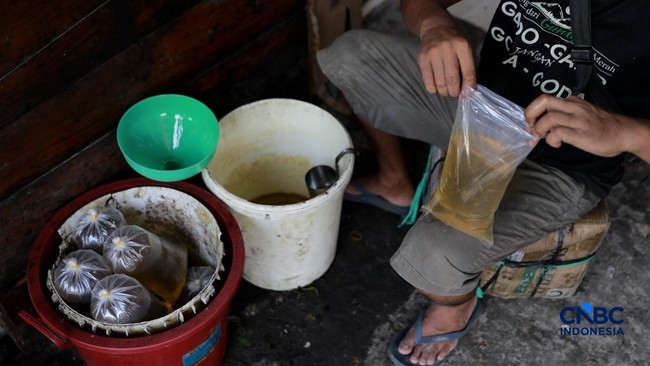
Today, 10 November, we once again remember the struggle of our heroes. But this year’s Heroes’ Day presents an irony worth reflecting on. Amid the fanfare surrounding the full implementation of B50, which took effect after the transition period ended on 30 September 2026, the public is also being confronted with another seemingly separate narrative: cooking oil prices continuing to climb. The two appear to be energy and food issues. Yet they share a point that is rarely discussed: the quality and efficiency of downstream palm oil processing.
Against this backdrop, state-owned enterprise PT Agrinas Palma Nusantara, an entity under Agrinas, has been tasked with managing state-owned oil palm land. The company was transformed from PT Indra Karya (Persero) under Government Regulation No. 3 of 2025, with a mandate from President Prabowo Subianto to achieve food self-sufficiency, energy self-sufficiency and well-targeted subsidy distribution.
Danantara Indonesia now holds the majority of its shares. Danantara Indonesia chief executive Rosan Roeslani has stressed that capital injections will not come through state capital participation, but from dividends generated by state-owned enterprises and managed by Danantara. In other words, under the fiscal design, Agrinas Palma is expected to stand on its own—a requirement it can meet only if its downstream value chain is genuinely efficient.
The ‘Palm Oil King’ Paradox: Running Short of Oil
Indonesia is the world’s largest producer of crude palm oil (CPO). But in 2026, for the first time in industry projections, national CPO production is expected to fall, from 51.6 million tonnes in 2025 to around 49.2 million tonnes.
Domestic consumption continues to rise alongside the B50 mandate. At the start of B50 implementation in July 2026, bulk cooking oil was already priced at Rp19,633 per litre, and the trend is likely to continue upwards. Meanwhile, Minyakita, which is meant to serve as a safety net, is being sold above its maximum retail price of Rp15,700.
These figures are more than trade statistics. They signal that high-quality raw materials for domestic cooking oil are increasingly being squeezed by biodiesel demand. The risk is clear: animal protein suitable for low-income households depends on cooking oil as a means of preparation. If oil is expensive or its quality unstable, household nutrition—which is already deficient—will be further jeopardised. This is not just a kitchen issue. It is a question of the next generation’s competitiveness.
The B100 Ambition Runs Up Against Downstream Realities
The B50 mandate is underpinned by Energy and Mineral Resources Ministerial Regulation No. 4 of 2025, with a transition period running until 30 September 2026. Hashim Djojohadikusumo, the President’s Special Envoy for Climate and Energy, has stated the next ambition: B100, which he says could save Rp200 trillion to Rp300 trillion in foreign exchange by reducing diesel imports.
But two problems are absent from that optimistic narrative. First, B50 demands stricter biodiesel quality standards. These can be met only if the CPO supplied to biodiesel units is consistently high-quality.
That means the pressure is not only on CPO production, but also on refining capacity—the purification of oil—and pretreatment, the initial processing before the oil undergoes further treatment. Second, the Free Nutritious Meals (MBG) programme, a pillar of protein sovereignty, faces problems more complex than its budget alone.
Refining Is Not Yet Ready to Bear the Policy Burden
Indonesia’s palm oil refining and pretreatment capacity is not yet fully equipped to meet the demands of B50 and MBG simultaneously. Capacity is unevenly distributed, and much of the technology remains conventional. New refining plants with digital technology and adequate capacity are still the exception.
Most refining capacity is concentrated in Sumatra and Java, while areas with significant raw material potential, such as Kalimantan and Papua, have limited downstream capacity. The system has little tolerance for fluctuations in raw material quality.
When CPO production falls and raw materials contain higher levels of free fatty acids (FFA) and phosphorus, conventional degumming, bleaching and deodorisation—the three standard stages of oil refining—become less efficient. The loss of neutral oil increases, and the quality of the final product becomes inconsistent. This cannot be solved simply by expanding upstream production; it is a matter of downstream process design.
Waste also becomes a burden for local authorities, and public complaints about the problem are no longer hypothetical. Spent bleaching earth (SBE), solid waste from the bleaching stage that contains residual oil and heavy metals, is still often piled up in open areas or left awaiting buyers from outside the province because treatment costs are high.
In Bontang, East Kalimantan, piles of SBE came under scrutiny from a special committee on spatial planning at the local legislature in October 2026. At national level, in September 2026, a legislator responsible for energy and the environment submitted evidence of public complaints from Riau about alleged river pollution in Kuantan Singingi caused by palm oil mill waste.
When refining processes are not designed to minimise waste from the outset, the consequences spread to rivers and settlements, and ultimately to local legislative negotiations. Local governments are left to bear the costs of oversight, mediation and environmental remediation—burdens that should not have arisen.
Finally, refining does not yet use the quality standards required for nutrition programmes as a benchmark. Cooking oil supplied to MBG kitchens must meet food safety standards, but ideally it should also retain micronutrients relevant to nutritional targets.
Uncontrolled high-temperature deodorisation removes tocopherols and tocotrienols, natural antioxidants needed for vitamins A and E fortification. With current technology, the nutritional quality of cooking oil is not an optimised parameter; FFA levels and colour are.
An Ideal Link That Has Yet to Materialise
A chain that should already be operating by design remains disconnected in practice. Since October 2026, the Ministry of Trade has involved PT Agrinas Pangan Nusantara as a first-tier distributor of Minyakita for the Merah Putih Village/Urban-Village Cooperatives (KDKMP) network.
Meanwhile, the National Nutrition Agency has prohibited MBG kitchen implementing units, known as Nutrition Fulfilment Service Units (SPPG), from using Minyakita, to ensure that subsidies reach their intended recipients. In policy terms, two channels should therefore converge: quality cooking oil available through KDKMP, and SPPG kitchens that need oil to prepare nutritious meals for tens of millions of beneficiaries.
Ideally, KDKMP would serve as a distribution point for food-grade cooking oil at a reasonable price, with SPPG purchasing from their local cooperative. This chain would strengthen village economies, ensure the quality of the oil used and reduce dependence on long supply chains.
That is not yet the situation. KDKMP is only beginning to act as a distributor of Minyakita, rather than as a supplier of premium-quality cooking oil to institutions such as SPPG. SPPG still procure their own supplies, resulting in inconsistent quality.
Komnas HAM, meanwhile, has noted that SPPG are concentrated in Java. West Java, Central Java and East Java each have more than 4,000 SPPG, while East Nusa Tenggara and Papua, where stunting prevalence is 34–50 per cent, have fewer than 300 each. In areas that should be nutritional priorities, the infrastructure for distributing suitable cooking oil is weakest.
This disparity is about more than logistics. It reflects a deeper problem: refining technology is not yet capable of producing consistent-quality cooking oil at a reasonable price and at the required scale. If sufficient quantities of quality cooking oil are not available at affordable prices, the KDKMP–SPPG chain will remain a paper scheme.
Recommendation: Modernise Refining as Part of the President’s Priority Programmes
As a writer who has previously been assigned to the Ministry of Home Affairs’ National Priority Programme Implementation Oversight Team, I see a recurring pattern: presidential priority programmes are often set out in policy but stumble at the technical implementation stage.
B50 has been established. MBG is under way. Agrinas has been formed. KDKMP has been linked with Agrinas Pangan. But the downstream infrastructure needed to make all of this work with the required quality and efficiency is lagging behind.
My recommendation is to make the modernisation of palm oil refining and pretreatment capacity an explicit part of the national priority programme. The reason is simple: the quality of cooking oil sold on the market—and the oil that should reach MBG kitchens through KDKMP—is determined by refining technology, not by how much CPO is produced upstream.
If local governments no longer have to deal with waste from plants using outdated technology, they can focus their efforts on monitoring food quality and public nutrition rather than tackling pollution. In this context, integrated refining and pretreatment systems, such as those developed by global technology providers with experience in the edible oils and biodiesel industries, are not a luxury.
Their ability to handle challenging feedstocks—from high-FFA CPO to PFAD (palm fatty acid distillate, a refining by-product) and UCO (used cooking oil)—using precise degumming, dechlorination and bleaching, followed by gentler two-stage deodorisation, is basic infrastructure for a country seeking to diversify biodiesel feedstocks while maintaining supplies of quality cooking oil.
When a refining system is designed to preserve yield—the recoverable oil from increasingly variable-quality raw materials—minimise refining losses and reduce waste at its source, the real effect is to shift the burden from local government to process design.
Local governments would no longer have to deal with piles of spent bleaching earth or wastewater exceeding quality standards, because the process would be designed from the outset to produce as little waste as possible. Automation that reduces reliance on skilled operators in remote areas, together with technology that enables real-time quality monitoring, is essential to ensure that nutrition and food safety standards are actually met, rather than merely claimed on paper.
10 November and Those We Must Not Let Down
Heroes’ Day on 10 November reminds us of one thing: our predecessors did not fight for an Indonesia that was merely ‘full’ in statistical terms but nutritionally fragile. They fought for a sovereign nation—in its territory, its politics and, today, its food and energy.
The energy sovereignty pursued through B50 and B100 is a legitimate ambition. But it must not be built on the ruins of food sovereignty. If B50 absorbs high-quality raw materials while domestic refining cannot keep pace with the required efficiency and quality, the result will be a quiet deterioration in the nation’s nutrition.
Our heroes did not die for a generation whose brains fail to develop fully because of a lack of animal protein. They did not sacrifice themselves for children who grow up with carbohydrates as the dominant food on their plates, while cooking oil—the very medium for preparing protein—becomes a product whose quality can no longer be guaranteed.
Upgrading Indonesia’s oil refining industry is not merely an engineering project. It is an upstream guarantee of human-resource competitiveness, and also the shortest route to ensuring that the President’s priority programmes proceed without burdening local governments. If we fail here, we will disappoint not only the market. We will disappoint those who sacrificed for this republic.
Source: jawawa.id (https://jawawa.id/newsitem/heroes-day-and-the-cooking-oil-paradox-1794282687)
Originally published by CNBC Indonesia (https://www.cnbcindonesia.com/opini/20261110095709-14-783790/hari-pahlawan-dan-ironi-minyak-goreng), translated from Indonesian