
Heritage Regulations Under Scrutiny After 11 Historic Lempuyangan Houses Demolished
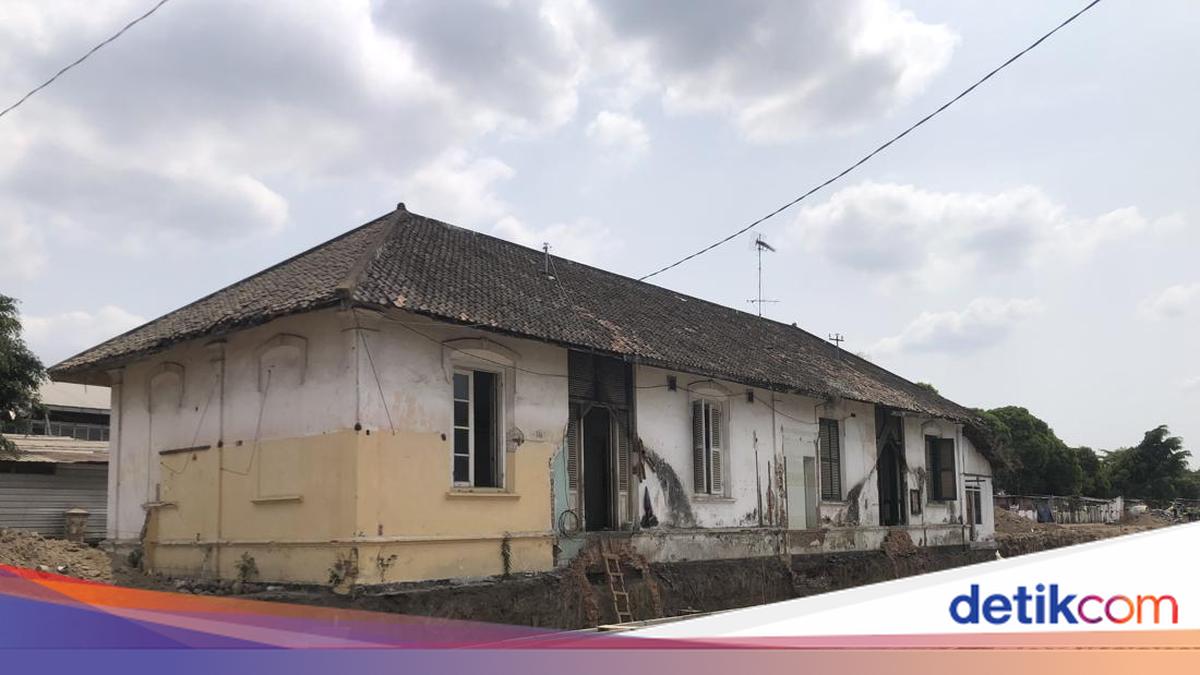
A historian has criticised what she describes as lax regulations on cultural heritage conservation after PT KAI demolished 11 historic houses at Lempuyangan Station. She said a more rigorous assessment should be required to determine whether demolition is permissible.
“You cannot directly prevent it like that; we are at a disadvantage under the regulations. The decision rests with the relevant agency, after it has carried out its assessment. Is demolition allowed? It turns out it is,” Maria Tri Widayati, head of the Kandang Kebo community, told detikJogja by telephone on Saturday (10 October 2026).
“That may be one factor. We do not know whether an assessment was carried out because the buildings had not been designated cultural heritage. The Cultural Heritage Expert Team (TACB) presumably had not assessed them,” she added.
Maria said she deeply regretted the demolition, arguing that bringing down a historic building should be a last resort when no other solution is available.
“I am very sorry. Were there really no other solutions? Sometimes we do not know what is happening, and then suddenly the buildings are demolished. We are left shocked when they have already been torn down,” she said.
“Demolishing a building is the last resort, when there is no other option. In my view, preserving buildings that form part of our cultural heritage remains an obligation,” she added.
Maria said the 13 historic houses south of the station should already have been classified as cultural heritage. PT KAI, however, recently said that, after checking with the Yogyakarta City Culture Office, the houses were not cultural heritage buildings.
“Clearly they qualify: they meet the age criterion, being more than 50 years old. They are also significant because they once served a purpose connected with transport. They have value in terms of knowledge, architecture and history,” she said.
Maria, who teaches heritage and cultural tourism at Sanata Dharma University, added that buildings that should have cultural heritage status are continually losing out to present-day needs.
She acknowledged that current needs are substantial, but said other ways of meeting them are often not properly explored.
“As cultural heritage conservators, we lose out to arguments about meeting present-day needs. From what I have read in the news, the need is to accommodate the overflow of passengers, and it is indeed very high. It can also be frustrating to pass through there because of the traffic,” she said.
“So, in our view, the regulations are too lax. But because the buildings are not designated cultural heritage, even though the law says demolition is allowed, or that they are not yet cultural heritage, they should still be treated in the same way as cultural heritage buildings,” Maria added.
Nevertheless, Maria said she was grateful that two historic houses remained in the Lempuyangan project. She hopes PT KAI has complete documentation recording all the buildings and the site’s condition before demolition.
She also urged the relevant agency to designate the two surviving houses as cultural heritage as soon as possible.
“Yes, if possible, we should jointly urge the Yogyakarta City Culture Office to designate them as cultural heritage promptly. The difficulty is that even if we submit an assessment for a recommendation, we can do nothing if the owner does not give permission. That is the hardest part,” she said.
PT KAI demolished 11 of the 13 historic houses in front of Yogyakarta’s Lempuyangan Station as part of efforts to reorganise the area. Kandang Kebo, an independent cultural and heritage conservation group in Yogyakarta, expressed regret and drew attention to what it considers lax regulations governing the designation of buildings as cultural heritage.
PT KAI had earlier said it demolished 11 of the 13 former official residences in front of Lempuyangan Station. Only two houses remain standing.
“Of the 13 company houses, 11 have been demolished and two retained in accordance with the guidance and recommendations of the Yogyakarta City Culture Office. They are actually two houses joined together, which makes them look like one. They were left standing, as recommended by the cultural preservation office, so that something would remain,” Feni Novida Saragih, public relations manager for KAI’s Yogyakarta Division 6, told detikJogja on Friday (9 October).