
Help! Indonesia’s Prehistoric Treasures at Risk of Being Lost to Wildfires
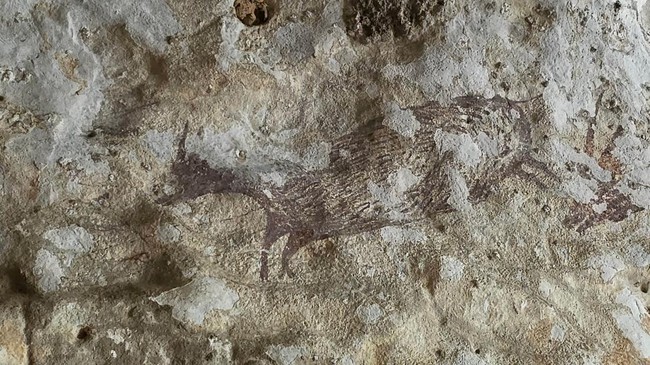
Jakarta, CNBC Indonesia — Indonesia’s prehistoric treasures, dating back tens of thousands of years, are now at risk of damage from forest and land fires. Heat and smoke threaten cave paintings in the Maros-Pangkep area of South Sulawesi, home to some of the oldest artworks ever discovered.
Basran Burhan, an archaeologist at Australia’s Griffith University, warned that heat can damage the paintings even if flames do not reach the caves directly.
“The first and most damaging impact is heat. Even if the fire does not directly touch the paintings, heat can damage them by changing the temperature around them and accelerating corrosion,” he said, as quoted by Reuters on Saturday (24 October 2026).
Another threat comes from smoke, which produces soot that can cover the paintings.
“The smoke creates soot that covers the paintings, making them blurred and difficult to identify,” Burhan said.
The paintings in Maros-Pangkep depict a human-like figure interacting with a pig. Griffith University researchers estimate they are at least 51,200 years old, making them important evidence of the development of art and human storytelling in prehistoric times.
Other prehistoric art has also been found on Muna Island, near Sulawesi: reddish hand stencils estimated to be at least 67,800 years old. The age of both discoveries makes the Sulawesi region an important location for research into the early history of human art.
Wildfires have now reached the karst landscape that contains these relics. Firefighter Muhammad Ikfar said flames burned for more than a week in early October, with the nearest fire about 800 metres from the caves. More than 270 hectares of land in the national park burned between 30 September and 18 October, he said.
The fires occurred as Indonesia faced a dry season intensified by the El Niño phenomenon, which raises temperatures and reduces rainfall. Sumatra and Kalimantan have been the worst-affected regions, but fires have also spread to South Sulawesi, including the national park known for its karst landscape and prehistoric sites.
Ikfar said firefighters were still working to extinguish fires in other parts of the national park on Thursday (22 October 2026) and Friday. Dry ground and the absence of rain mean the fire risk remains a concern, while heat and smoke could continue to threaten the ancient relics even if flames do not reach the caves.
Burhan warned that without swift action, Indonesia could lose important evidence of human history.
“If we do not act immediately, if there are no tactical mitigation efforts to deal with this incident, we will lose one of the most remarkable pieces of evidence of human history in Maros-Pangkep. That would be truly regrettable,” he said.
Source: jawawa.id (https://jawawa.id/newsitem/help-indonesias-prehistoric-treasures-at-risk-of-being-lost-to-wildfires-1792813826)
Originally published by CNBC Indonesia (https://www.cnbcindonesia.com/tech/20261024082620-37-779079/tolong-harta-karun-purbakala-ri-terancam-hilang-disapu-karhutla), translated from Indonesian