
Heavy Rainfall Pushes Up Bird's-Eye Chilli Prices in Jakarta
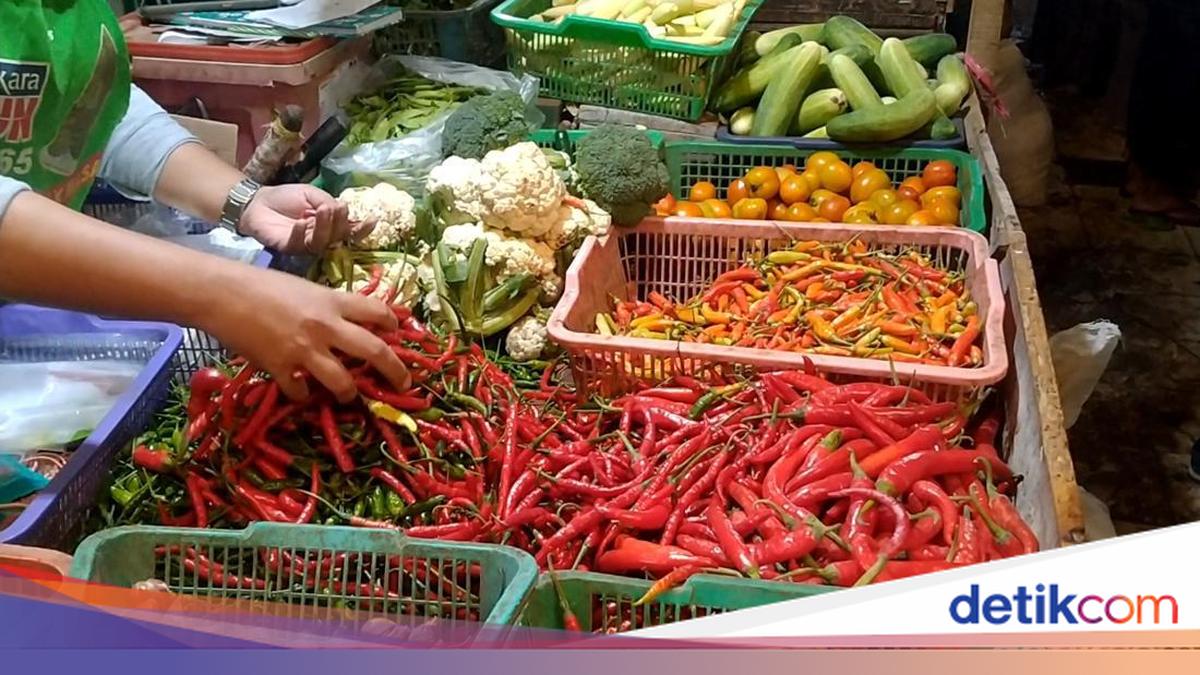
Head of the Jakarta Provincial Service for Food Security, Maritime Affairs and Agriculture (KPKP) Hasudungan A. Sidabalok said that the high rainfall in producing areas is one of the main reasons for the rise in prices. ‘The Jakarta Provincial Service for Food Security, Maritime Affairs and Agriculture, in line with its duties and functions, conducts regular monitoring for strategic food commodities. The horticultural commodities that are classified as strategic foods are chilli and onions,’ Hasudungan said in a statement on Wednesday (20/5/2026).
Based on monitoring in the second week of May 2026, several horticultural commodities showed price increases compared with the previous week. Red bird’s-eye chilli recorded the highest increase, at 12.12% or Rp 8,689 per kg, from Rp 71,664 to Rp 80,354 per kg.
In addition, Hasudungan said, curly red chilli rose 5.61% or Rp 2,926 per kg, from Rp 52,117 to Rp 55,103 per kg. The price of red onions also rose 3.96% or Rp 2,082 per kg, from Rp 52,615 to Rp 54,697 per kg.
Meanwhile, red chilli TW rose 3.84% or Rp 2,306 per kg from Rp 60,069 to Rp 62,375 per kg. As for green bird’s-eye chillies, they rose 3.05% or Rp 1,773 per kg, from Rp 58,166 to Rp 59,939 per kg.
Hasudungan explained that the rise in horticultural commodity prices was influenced by weather conditions in producing areas. The still-high rainfall causes production to fall due to reduced harvest quality and increased attacks by Crop Pests (OPT).
‘The rise in horticultural commodity prices was caused by the persisting high rainfall in producing areas, leading to reduced production due to lower quality and increased attacks by Organisme Pengganggu Tanaman (OPT),’ he said.
Not only weather factors, Hasudungan said, price rises were also triggered by rising market demand ahead of the National Religious Holidays (HBKN) Idul Adha.
‘As Idul Adha approaches, there is an increase in market demand, leading to higher prices for chilli and onions,’ he added.
He added that the DKI Jakarta KPKP continues to monitor food prices regularly, both through direct field monitoring and via the food price monitoring application, one of which is the Jakarta Food Price Information (IPJ).