
Heatwave Stresses Cows, Causing Hundreds of Millions of Litres of Milk to Disappear
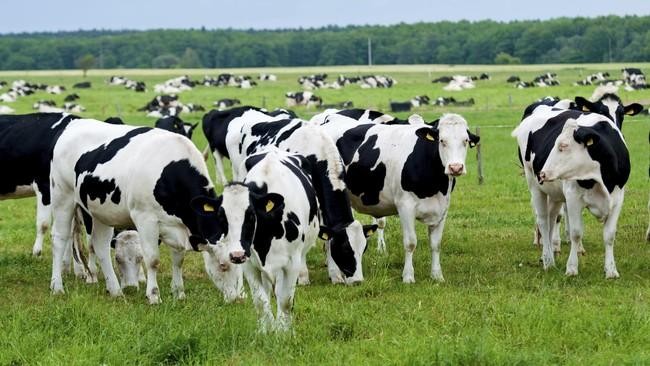
Extreme heatwaves affecting parts of the world throughout 2026 are putting pressure on livestock farming, including cow’s milk production.
High temperatures affect not only livestock health but also milk productivity and feed availability. This is a new challenge for the dairy industry amid growing global food demand.
These climate pressures have coincided with a strengthening El Niño in 2026. In an update in October 2026, the National Oceanic and Atmospheric Administration (NOAA) forecast that El Niño would continue to intensify into early 2027.
However, not every heatwave can be directly attributed to El Niño. The phenomenon’s effects vary between regions, while climate change is also increasing the risk of extreme temperatures.
The impact of hot weather on milk production is evident in the UK, which experienced its hottest summer on record in 2026.
Heatwave cuts UK milk production
According to an analysis by the Energy and Climate Intelligence Unit (ECIU), released on 25 September 2026, UK dairy farmers lost more than 240 million litres of milk supply compared with forecasts for May–August 2026.
That amount is equivalent to about four days of national milk supply, with production losses valued at more than £83 million.
The decline followed five intense heatwaves and drought conditions across the UK during the summer.
The impact was also evident on farms. Charles Goadby, a farmer in Warwickshire, told the BBC on 12 July 2026 that his cows’ milk production fell from about 40 litres to 32 litres per cow per day when temperatures reached their peak.
That represents a decline in milk productivity of about 20%. Although production later recovered to 35 litres per day, it remained below normal levels.
The ECIU nevertheless estimates that UK milk production for 2026 could still approach a record, as high output earlier in the year helped offset the summer decline.
Why does hot weather reduce milk production?
Dairy cows are vulnerable to heat stress when ambient temperatures and humidity interfere with their ability to release body heat.
Under these conditions, cows tend to eat less, need more water and use more energy to regulate their body temperature.
As a result, less energy is available for milk production, reducing productivity.
Heat also affects production indirectly by disrupting feed availability.
Drought can inhibit grass growth and reduce harvests of feed crops. Farmers may then have to use winter feed reserves earlier or buy additional feed at higher cost.
Debbie Wilkins, a dairy farmer in Gloucestershire, told the BBC that costs rise when cows have to be moved into barns, while lower milk output further strains farmers’ finances.
The pressure is compounded by persistently high energy, fertiliser and operating costs.
Some farmers are still making losses even as milk prices rise. Dyfrig Griffiths, a farmer in Wales, told the BBC in October 2026 that he was receiving about 39 pence per litre of milk, while production costs had exceeded 40 pence per litre.
This shows how extreme weather can squeeze farmers’ incomes through two channels at once: lower production and higher operating costs.
Global milk prices fall: what lies ahead?
Although heatwaves have disrupted milk production in the UK, global dairy prices have moved in a different direction.
According to a Food and Agriculture Organization (FAO) report released on 6 November 2026, the FAO Dairy Price Index stood at 117.8 points in October 2026.
The index fell by 1.1% from September and was 16.9% below its October 2025 level.
The decline mainly reflected relatively ample international dairy supplies and weak import demand.
This indicates that production disruptions in one country do not necessarily drive global prices higher immediately, particularly when supplies from other exporting countries remain sufficient.
Over the longer term, global demand for milk is still expected to increase.
The OECD-FAO Agricultural Outlook 2026–2035 projects that global milk production will grow by an average of 2% a year over the coming decade, primarily through improvements in livestock productivity.
Consumption of dairy products is also expected to rise with population growth, urbanisation and higher incomes.
The OECD-FAO expects demand for dairy products in South-east Asia to grow faster than domestic production. This could increase import requirements, particularly for milk powder.
The United States and Oceania are expected to remain the main suppliers of milk powder to South-east Asia.
However, the OECD-FAO also warned that extreme weather events could heighten risks to the sustainability of milk production, particularly in areas vulnerable to drought and high temperatures.
What about Indonesia?
The projected rise in demand for dairy imports in South-east Asia is a concern for Indonesia, whose dairy industry remains heavily dependent on overseas supplies.
This underlines the importance of improving domestic farm productivity, particularly as extreme weather can disrupt milk production and feed availability.
According to the National Research and Innovation Agency (BRIN) in November 2026, Indonesia still imports the equivalent of 3.8 million tonnes of fresh milk a year, worth around Rp32.3 trillion.
The Agriculture Ministry’s Director General of Livestock and Animal Health, Agung Suganda, said the government needs an additional 600,000 dairy breeding cows by 2030 to raise domestic production to 3.9 million tonnes of fresh-milk equivalent.
The government is also preparing Rp3.4 trillion in Presidential Assistance funding to initially procure 100,000 dairy breeding cows in 2027.
However, increasing production depends on more than expanding the livestock population. Feed costs remain a major challenge, accounting for about 70% of livestock production costs.
To raise productivity, BRIN is promoting closer integration between research and industry, including the development of improved breeds, quality feed and digital technology such as SIROSA, which predicts dairy-cow milk production.
As the risk of extreme temperatures grows, strengthening Indonesia’s dairy industry will also require climate adaptation, including better management of barn temperatures, water supplies and feed resilience.
Rising demand for milk and the threat of extreme weather therefore pose a dual challenge for Indonesia. Efforts to reduce import dependence must go hand in hand with higher productivity and stronger resilience to climate change.
Source: jawawa.id (https://jawawa.id/newsitem/heatwave-stresses-cows-causing-hundreds-of-millions-of-litres-of-milk-to-disappear-1794487884)
Originally published by CNBC Indonesia (https://www.cnbcindonesia.com/research/20261111142010-128-784287/gelombang-panas-bikin-sapi-stres-ratusan-juta-liter-susu-menguap), translated from Indonesian