
Heart-wrenching: Gaza children lose ability to speak amid war trauma
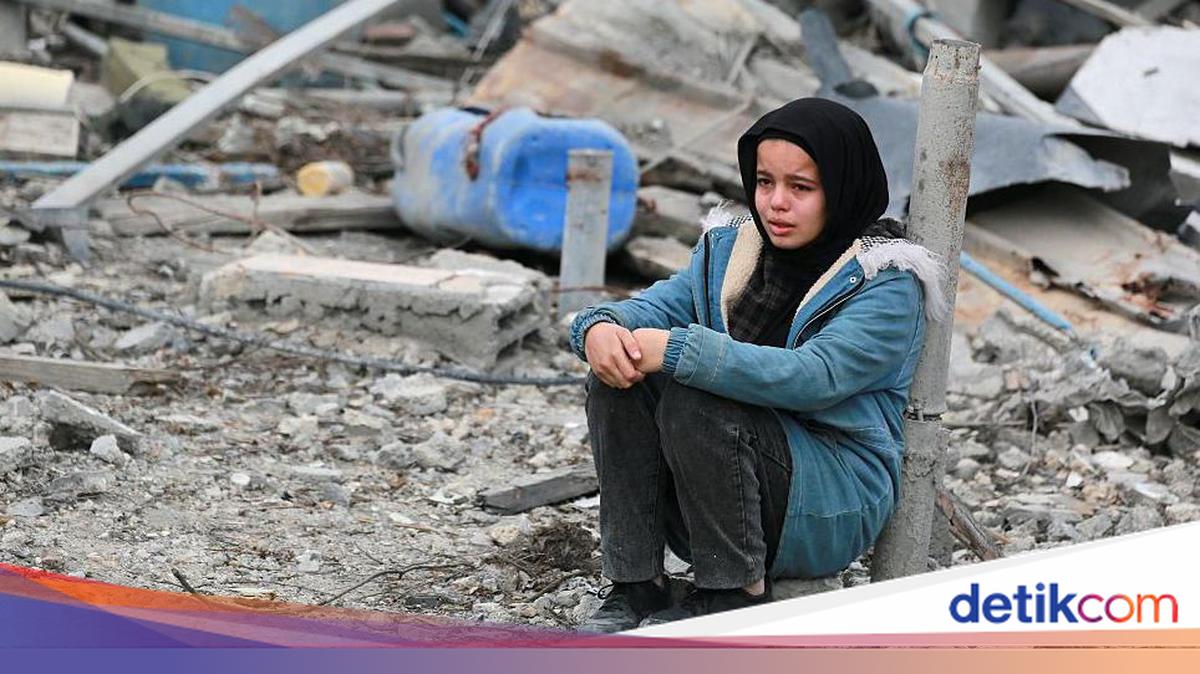
Violence, destruction and death in Gaza have caused some children to respond to immense suffering with silence. One such child is Adam. Before the war, Adam was a cheerful and talkative child. But when he turned five, he suddenly stopped interacting with the world.
“There is not a single child in Gaza who has not experienced trauma,” says Norwegian child psychotherapist Katrin Glatz Brubakk to BBC Mundo. “Over one million children have suffered severe trauma.”
Katrin has conducted two humanitarian missions to Gaza in 2024 and 2025 with Médecins Sans Frontières (MSF), treating children who have lost their ability to speak due to the conflict. Katrin does not know the exact number of children in Gaza who have stopped communicating, but she reports dozens of similar cases.
Local doctors told Al Jazeera network that such cases are “continuously increasing”.
Six months after the ceasefire announcement in Gaza, violence continues, with “Israeli attacks remaining routine,” said United Nations High Commissioner for Human Rights Volker Türk in April.
At least 846 people, including women and children, have been killed in Gaza in Israeli attacks since the ceasefire, according to the local health ministry.
Israel, which claims its attacks are to defend its troops and counter Hamas militant threats, reported five of its soldiers killed during the same period.
Hamas and Israel have accused each other of violating the ceasefire agreement.
Since October 2023, Israeli forces have reportedly killed over 20,000 children in Gaza and injured more than 41,000, according to UNICEF.
In total, Israeli attacks have killed over 72,000 people, mostly civilians, and injured more than 172,000, per Gaza’s health ministry.
BBC Mundo interviewed Katrin Glatz Brubakk on the trauma causing Gaza children to lose their speech ability, the impact of violence on their brains, and why the path to recovery sometimes begins with blowing bubbles. Here is the interview excerpt.
MSF’s Katrin Glatz Brubakk blows bubbles with three-year-old Maria at Nasser Hospital in southern Gaza. BBC
Why do children in Gaza stop speaking?
In Gaza, children live with severe trauma in conditions of prolonged uncertainty. They worry about their own lives, their families’, friends’, and loved ones’. These factors cause extreme stress and impact on their nervous systems.
Reactions to this stress vary among children. Some show restlessness, insomnia, emotional outbursts, or screaming — signs that can be detected. However, some children react by becoming completely silent, as if their nervous systems say: “I can’t take it anymore”.
Ultimately, they withdraw to protect themselves. Language is part of this. For these children, silence becomes a way to disengage from a world that continues to cause them pain and suffering. Thus, silence is not a conscious choice, but a neurological response to extreme stress and trauma.
MSF’s Katrin Glatz Brubakk has conducted two missions to Gaza with Médecins Sans Frontières. The child psychotherapist is a professor at Norway’s University of Science and Technology (NTNU).
Many struggle to comprehend the suffering endured by Gaza’s children. Can you describe the extreme trauma they face?
There is not a single child in Gaza untouched by trauma. Over one million have suffered severe trauma. They have been displaced, lost their homes, and cannot attend school as schools have been bombed. All children experience loss — of family members, school friends, teachers, neighbours. Many have seen dismembered bodies and smelled blood. Some children tell me they helped collect human remains or brain matter from the streets. This is extreme trauma. And it is not a one-off occurrence; most children have endured it repeatedly.
Moreover, they have lost all sense of safety. For healthy development, children need a degree of trust in the world — belief that it can be good, that people do not wish to harm them. This sense of safety has been entirely destroyed by the scale of destruction affecting everyone in Gaza. No child in Gaza can sleep assured they will wake up the next day. They have no room they can enter, close the door to, and know no one can reach them. Thus, the war has not only caused trauma but also shattered their entire worldview.
Can you tell us about the children you’ve treated in Gaza?
I want to speak about Adam, a five-year-old boy. He was very lively, cheerful, talkative, and active. He loved being outdoors and playing. After the conflict began in 2023, his family was forced to flee and move into a tent. His grandparents lived a bit further away, also in a tent. One day, Adam and his father went to visit his grandparents in an area with no evacuation orders and supposed to be safe. But without warning, a projectile landed very close to them, severely injuring Adam and his father. They were rushed to hospital, but as is common during such attacks, there were so many casualties that no hospital beds were available.