
Healthy Workers, Dignified Indonesia
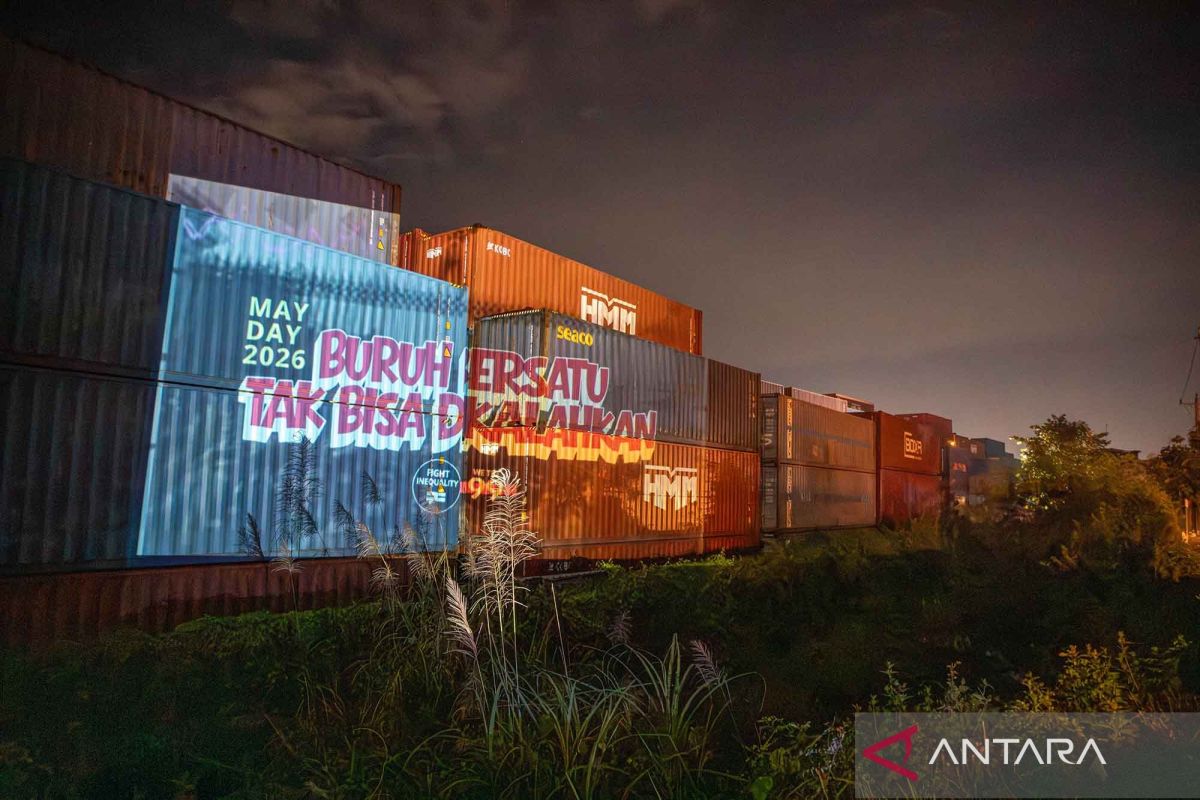
Jakarta (ANTARA) - International Labour Day is not merely a public holiday, a mass parade, or an annual routine. It is a collective memory that human labour has been, and is still often, treated as a cheap commodity.
Its symbolic roots refer to the workers’ struggles in Chicago in 1886, particularly the Haymarket incident, which became a symbol of the international fight for workers’ rights and humane working hours.
In Indonesia, 1 May was designated as a national holiday through Presidential Decree Number 24 of 2013 on the Designation of 1 May as a Holiday. However, Labour Day must not stop at being a holiday. It should become a moment of national reflection: does Indonesia’s economic development truly bring dignity to working people, or does it merely count workers as production cost figures?
Workers are not just labour. Workers are weary bodies, lungs inhaling dust, eyes staring at screens too long, spines bearing loads, minds pressured by targets, and families depending on monthly wages for their future.
The history of Indonesian labour is a long history of the people’s bodies working amid changes in power. During the colonial era, labour relations shifted from forced labour and plantation systems to contract work, especially after the economic changes in the colonial 19th to early 20th century. In the early years of independence, labour unions grew as part of the decolonisation process, when workers had more space to organise and take collective action.
During the New Order era, the labour movement was restricted through a corporatist and state-controlled industrial relations system. After Reformasi, the space for unionising strengthened, particularly after the birth of Law No. 21 of 2000 on Workers’ Unions/Labour Unions; but new dynamics emerged after the Job Creation Law, including the Constitutional Court decision on 31 October 2024, which asked the lawmakers to draft a new labour law separated from the Job Creation Law.
From that history, it is clear that labour issues are not just about wages. They are issues of public health, occupational safety, economic democracy, social justice, national productivity, and geopolitics. A country that wants to advance cannot build industry on vulnerable workers’ bodies. Factories, ports, hospitals, mines, plantations, logistics warehouses, and the digital economy do drive growth, but they all stand on human labour that needs real protection.
Data from Indonesia shows that work is not yet fully safe and decent. BPS records the average worker wage in February 2025 at Rp3.09 million per month. At the same time, Satu Data Indonesia records 462,241 work accident cases throughout January–December 2024, with 91.65 percent occurring among wage recipients. These figures are not mere administrative statistics. They mean there are workers who fall, get injured, fall ill, lose bodily functions, lose income, even lose their family’s future.
This reality is visible every day. Garment workers chase production targets with a machine rhythm that is not always body-friendly. Palm oil workers face heat, pesticides, sharp tools, and work locations far from health facilities. Online couriers race with road risks to fulfil orders and incentives.
Construction workers face heights, concrete, dust, and heavy physical loads. Health workers care for patients with empathy, but often return home carrying mental fatigue after long working hours. Behind every product, service, and development, there is human work whose body must be protected.
Globally, the ILO records that 2.93 million workers die every year due to work-related factors, while around 395 million workers experience non-fatal work injuries every year. The ILO also affirms that safe and healthy work environments have become part of the fundamental principles and rights at work, since the International Labour Conference decision in 2022. Therefore, occupational safety and health are not additional facilities, but basic rights of human labour.