
Healthy Lifestyle Trend in Bali Triggers Surge in Omega Egg Orders for Local Farmers
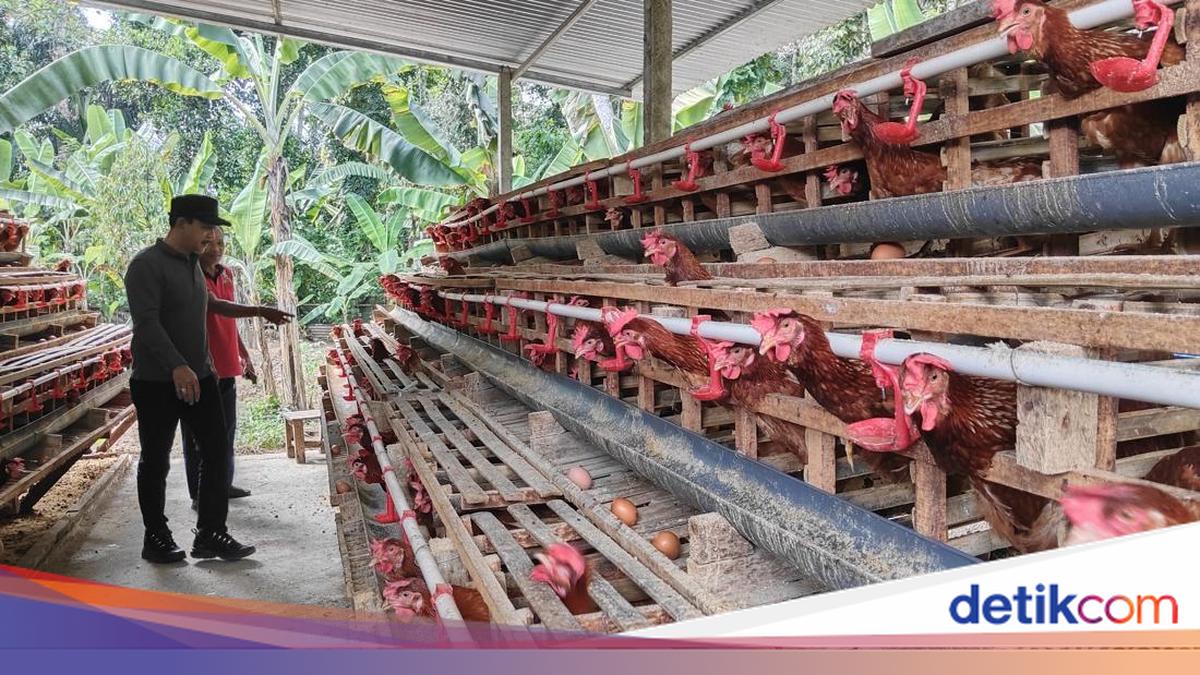
The burgeoning healthy lifestyle trend in Bali has brought unexpected fortune for local farmers in Ayunan Village, Abiansemal, Badung. Kadek Dwi Andika and his wife, Nenik Suryanadi, are now inundated with orders for omega eggs, with demand soaring from sports communities and dieters.
“For this omega egg market, we are indeed targeting consumers with a healthy lifestyle, because the nutritional content is different and better for the body. The demand is very high from sports enthusiasts, to the point where we are sometimes overwhelmed trying to meet the local Bali supply,” said Nenik Suryanadi during a visit to their farm on Thursday (18/6/2026).
The high public interest has prompted the home-based farming business, named Candi Kusuma Pinatih Farm, to plan an expansion. Nenik admitted that in the past week alone, they have managed to market up to 1,000 omega eggs at a price of Rp 75,000 per crate for the medium size.
“The selling value of these omega eggs tends to be stable at around Rp 60,000 to Rp 65,000 over the last six months, only now reaching Rp 75,000 because we sell directly from the farm so consumers have no doubts. In fact, seeing this very potential market, we already have plans to enlarge the area and add new coop buildings,” Nenik explained.
Not only omega eggs, demand for regular chicken eggs at the farm has also seen a drastic increase ahead of religious holidays. High consumption from fitness centres and hospitals means daily production is quickly absorbed within hours.
“Our regular chicken egg production is around 500 eggs per day, but the incoming demand is very high, reaching 1,000 to 2,000 eggs, which sell out immediately in a day. One of the triggers is that fitness centres are now popping up everywhere; even a single location can use up to 10 crates of eggs per day,” said Kadek Dwi Andika.
Kadek recounted that this chicken farming business was only started with his wife in 2023. Beginning with a hobby of raising free-range chickens, they astutely spotted a large market opportunity and decided to study more professional farm management.
“Previously, I was already accustomed to raising free-range chickens, but seeing the huge market demand, my wife and I finally agreed to study further to develop this business seriously. We thoroughly learned about profit calculations, advantages, disadvantages, down to the details of care and disease prevention before finally daring to proceed,” Kadek revealed.
Currently, Candi Kusuma Pinatih Farm manages a population of around 700 chickens, with 500 of them still productive in laying eggs. The commodities are divided into several types, comprising 300 red laying hens and 200 golden comb free-range chickens, while the rest are still in their growth phase.
“These red laying hens have a productive egg-laying period of up to 2 years before we eventually sell them as culled broilers at Rp 45,000 per kilogram. The meat from these culled chickens is also in high demand in the local Bali market for processing into satay or soup dishes,” Kadek added.
The couple’s success in maintaining farm productivity is inseparable from the implementation of a very strict biosecurity system in the coop area. This measure is their main key to preventing the transmission of livestock diseases due to extreme weather factors.
“The unpredictable weather now makes chickens very susceptible to illness, which is why we implement strict supervision with routine disinfectant spraying in the farm area. We also remain committed to providing high-quality feed despite its high price, in order to maintain chicken health and the quality of the eggs produced,” Kadek explained.
Through the clean and well-organised management of Candi Kusuma Pinatih Farm, the couple carries a major mission to change the public’s perspective on the world of farming. They want to prove that the agribusiness sector can be managed in a modern and hygienic way, keeping up with the times.
“We want to educate the younger generation now so that their mindset changes and they no longer consider chicken farming to be a dirty and squalid job. A home-based business like this has proven it can operate cleanly alongside technological developments; in fact, the sales results are already very good and have surpassed the break-even point,” Kadek stated.
Despite recording promising profits, Kadek did not deny that independent farmers like himself still face the heavy challenge of high feed operational costs. The price of corn and concentrate on the market is currently reported to have increased by up to Rp 10,000 per sack.
“Our hope for the future is that there will be attention so that feed prices can be lowered, enabling independent farmers’ operations to be more optimal and efficient. Besides feed, we also hope the government can provide educational assistance or training on how to produce laying hen chicks independently here in Bali,” Kadek lamented.
Dependence on chick supplies from outside the island is acknowledged as one of the determining factors for the high initial capital that local farmers must expend. For 18-week-old red hen chicks, farmers must purchase them using a fairly high weekly cost calculation system from the supplying company.
“These red hen chicks still have to be brought in from outside Bali because no one in our region has developed them yet; the price is around Rp 15,000 per chick for the small ones, or calculated at Rp 5,600 per week for ready-to-lay hens. If the government could guide us to hatch our own chicks from upstream to downstream, certainly production costs could be reduced and local farmers’ profits would be far more decent,” Kadek concluded.