
Healthy Eating Does Not Have to be Expensive: How to Meet Family Nutritional Needs Affordably
Amidst the various daily necessities that must be met, many families are becoming increasingly prudent in managing household expenses. From transport and education costs to daily essentials, everything requires careful planning. In this situation, a question often faced by many families arises: how can nutritious food be provided without increasing expenditure? This question is vital because the quality of food consumed by a family affects not only current health but also determines future quality of life.
Data from the Basic Health Research (Riskesdas) shows that the prevalence of obesity in residents aged 18 and over increased from 15.4 per cent in 2013 to 21.8 per cent in 2018. Meanwhile, the 2023 Indonesian Health Survey (SKI) recorded the prevalence of diabetes in residents over the age of 15 at 11.7 per cent, an increase from 10.9 per cent in 2018. Various non-communicable diseases such as diabetes, hypertension, heart disease, and stroke are now becoming significant health challenges for the community.
The good news is that meeting family nutritional needs does not always require high costs. Many nutritious food sources are available within the community at relatively affordable prices. This is the spirit behind the ‘Diverse, Balanced, and Safe’ (B2SA) campaign, which is continuously encouraged by the National Food Agency.
It is not about expensive food, but about a balanced plate. There has long been a misconception that healthy food is synonymous with expensive ingredients or popular trendy menus. However, health is not determined by the price of food, but by the nutritional balance consumed daily. The B2SA principle aligns with the Ministry of Health’s ‘Isi Piringku’ (My Plate) guidelines, where half the plate is filled with vegetables and fruit, while the other half consists of staples and side dishes as sources of energy and protein.
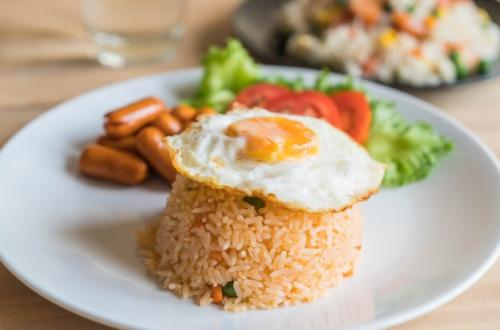
This means a nutritious meal does not need to contain expensive or imported ingredients. The public can utilise food available around them according to the potential and habits of their respective regions. For example, a B2SA menu can consist of rice, corn, sweet potato, or cassava as carbohydrate sources; eggs or mackerel as animal protein sources; tempeh or tofu as plant-based protein sources; and local vegetables and fruits such as spinach, water spinach, moringa leaves, bananas, or papaya.
The Deputy for Consumption Diversification and Food Safety at the National Food Agency, Andriko Noto Susanto, emphasised that the public does not need to spend large amounts to meet family nutritional needs. “B2SA is not expensive. By utilising the food available around us, we can meet nutritional elements according to the standards,” he stated.