
Healthcare Innovation Advances: How Surgical Operations Have Changed From Past to Present
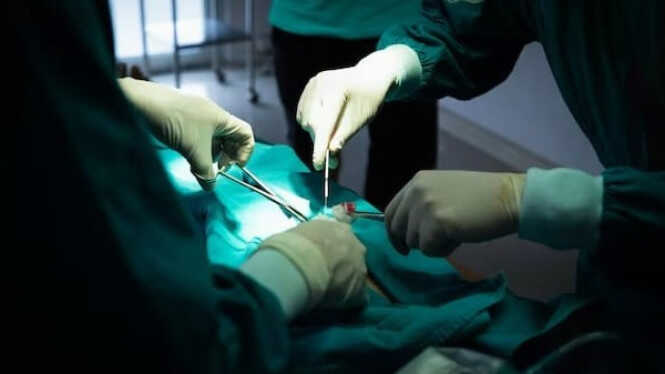
Jakarta — The development of medical technology has brought significant changes to the field of oncology, particularly in surgical procedures. Whereas cancer operations were once synonymous with large incisions and lengthy recovery periods, current approaches are increasingly modern, precise, and minimally invasive.
This transformation represents an important milestone in improving patients’ quality of life.
Prof. Dr. dr. Agus Rizal, A.H. Hamid, Sp.U, Subs. Onk (K) explained that the practice of surgical oncology has undergone a paradigm shift. According to him, conventional surgical techniques involving wide open wounds are now being phased out, with surgical approaches evolving towards procedures with far smaller incisions.
“Developments in oncology have shifted from open surgery with large surgical wounds to operations with smaller incisions,” explained Dr Agus Rizal at the grand launching of the Summit Robotic & Endourology Institute at Eka Hospital MT Haryono, Jakarta, on Wednesday 18 February 2026.
He added that the latest innovation in the field is the use of robotic technology in surgical procedures. Through robotic systems, doctors maintain full control over the course of the procedure. The movement of surgical instruments inside the patient’s body is precisely controlled by the doctor through a dedicated console, ensuring optimal accuracy.
According to him, smaller surgical wounds bring significant benefits for patients. The recovery process becomes faster and the length of hospitalisation can be shortened.
“Smaller wounds certainly mean patients can go home sooner, because nobody enjoys being a patient,” he said.
This is certainly welcome news, given that most patients hope to return to normal activities as soon as possible without having to endure prolonged hospital stays.
In general, minimally invasive surgery offers advantages over conventional operations, including minimising or even eliminating surgical scarring, reducing pain, shortening procedure times, accelerating post-operative recovery, and lowering the risk of complications.
Endoscopy, such as laparoscopy, is one commonly used example of minimally invasive surgery.
This technology is now available at the Summit Robotic & Endourology Institute. Eka Hospital is introducing a modern approach to urological procedures through the use of the Da Vinci Xi robotic system.