
Health Spending at Only 2.9% of GDP, Indonesia Targets Sector Investment
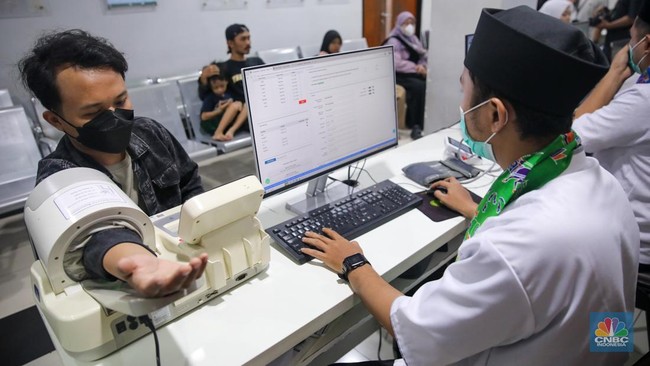
Jakarta, CNBC Indonesia – The government is targeting investment in the health sector to strengthen national health services whilst accelerating the transformation of the health industry.
Coordinating Minister for Human Development and Culture (Menko PMK) Pratikno said that investment in the health sector depends not only on capital and company operations, but also on the readiness of a supportive ecosystem. He said the government is currently building that ecosystem through strengthening the education of health workers, research, hospital construction, expansion of BPJS Kesehatan services, and the free health screening programme, which is expected to increase demand for health services in the future.
“We invite all partners to become strategic partners of the government. Come to us before problems become obstacles,” said Pratikno at the opening of the Indonesia Partnering Days 2026 event organised by Novo Holdings in Jakarta on Wednesday (29/7/2026).
Pratikno stressed that Indonesia needs collaboration with global investors to develop talent, research, technology and diagnostics, as well as to expand access to health services across the entire Indonesian territory.
In line with this, Director General of Pharmaceuticals and Medical Devices at the Ministry of Health (Kemenkes) Rizka Andalucia noted that Indonesian health spending had only reached around Rp614 trillion, equivalent to 2.9% of gross domestic product (GDP), in 2023. According to her, this figure shows that there is still considerable room for growth in Indonesia’s health sector.
Moreover, Indonesia’s per capita health expenditure remains relatively low, at around US$140, compared with Malaysia at around US$450 and Singapore at around US$4,000.
“This shows one important thing: Indonesia still has very substantial room to grow,” said Rizka.
Rizka said the government is accelerating the transformation of healthcare through digitalisation. One of the efforts undertaken is building a national digital health ecosystem connecting community health centres (puskesmas), hospitals, laboratories, clinics and public health institutions.
“The Satu Sehat platform, for example, is the backbone of national health data integration. More than 56,000 health facilities are now connected to the platform, and more than 40,000 facilities are actively submitting data,” she said.
Beyond digitalisation, the government has also begun developing the use of technologies such as artificial intelligence (AI), health robotics and genomic technology. Rizka stressed that these technologies are not intended to replace health workers, but rather to help improve diagnostic accuracy, speed up services and strengthen clinical decision-making.
Meanwhile, Indonesia is also reinforcing the self-reliance of its domestic health industry. Since the Covid-19 pandemic, the number of domestic vaccine producers has increased from one to four companies. National vaccine production capacity has also risen from 2.5 billion doses to 3.6 billion doses per year.
Currently, 10 of the 14 antigens in the national immunisation programme are produced domestically. According to Rizka, this development opens up opportunities for collaboration with investors in vaccine development, biological products and bio-manufacturing.
She added that the government welcomes investment that is not only market-oriented, but also drives innovation. Indonesia is opening up opportunities for cooperation in digital health, artificial intelligence, precision medicine, genomics, health data interoperability, health technology research and talent development.
“The transformation of healthcare cannot be carried out by the government alone. Visionary investors, innovative companies and trustworthy partners are needed,” she said.
The Danish Ambassador to Indonesia, Sten Frimodt Nielsen, said the transformation of healthcare requires collaboration between governments, hospitals, universities, companies, investors and start-ups.
“Technologies such as artificial intelligence (AI), genomics and digital health platforms have the potential to expand access to health services, particularly in an archipelagic nation like Indonesia,” he said.
Meanwhile, Managing Partner & Head of Asia at Novo Holdings, Dr Amit Kakar, said Indonesia is one of the most attractive health markets in Asia, supported by its large population, high adoption of digital technology, and the expanding coverage of the National Health Insurance scheme (JKN).
“The need for health infrastructure development and specialist services remains considerable, opening up opportunities for long-term investment in Indonesia’s health sector,” he said.
Source: jawawa.id (https://jawawa.id/newsitem/health-spending-at-only-2-9-of-gdp-indonesia-targets-sector-investment-1785318823)
Originally published by CNBC Indonesia (https://www.cnbcindonesia.com/lifestyle/20260729131935-33-754739/belanja-kesehatan-baru-29-pdb-ri-bidik-investasi-sektor-kesehatan), translated from Indonesian