
Health Ministry Urges Public to Be Vigilant Against Anthrax from Sacrificial Animals
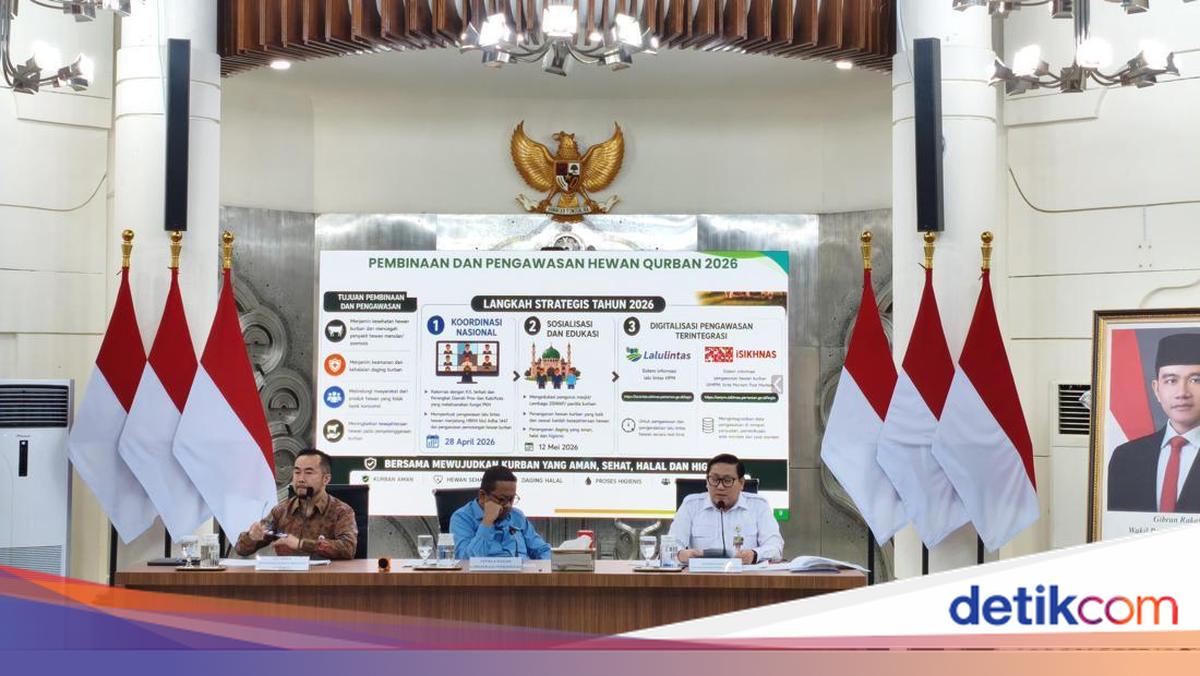
The Ministry of Health has emphasised the need for vigilance against zoonotic diseases from livestock during the Eid al-Adha sacrificial holiday,” stated Andi Saguni, Acting Director General of Disease Prevention and Control at the Ministry of Health, during a press conference at the Government Communication Agency office in Central Jakarta on Wednesday (13/5/2026). “Zoonotic diseases are infections transmitted from animals to humans or vice versa. In this context, anthrax is the primary zoonotic disease from livestock that requires heightened caution during Eid al-Adha,” he continued. Andi explained that anthrax originates from the bacterium Bacillus anthracis, which can form spores capable of surviving in the environment for a considerable time. Transmission can occur through direct contact with infected animals via skin or inhalation, consumption of undercooked meat, or exposure to soil and waste. He noted that according to Ministry of Health data, anthrax can lead to fatalities. The peak transmission occurred in 2023 with 81 cases. “From this data, in 2023 there were three deaths due to anthrax. In 2024, there was only one. Thankfully, in 2025 there were no deaths, and up to now in 2026, there have been none,” Andi clarified. “With this vigilance, we hope to safeguard public health so that cases are minimised or eliminated, and we hope there will be no more deaths,” he added. He described three types of anthrax: cutaneous infection, gastrointestinal affecting the digestive tract, and anthrax meningitis causing brain inflammation. Exposure typically happens during slaughtering, processing, or consumption of infected meat. To enhance vigilance against this infectious disease, four key measures can be taken. First, during selection and purchase of animals: “Hands should be washed with soap after contact during the selection and purchase process. And once again, do not buy sick or symptomatic animals for sacrifice,” he said. Second, during transportation and containment: healthy and sick animals must be separated. Third, during slaughtering and processing: the public is urged to use aprons, masks, gloves, and boots. “Fourth is the disposal of sacrificial waste, ensuring separation of solid waste like stomach contents and faeces from liquid waste such as blood and others,” he added. “These are the main standards in handling sacrificial animals,” he concluded.