
Health Ministry to Mandate Plain Packaging for Cigarettes
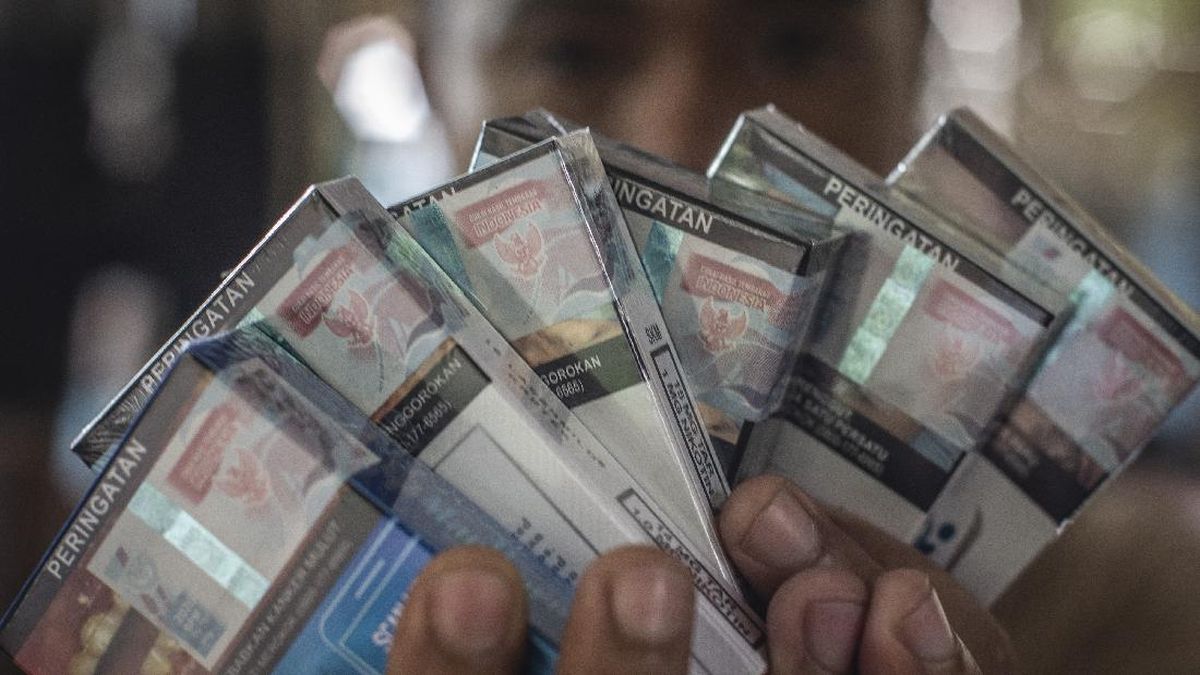
The Ministry of Health (Kemenkes) is formulating new rules for tobacco cigarettes and electronic cigarettes under the pretext of protecting the younger generation. In the latest regulation, Kemenkes plans to make cigarette packaging standardised or uniform, for both tobacco and electronic cigarettes.
Citing a Kemenkes press release, the Draft Minister of Health Regulation (RPMK) on the Inclusion of Health Warnings and Information on Tobacco Products and Electronic Cigarettes (vapes and the like) is being prepared to protect the younger generation.
“One of the substances regulated in the draft is packaging standardisation or plain packaging, namely the standardisation of packaging colours for tobacco products and electronic cigarettes to reduce product appeal, especially for children and adolescents,” the press release uploaded on the Kemenkes page last Friday (5/6) stated.
Kemenkes explained that the upcoming regulation is a follow-up to the mandate of Government Regulation Number 28 of 2024 concerning the Implementing Regulation of Law 17/2023 on Health, which regulates the standardisation of packaging for tobacco products and electronic cigarettes.
Acting Director General of Disease Control at the Ministry of Health, dr. Andi Saguni, said his party views that cigarette and vape packaging has so far not only functioned as a product container. According to him, cigarette packs also serve as promotion capable of attracting the attention of potential new smokers, especially the young age group.
“The main purpose of uniform packaging regulation is not to ban a legal product, but to reduce the visual appeal that has made tobacco products more attractive to children and adolescents. Cigarette packaging must not become a promotional medium that encourages the younger generation to start smoking,” said dr. Andi.
He stated that various international studies show that the implementation of plain packaging is effective in reducing the appeal of tobacco products, increasing the effectiveness of health warnings, and helping to prevent smoking initiation among children and novice smokers.
“When attractive design elements are reduced, public attention will be more focused on the health message listed on the packaging. This is one strategy proven effective in efforts to control tobacco consumption,” he said.
In the latest draft ministerial regulation, it will be stipulated that the packaging of tobacco products and electronic cigarettes uses uniform colours. Furthermore, pictorial health warnings will still be clearly included so that the public obtains adequate information regarding the health risks of consuming tobacco products.
In addition, brand identity and font type can still be included in accordance with applicable regulations.
According to him, the policy of packaging standardisation is not new at the global level. A number of countries have previously implemented similar policies as part of efforts to control tobacco consumption, including Australia, Canada, the United Kingdom, France, New Zealand, Singapore, Thailand, Brunei Darussalam, and Myanmar.
Andi stressed that the preparation of the draft ministerial regulation also involved stakeholders. He said that since 2024 the government has organised a number of public consultation forums, cross-ministerial and institutional coordination meetings, and received various inputs from the public, academics, professional organisations, business actors, and civil society organisations.
“All inputs submitted during the regulatory drafting process have been taken into consideration by the government. However, in principle, health policy must continue to prioritize the protection of the public, especially children, from the risk of addiction and the adverse effects of tobacco consumption,” said Andi.
He explained that the government is also providing an adequate adjustment period for business actors. In the draft ministerial regulation being prepared, the government regulates an additional adjustment period of a maximum of 12 months for the implementation of provisions on the inclusion of health warnings and information on tobacco products and electronic cigarettes.
Meanwhile, various cross-sector associations from the regional to national level have expressed objections to the proposed standardisation of packaging for tobacco and electronic cigarette products being formulated in the draft ministerial regulation.
The Daily Chair of the All-Indonesia Cigarette Industry Community Forum (Formasi), Heri Susianto, said the Draft Minister of Health Regulation on the Inclusion of Health Warnings violates the principles of legal certainty, the principle of benefit, and the principle of justice.
“The Ministry of Health’s sectoral ego is very high. Please, do not make misleading regulations. The mandate of PP 28/2024, which should be about health warnings, has expanded to packaging standardisation. All this time our input has not been appreciated, it is very complicated. The Ministry of Health must not be arbitrary,” said Heri in his statement last Saturday (6/6).
His party admitted disappointment because Kemenkes is making non-tobacco producing countries the benchmark for the draft ministerial regulation.
“Indonesia is a tobacco producer, do not equate it with Singapore and Thailand which are considered to have implemented strict packaging standardisation. Kemenkes should also not forget that there are intellectual property rights being violated by this Draft Ministerial Regulation,” he asserted.
Meanwhile, the Chairman of the National Governing Board of the Indonesian Tobacco Farmers Association (DPN APTI), Agus Parmuji, stated that packaging standardisation in the Draft Ministerial Regulation will make things difficult for farmers. Therefore, his party hopes the government will review the implementation of the rule.
This is because the draft regulation on packaging standardisation was made not in accordance with the reality of the tobacco ecosystem in the regions. Farmers in West Java, East Java, Central Java and West Nusa Tenggara provinces depend their livelihoods on tobacco harvests.
The Secretary General of the Indonesian Clove Farmers Association (APCI), I Ketut Budhyman, said that if the regulation is passed, the