
Health Ministry: TBScreen.AI Technology Can Boost National TB Screening Efficiency
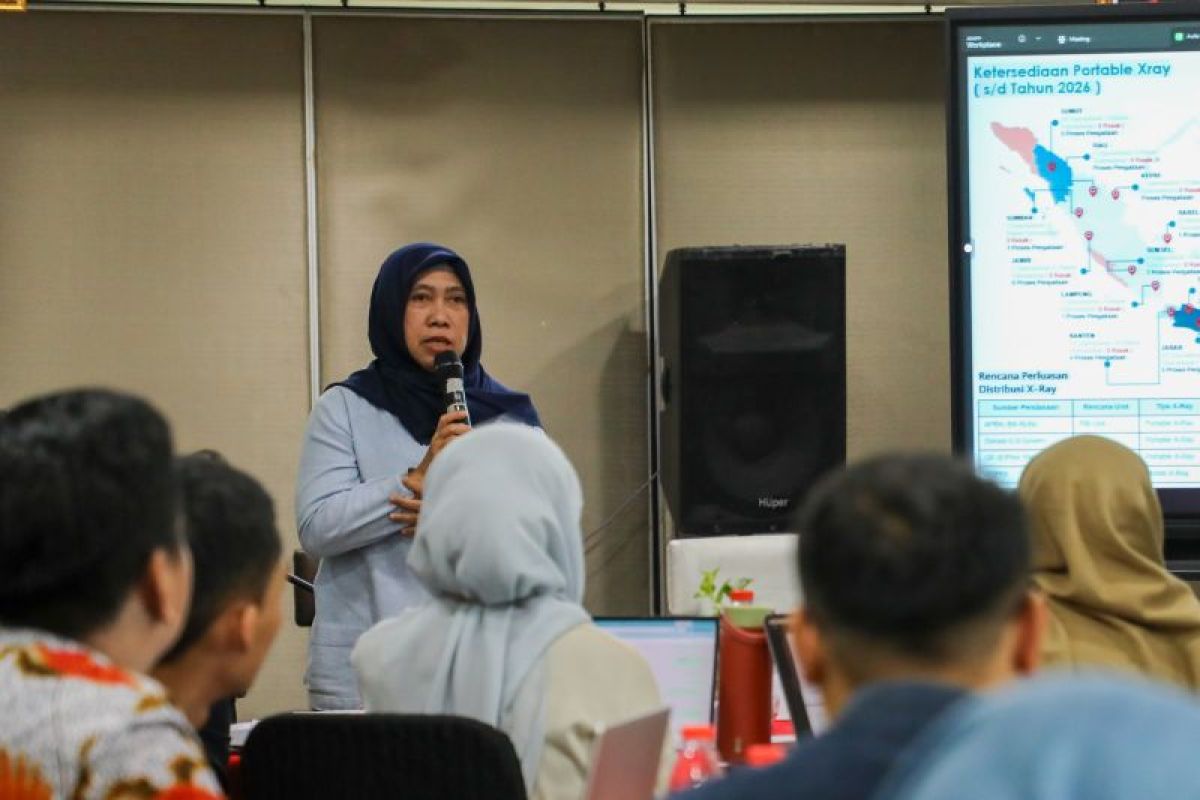
The Ministry of Health has stated that TBScreen.AI technology, created by KONEKSI, an Australia-Indonesia partnership platform for knowledge and innovation, is capable of increasing the efficiency of national tuberculosis (TB) screening, especially in remote areas with limited health facilities and specialist doctors. Rita Aryati, staff of the TB and Acute Respiratory Tract Infection (ISPA) Working Team at the Ministry of Health, said in Jakarta on Monday that data as of 27 July 2026 shows TB case notification achievement remains below target, with notifications only reaching 41 percent of the 45 percent target. Furthermore, treatment management is only at 89 percent of the 95 percent target. “Case finding must be followed by rapid and appropriate treatment to break the chain of TB transmission. This is considering that handling TB is one of the programmes that is the focus of the President’s PHTC. So, the TBScreen.AI research can assist the Ministry of Health in efforts to improve TB screening,” said Rita. TBScreen.AI is capable of analysing chest X-ray images in less than five seconds. In addition, the platform was developed based on the diversity of the Indonesian population, including factors of gender, age, race, and disability, so that screening results are more accurate and appropriate to the local context. Although the development of CAD for TB screening has grown globally, Rita said, Indonesia has not yet had an independently developed CAD system. Dr. Antonia Morita Iswari Saktiawati, principal researcher and lecturer at the Department of Internal Medicine, Faculty of Medicine, Public Health and Nursing, Universitas Gadjah Mada (UGM), explained that the dataset currently used by TBScreen.AI is still dominated by Yogyakarta, Central Java, and Papua, so it does not yet sufficiently represent the variation in characteristics of the Indonesian population. Therefore, adding data from other provinces is a top priority. Currently, TBScreen.AI can already be operated online and in the future, the team will create an offline version, so it can be effectively used in remote areas with limited internet access. “The data collection and testing carried out resulted in the TBScreen.AI platform achieving a sensitivity of 83.16 percent,” she said. According to her, the development of CAD technology according to the Indonesian context provides variation in chest X-ray image quality and cost affordability, because the government does not need to pay annual licence fees. In addition, the governance of sensitive health data is better maintained because it is managed directly by Indonesia. KONEKSI Team Leader Jana Hertz said this collaborative research affirms the commitment of both countries in utilising research results to produce relevant and sustainable innovations in the health sector. “KONEKSI supports research and innovation to address various development challenges, including through the use of digital technology. TBScreen.AI is one of 101 research projects supported by KONEKSI and is expected to help handle TB more quickly and precisely,” said Jana. She explained that this research was conducted by, among others, Universitas Gadjah Mada, the University of Melbourne, Sentra Advokasi Perempuan, Difabel, dan Anak (SAPDA), and the Papua Health and Community Development Foundation (YPKMP).