
Health Ministry Sets Five Agendas for Indonesian Health Council to Improve Healthcare Quality
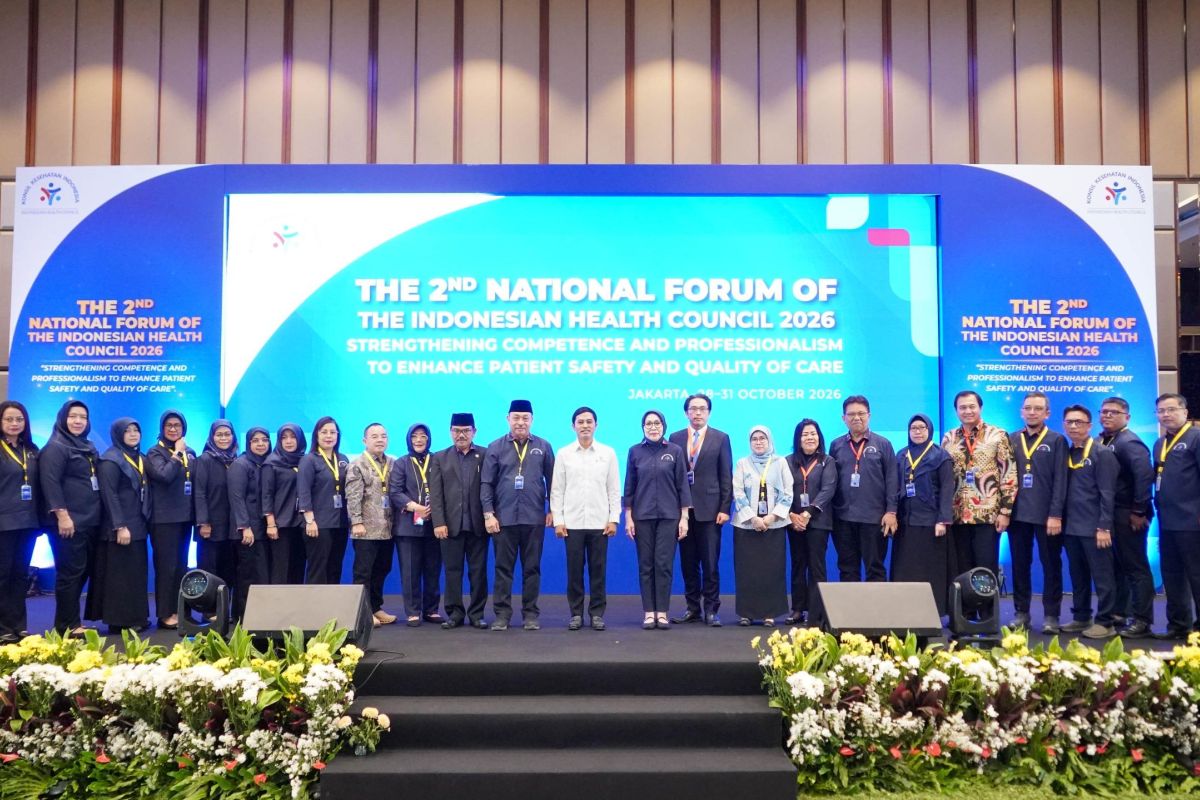
Jakarta (ANTARA) – The Health Ministry has set five main priorities for the Indonesian Health Council (KKI) to address the challenges of changing times and improve the quality of national healthcare so it can compete globally. The priorities aim to strengthen the scientific knowledge, legal standing and competency standards of all medical professionals.
Deputy Health Minister Dante Saksono Harbuwono said in Jakarta on Thursday that the five priorities are: strengthening adaptive competency standards; promoting lifelong learning; encouraging research and development; accelerating the ethical use of digital technology; and improving coordination and accountability.
He stressed the importance of strengthening the scientific knowledge, legal standing and competency standards of all medical professionals in Indonesia. He said this was crucial amid the rapid development of healthcare technology and the swift flow of medical information.
Dante illustrated the importance of formal qualifications by referring to the real-life story depicted in the popular film Catch Me If You Can. In the film, the central character convincingly pretends to be a doctor or pilot, but has neither formal credentials nor verified competence.
“Someone may appear convincing and possess certain knowledge, but that does not automatically prove that they have genuine professional competence. In healthcare, this competence is vital because it is directly linked to patient safety and must be assessed on medical grounds,” he said.
Dante added that medical knowledge is currently advancing very quickly. Studies indicate that medical science can be transformed entirely within three years, meaning some procedures that are relevant today may be replaced by more effective methods in the future.
The Health Ministry is therefore encouraging closer cooperation among the Indonesian Health Council, health colleges and universities or medical faculties to minimise the gap between technological advances and the governance of medical competence.
“Technology can support learning and medical decision-making, but it must not override the principles of caution, professional standards and responsibility to patients. Let us ensure that the health professions are built on a strong foundation of knowledge and well-grounded competence,” Dante said.
The ministry is committed to continuing to support this cross-sector collaboration so that all Indonesians can access high-quality healthcare provided by trusted medical professionals.