
Health Ministry Says 1.6 Million Indonesians May Have Visual Impairments
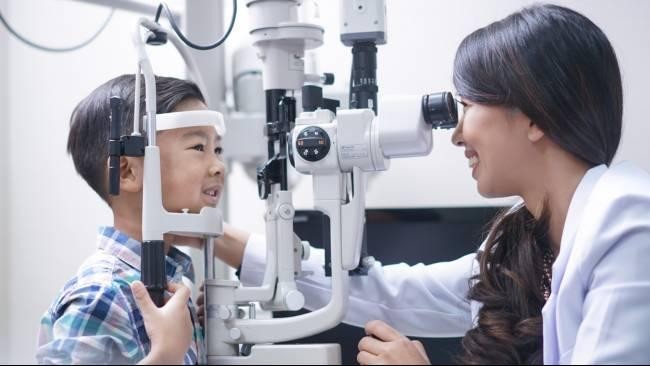
Jakarta, CNBC Indonesia – The Ministry of Health says 1.6 million Indonesians are suspected of having visual impairments, based on findings from its Free Health Check (CKG) programme. The figure comes from eye examinations of around 34 million participants.
Deputy Health Minister Dante Saksono Harbuwono said the results show that visual impairment remains a health issue requiring serious attention.
“In Indonesia, 34 million participants have received free eye health checks. Of these, 1.6 million are suspected of having visual impairments,” Dante said at an event marking World Sight Day 2026 in Jakarta on Thursday, 15 October.
He said CKG findings indicated that around 3% of schoolchildren screened were suspected of having visual impairments. The proportion was approximately 4% among the general population examined.
The screening also identified eye problems associated with cataracts. Dante said visual impairment was not only an issue in Indonesia but a global health challenge.
“Globally, around 1.1 billion people have eye disorders. As many as 90% of these cases could actually be addressed,” he said.
The Ministry of Health is preparing four strategic measures to strengthen eye care services in Indonesia. The first is to expand eye health checks and screening through the CKG programme in schools, health facilities and communities.
Second, the government is seeking to widen access to cataract surgery through coverage from the Health Social Security Administration (BPJS Kesehatan). Dante acknowledged that access and service quotas for cataract surgery remain problems that need to be resolved with BPJS Kesehatan.
“We have held several meetings with BPJS, but this issue has not yet been resolved. We will address it as soon as possible,” he said.
He said cataract surgery quotas were still unevenly distributed across several regions. The government is therefore seeking to revise allocations so areas facing shortages can gain access to additional services.
The third measure is to ensure a more even distribution of ophthalmologists. Dante said specialists remain heavily concentrated in major cities, leaving access to care in some areas inadequate.
The fourth measure is to improve eye health education in schools and workplaces. One initiative being promoted is the 20-20-20 rule: resting the eyes for 20 seconds every 20 minutes by looking at an object around 20 feet, or six metres, away.
“After 20 minutes of eye work, rest the eyes for 20 seconds and look 20 feet away to relax them. This is what we need to do and make part of our culture,” he said.
Also speaking at the event, the Ministry of Health’s Director of Non-Communicable Diseases, Dr Siti Nadia Tarmizi, said the government was developing a primary health centre-based eye care model through its Vision Centre programme. The initiative is a collaboration involving the government, health facilities, professional organisations, communities and development partners, including The Fred Hollows Foundation.
Nadia said most eye care services, particularly those requiring specialist examinations, were currently concentrated in hospitals. As a result, some people had to travel long distances to receive care.
Through Vision Centres, the government aims to bring eye care services closer to communities at primary health centre level.
“With Vision Centres, specialist and other health services, including the provision of free spectacles, can be delivered at primary health centres,” Nadia said.
She said development of the services involved several organisations, including the Indonesian Ophthalmologists Association (Perdami), the Indonesian Optical Business Association (Gapopin) and the Indonesian Optometrists Association (IROPIN).
The Vision Centre service model is planned for expansion to other parts of Indonesia.
Nadia also stressed the importance of early detection of visual impairments, particularly among school-age children.
Refractive errors and other vision problems in children often go unnoticed by the children themselves. If not detected and treated promptly, they can interfere with learning.
Meanwhile, Amanda Huang, Chief of Programme and Partnerships at The Fred Hollows Foundation, said the foundation would continue working with the Ministry of Health to widen access to eye care through its Comprehensive Community Eye Care programme. She said the partnership builds on cooperation with the Indonesian government that began in 2012.
Over the next three years, the programme will operate in five provinces and 19 regencies and cities to strengthen community-based eye care. It aims to train more than 2,000 health workers and teachers, screen more than 60,000 students and workers, support more than 6,500 operations and provide more than 10,000 pairs of spectacles.
The partnership also includes establishing 13 new Vision Centres and strengthening 21 existing ones. Amanda said the programme aims not only to increase the number of people receiving eye examinations but also to strengthen the health system so that people can receive treatment earlier.
She said access to eye care directly affects quality of life, including children’s ability to learn and people’s productivity at work.
When children can see clearly, she said, they have better opportunities to learn. Adults who receive treatment for visual impairments can work independently and support their families.
Through the collaboration, the government and The Fred Hollows Foundation hope to make eye care easier to access, including for groups that have historically faced barriers to health facilities.
Source: jawawa.id (https://jawawa.id/newsitem/health-ministry-says-1-6-million-indonesians-may-have-visual-impairments-1792061448)
Originally published by CNBC Indonesia (https://www.cnbcindonesia.com/lifestyle/20261015151655-33-776514/kemenkes-ungkap-16-juta-warga-ri-alami-gangguan-penglihatan), translated from Indonesian