
Health Ministry Reveals Timeline of Doctor's Death from Measles Infection While on Duty
The Ministry of Health (Kemenkes) has revealed the chronology of the death of an intern doctor with initials AMW (25) in Cianjur, West Java, who is believed to have contracted measles while on duty. This case has drawn attention because the victim continued working despite experiencing initial symptoms.
Acting Director General of Disease Prevention and Control at Kemenkes, Dr Andi Saguni, stated that the doctor was likely already infected before the first symptoms appeared on 18 March 2026.
“Based on the investigation, the individual was probably already infected before 18 March,” Andi said during an online press conference on Monday (30/3/2026).
Initial symptoms began on 18 March, including fever, flu, and cough. At that time, the victim requested permission not to work and was allowed to rest.
However, in the following days, the victim returned to work for three consecutive days. From 19 to 21 March, she continued her duties at the Emergency Department (IGD), including handling suspected measles patients, citing that she still felt fit.
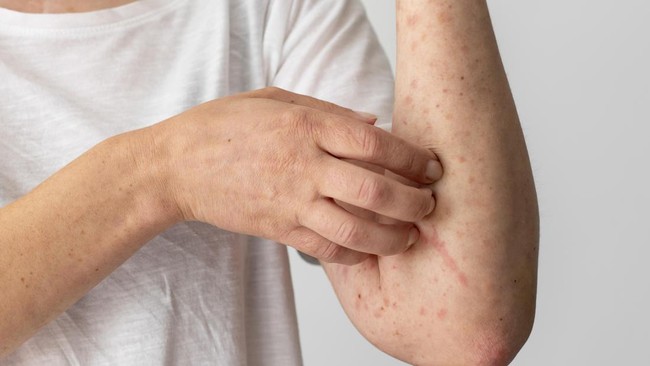
Yet, on 21 March, characteristic measles symptoms appeared in the form of skin rashes. Her condition continued to deteriorate until she finally applied for leave.
On 24 March, Andi noted, the victim informed her colleagues that she suspected she had measles. The next day, on the night of 25 March at 22:00, AMW was rushed to hospital in a state of decreased consciousness.
“Upon arrival at the IGD, the patient’s condition showed cold extremities. Blood pressure was recorded at 90/60 mmHg, pulse rate reached 144 beats per minute, oxygen saturation was only 35%, and it only improved to 50 percent despite receiving 15 litres per minute of oxygen via a hood,” Andi said.
Despite oxygen support, the condition did not improve significantly. The patient was then referred to the ICU in the early hours of 26 March. After undergoing intubation, the victim was declared dead at 11:30 WIB.
“The final diagnosis indicated measles with complications affecting the heart and brain,” Andi explained.
Kemenkes subsequently conducted an epidemiological investigation with local health authorities. Laboratory results released on 28 March 2026 confirmed that the patient was positive for measles.
Nationally, Kemenkes recorded 10 measles-related deaths throughout 2026, one of which was in the adult age group, including this Cianjur case.
Evaluation of the Internship System
Director General of Health Human Resources at Kemenkes, Yuli Farianti, emphasised that this case serves as a serious evaluation point, particularly regarding the implementation of the doctor internship programme. She revealed that the victim had been granted permission to rest several times but chose to continue working and self-medicate.
“Kemenkes will tighten supervision of internship participants, including ensuring that ill doctors must receive complete treatment and not handle patients,” she said.
Additionally, internship participants will no longer be allowed to determine their own health management. Kemenkes stressed that healthcare workers experiencing measles symptoms should not continue working.
“This step is crucial to prevent transmission and avoid the risk of worsening conditions,” Yuli stated.
Kemenkes Issues Circular
In line with this situation, Kemenkes also issued a measles vigilance circular for medical and healthcare personnel dated 27 March 2026. The circular requires healthcare facilities to tighten screening and triage for patients with measles symptoms, including in emergency departments, outpatient services, and inpatient wards.
Andi said hospitals are also required to prepare isolation rooms according to standards, as well as ensure the use of personal protective equipment (PPE) such as masks and gloves for healthcare workers handling patients.
“Furthermore, the implementation of clean and healthy living behaviours (PHBS), especially handwashing habits, is a primary focus to prevent transmission,” he added.
Kemenkes also requested hospital management to regulate medical staff work schedules to ensure adequate rest time, and to prepare mechanisms for handling if healthcare workers are exposed to measles.
On the other hand, healthcare workers are urged to discipline themselves in applying infection prevention protocols, following established service flows, and immediately reporting if they experience symptoms such as fever, cough, runny nose, red eyes, or rashes.
These measures are taken to ensure transmission can be curbed, while protecting medical personnel who are at the forefront of case management.