
Health Ministry Reveals Root Causes Behind Persistence of Female Genital Mutilation in Indonesia
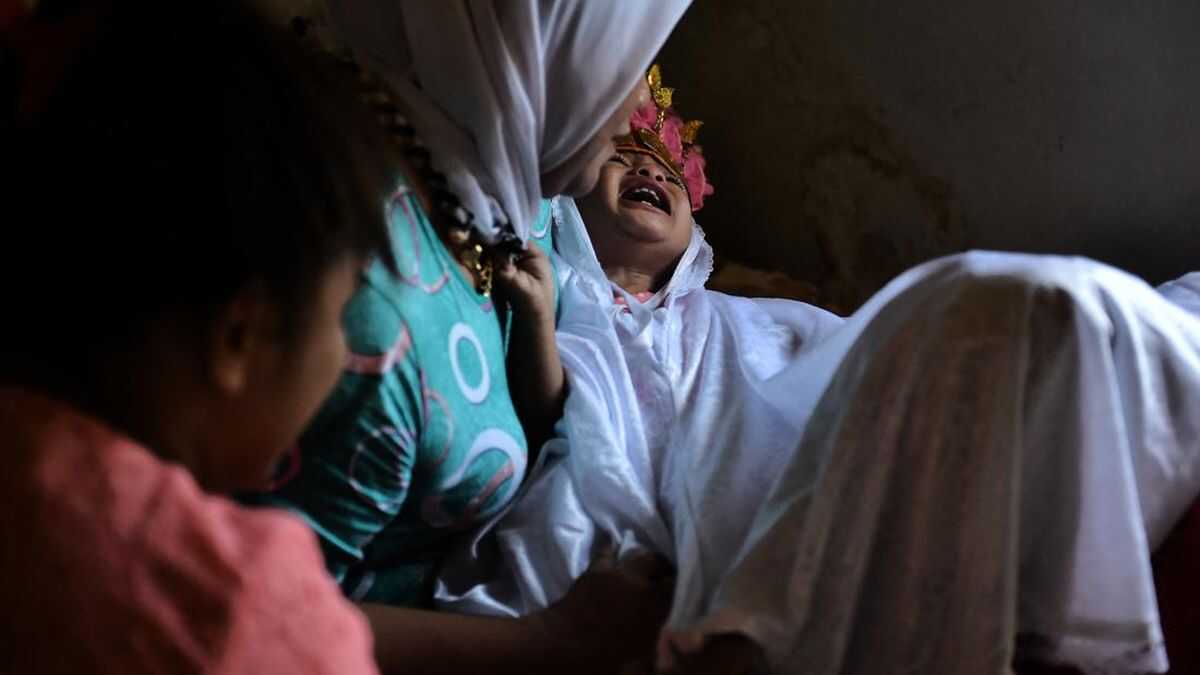
The Ministry of Health has stated that the practice of female circumcision, or female genital mutilation (FGM), in Indonesia remains at a high level.
Imran Pambudi, Director of Health Services for Vulnerable Groups at the Ministry of Health, revealed that the latest data from the 2024 National Women’s Life Experience Survey (SPHPN) shows that after a decade, the prevalence of female circumcision has only declined marginally, from 52 per cent in 2013 to 46 per cent in 2024.
Imran noted that more than half of all female circumcision practices now take place in symbolic or ritual form.
“Symbolic forms, such as nicks, pricks, or rituals without major cutting, are often regarded as ‘milder’ by communities, yet they continue to sustain the social legitimacy that keeps the practice alive,” Imran said in Jakarta on Tuesday (17 February).
In Indonesia, he said, the practice is still found across various regions, with higher concentrations in certain areas and communities. Locations frequently cited in studies and reports include West Nusa Tenggara, Lampung, and several areas in Jakarta.
The practice has also been reported in other communities across the major islands and coastal regions, with significant inter-regional variation. Some districts and cities show high prevalence whilst others remain relatively low. Local factors such as tradition, regional religious edicts, and the medicalisation of the practice influence distribution patterns.
Globally, several countries still record very high figures — nearly 99 per cent in Somalia, approximately 87 per cent in Egypt, and between 86 and 87 per cent in Sudan — whilst countries such as Ethiopia and Nigeria show significant inter-regional variation.
Imran emphasised that these figures serve as a reminder that FGM is not merely a local issue but a humanitarian concern affecting millions of women and girls.
From a health perspective, Imran said female circumcision has no medical basis and carries the risk of short-term complications such as pain, bleeding, and infection, as well as long-term effects including scarring, sexual dysfunction, and psychological disorders.
In Indonesia, the government has established a policy framework comprising legislation on the elimination of violence against women, Government Regulation No. 28/2024 banning female circumcision, and Health Minister Regulation No. 2 of 2025 directing health facilities not to carry out the practice.
Persuasive campaigns
The Ministry of Health has also conducted training for midwives and health workers to refuse family requests for the procedure.
However, regulation and training alone are not sufficient. When health workers still face social pressure and the risk of stigma, many opt for a passive stance or even perform the symbolic practice to maintain community relations.
“Prevention messages that only emphasise medical risks often fail to address the root motivations within communities — cultural values, moral beliefs, and religious convictions — meaning campaigns need to be redesigned to be more contextual and persuasive,” he said.
Furthermore, prevention has not been adequately integrated into routine services such as antenatal checks, postnatal care, and child health services, meaning opportunities for intervention are frequently missed.
Health workers also often face a dilemma in the field when their refusal to perform female circumcision leads to the procedure being carried out by untrained individuals.
To change course, a broader and bolder approach is required. First, the elimination of FGM must be positioned as an investment in human development, not merely a social cost.
“The focus must shift from simply reducing risk to eliminating the norms that drive demand. Changing norms requires time, intergenerational dialogue, and the involvement of religious leaders and community figures,” he said.
Technology and digital campaigns could be harnessed to reach young people and families in remote areas with contextual and persuasive messaging. Meanwhile, health workers need legal and social protection so they can confidently refuse the practice without fear of social sanctions.
Consistent reporting mechanisms, incentives, and mentoring would help transform midwives and health workers into agents of change rather than practitioners of the procedure.
“The 2026 Zero Tolerance commemoration must become a genuine turning point — not mere rhetoric, but a coordinated step involving government, health workers, religious leaders, civil society organisations, and families,” he said.
According to Imran, normative change does not happen overnight, but with the right strategy — firm regulation, communication that resonates with local values, and protection for frontline workers — Indonesia and other countries have the opportunity to accelerate the elimination of this harmful practice.
“This year could be a turning point if all parties are bold enough to change their perspective: from merely reducing numbers to ending the social legitimacy that keeps the practice alive,” he said.