
Health Ministry Outlines Efforts to Meet Health Workforce Needs at AAAH Conference
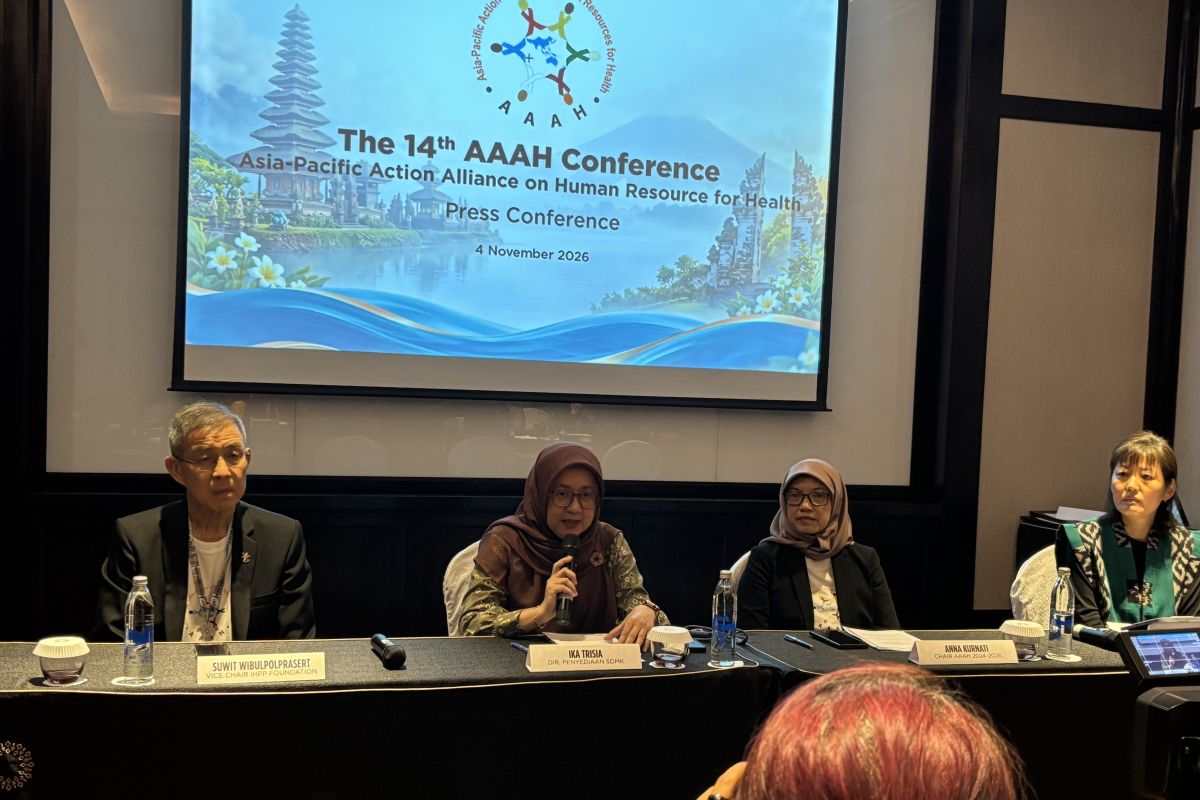
Indonesia continues to face challenges in distributing health workers evenly, particularly in remote, border and island regions.
Badung (ANTARA) – The Ministry of Health outlined Indonesia’s strategic measures to meet its health workforce needs at the 14th Asia Pacific Action Alliance on Human Resources for Health (AAAH) Conference in Bali.
“Developing the health workforce is a fundamental priority for Indonesia in building a stronger, fairer and more resilient health system,” said Ika Trisia, the ministry’s Director of Health Human Resources Provision, in Badung regency on Wednesday.
Addressing delegates from 22 countries, she said Indonesia was taking a comprehensive approach to transforming its health workforce in response to staffing challenges.
The first step is to strengthen data-based planning for health-worker requirements in order to anticipate national needs. Indonesia is also using international health-worker mobility to build the capacity of educational institutions, improve competencies and facilitate knowledge transfer.
The conference’s outcomes will inform the development of a 2026–2035 blueprint for health workforce management, help improve the distribution of health workers and support strategic partnerships.
Despite these efforts, Ika acknowledged that Indonesia still faces difficulties in ensuring an even distribution of health workers, especially in remote, border and island areas.
Figures presented at the conference show that Indonesia has 180,327 registered doctors, or 0.62 doctors per 1,000 people. Nationally, 63 per cent of community health centres (6,520 out of 10,337) have the nine types of health workers required under the standard. Meanwhile, 80.8 per cent of regional public hospitals (681 out of 843) have the seven basic specialist doctor categories.
The ministry said the main challenge was not simply producing more health workers, but ensuring that the right personnel, with the right competencies, are available in the right places.
To address workforce gaps, the ministry is prioritising areas with no health workers at all, particularly in eastern Indonesia. “So, where we have priorities, we will fill positions where there is currently no one,” Ika said.
She said Java and Bali were not the main priorities because they could meet their own health-worker needs, although they still faced shortages measured against workload analysis.
To address vacancies in underserved areas, the ministry is running a special-assignment programme that recruits health workers for placement in priority regions. The government is also providing scholarships to local students and directing them towards courses that meet specific shortages in their home areas.
“That way, once they have completed their education, they will return to their regions and provide health services in areas where those vacancies existed,” Ika said.
At the AAAH Conference, Indonesia also shared its experience by taking delegates to Dr Ngoerah General Hospital, the Denpasar Health Polytechnic under the Ministry of Health, and Kuta II Community Health Centre to observe education and health-service delivery firsthand.
Source: jawawa.id (https://jawawa.id/newsitem/health-ministry-outlines-efforts-to-meet-health-workforce-needs-at-aaah-conference-1793789628)
Originally published by Antara (Indonesian) (https://www.antaranews.com/berita/5831591/kemenkes-paparkan-upaya-pemenuhan-sdm-kesehatan-dalam-konferensi-aaah), translated from Indonesian